
At some point in the middle of a piece of writing, whether it’s a short story or a full-length manuscript, I invariably hit a slump. Given the number of publications, workshops, tools, and challenges out there, I’m pretty sure I’m not alone!
Here are some tools that might be useful to you in moving a recalcitrant manuscript forward.
Books
Of course we all read books about writing. Every writer has their favorite dog-eared copy of certain books.

One that continues to inspire me to create writing that is filled with my own spirit is Steering the Craft: Exercises and Discussions on Story Writing for the Lone Navigator or the Mutinous Crew, by Ursula K LeGuin. How could LeGuin NOT write a really great book about writing? Working through the exercises in this book has taught me how powerful a change in point of view, length of sentence, or approach to paragraph structure can be in “waking up” a manuscript that has become predictable. More than one of my Mixed Up Files buddies recommended exercise just like these when I asked for help. I’m listening!
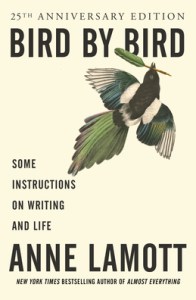
Bird by Bird: Some Instructions on Writing and Life, by Anne Lamott, helps simply because I can open it and find something to inspire me, to reassure me, or even to push me to try something with more abandon.

A friend just pulled this lovely little book off her shelf, remembered how helpful it has been for her, and got me my own copy for my birthday. I can’t wait to dive in to Story Structure Architect, by Victoria Lynn Schmidt, as I work and re-work this manuscript to make it even better.
Workshops and other in-person learning opportunities
Shortly after I inherited my father’s publishing company, I attended Write on the Sound, a local writing conference, after years of wishful thinking. It was just right for me – small and welcoming and not too scary as I dove headlong into the world of writing and publishing.
What I discovered was the gift of deep inspiration and commitment that can be found when you encounter a really good instructor. The lessons I learned about historical fiction from the lecturer were powerful tools I share with students today.
 A
A
Another favorite workshop introduced me to exercises based on author and creativity coach Deb Lund’s fun deck of cards called “Fiction Magic.” These provocative questions, prompts, orders, magic tricks can be used in a variety of ways. It was really fun to play with them in person with their creator and a room full of enthusiastic writers.
Of course there is my local SCBWI chapter to turn to for inspiration and help – amazing meetings, drink nights (which are often sketching/noodling/doodling and writing nights, too), and also the meet ups with other authors that have come about because we discover like interests or common writing hangouts. I learn much from doing exercises on the page, but I learn even more for getting together with other people and talking about the process, the ideas, the struggles…
Challenges
I love deadlines, too. They motivate me. At least, they usually do!
I have participated in NaNoWriMo (National Novel Writing Month) several years running, which for the uninitiated is a month-long sprint challenge in which writers all over the world attempt to finish a manuscript draft of at least 50,000 words. This challenge is not for the faint of heart, and requires a huge commitment. For getting the bones of a new book onto the page, it’s fantastic. And the fancy certificate you get at the end (along with discounts from a wide variety of writing-related vendors.
For the most part, I prefer my challenges in more manageable chunks; though NaNo is something I look forward to each year, I can’t always give up the month of November to hide in my writing cave.
Here are two shorter ones I’ve used with good success in the revision stages of my work, when it’s easy to put other things first (since I edit for others as well, I often put my writing at the bottom of the list. Small challenges help me to put it in the spotlight in reasonable ways).
WFMAD- Write Fifteen Minutes a Day, by Laurie Halse Anderson
http://madwomanintheforest.com/wfmad-day-1-lets-start-at-the-beginning-shall-we/
All you need to do is read these posts from 2013 and you will be able to create your own challenge. Invite your friends to join you. This series comes with great stuff to do beyond writing for 15 minutes- it really is an invitation to examine your writing and get over being afraid to just DO it.
Write Daily 30 – Linda Urban
 s
s
Middle Grade author Linda Urban has offered this challenge/support several times, where you sign up on a shared spreadsheet and post your progress. You create your own goal and the others in the challenge prod you and hold your hand. I’ve presented my own a couple of times since, without the spreadsheet, just daily tweets with the hashtag #WriteDaily30 for 30 days. I’ve made tremendous progress on projects by having the accountability to check in frequently and cheer for others.
I happen to be subbing in Middle School writing lab as I put finishing touches this post (I’ve been encouraged to use my own writing practice to set a good example for students). They are calling on their classmates for inspiration and using images to jump start ideas, and I’m watching.
What tools do you use to move your writing forward?
In fourth grade, Valerie Stein touched an ancient artifact from an archaeological dig. Though she never got to travel the world in search of buried treasure, she ended up journeying to new and exciting places between the pages of books. Now she spends her time researching history, in museums and libraries, which is like archaeology but without the dirt. Valerie’s book, THE BEST OF IT: A JOURNAL OF LIFE, LOVE AND DYING, was published in 2009. Her current work focuses on historical fiction set in Washington State. Valerie is proprietor of Homeostasis Press, and blogs at The Best of It. She manages Gather Here, an online history site for middle grade readers and teachers.

 Every time I do an author visit, I get asked this question, and I always stumble as I try to answer it. Most writers I know dread this question. How do we explain what happens in our brains? How do we describe the way everything we see, read, hear, and do generates story ideas?
 Writers may think those thoughts too, but then their brains start racing. Hmm…what if she’s a mess because her family’s homeless, and this is their only food for the day? Where might they be living? In a homeless shelter? In their car? What would it be like to live there, and how did they end up there? What would a little girl like that want or need if she were living in a car? And the writer is off, plotting a new story or maybe even two. Perhaps all those questions might lead to a story like Barbara O’Connor’s How to Steal a Dog, where a girl living in a car is lonely and wants a pet so badly she decides to steal one.


 My Grandpa Jagger served in the United States Marines during WWII. He drove a tank and was injured on a battered and bloody beach during the invasion of Saipan in 1944, earning a Purple Heart. Over 60 years later, I sat beside his chair, rested my hand in his, and listened as he shared about his military service.