Posts Tagged parents

The Limitless Middle Grade Imagination: Ideas for Encouraging Students’ Fiction

Intro with thesis, three main points, conclusion with cap.

The traditional five-paragraph essay format is one of those topics I’ve been teaching for… let’s just say a lot of years. Valuable and necessary, it’s a handy tool in the toolbox for middle grade students. It helps to structure and organize weighty and mature thoughts into real and powerful language on the page. Students learn to let this formula work for them, the way you let the weight of a hammer do the work of driving the nail. I love the five-paragraph structure for its simplicity and efficiency, and for the way it prompts students to write without worry.

And sometimes, I cheerfully throw it out the window.

Middle grade students — whether in a traditional classroom, a non-traditional environment, homeschool, or virtual learning setting — have vast potential as writers…all sorts of writers. At times, the taming of their wild ideas with that five-paragraph structure is appropriate, but kids in this age group can also bring fierce creativity to writing jobs as seemingly limiting as vocab sentences, and that talent should be given room to grow. And then there’s the untapped storyteller inside many a middle grade student, who needs only a bit of encouragement, a cool assignment idea, and permission from the teacher, librarian, or homeschooling parent to Go ahead…make it up. Forget the 6- to 8-sentence paragraphs that must support your thesis. Don’t dare tame ideas into any kind of structure. Let the tale-spinning begin—and set it free to roam the dark woods and swamps, the castle hallways strewn with trapdoors, the hidden monster-lairs on distant planets.

The freedom of fiction writing in the classroom has just as many (and in some cases, more) educational benefits as learning proper, formal sentence and paragraph structure. This is true at any grade level, but middle grade fiction freedom is especially important. Fiction writing projects

  • Work the imagination–not the handy gadgets and devices.
  • Bring out new talents and skills at a crucial identity-building age.
  • Allow independent, personalized work and countless project options for a variety of types of learners.
  • Can be shared in whole or in part, or in nutshell summations of premises — tasks which offer practice at additional skills.
  • Inspire many middle grade students to read more, inside and outside of the classroom.

Fiction writing projects don’t have to be limited to the classroom. Teachers and librarians might consider the following suggestions for school hours, but parents and after-school group leaders seeking enrichment projects for their middle graders might find them helpful as well.

The Historical Premise: Middle grade writers create a plot scenario with conflict and characters based on a historical setting, time period, and event.
The Character Blueprint: Writers “map” out characteristics for a character unlike any they’ve read, detailing physical and personality traits, likes, dislikes, goals, dreams, family, home, daily life.

The Conflict-driven Plot Scenario: Writers compose short situations that “up” the conflict with each new line: But the next day…suddenly…just then…unfortunately…

The Look-Alike: Writers use already-created characters — perhaps from a shared class read — and send them down unfamiliar roads of conflict, or place them in a conflict from a different novel they’ve studied.

The Choose Your Tale-teller: Writers select a format that suits their story idea best: illustrated picture book, graphic novel, comic book, story in verse.

Remember that in order to truly encourage the creativity that comes with fiction writing, teachers, parents, and librarians might have to rethink traditional lesson planning and writing “rules.” Here are some ideas for inspiring your middle graders as they create fiction.

  • Don’t go with your first idea…dig deeper. Reject that which comes too easily.
  • Don’t worry about a beginning or an end. Start in medias res and stop when you want.
  • Try creating only the premise of a story – without the overwhelming work of writing the actual story.
  • Write a detailed beginning full of mystery and sense imagery, then stop. Write another full of opposite choices to the first (night instead of day, freezing instead of sunny), then choose one to continue.
  • Write a whole scene of dialogue, without narration. Use dialect, jargon, fragments, idioms.
  • Write only a one-page real-time scene (or half a page, or two pages, etc.), without worrying about descriptions and set-up.
  • Write from the point of view of an animal or a plant, or a rock or a wall.
  • Design a character, and write unrelated scenes featuring him or her in different genres.

With fiction writing, the options for learning by doing about literature and storytelling are endless: Plot. Character. Imagery. Genre. Dialogue. Theme. Excellent practice opportunities for mechanics, vocabulary, syntax, and a host of other communication skills come into play in the revision stages, as well.

But best of all, a student has made a piece of something that was not there before, and with these new creations almost certainly come sparks of continued inspiration.

Thanks for reading and good luck to your middle grade-aged writers!


STEM Tuesday — Pair Up! Comparing Nonfiction Titles — Writing Craft and Resources

Going Deep

Today we are diving deep into two books that intrigue me. Books about a horrific medical epidemic. Books that both use narrative and expository plus characters to carry readers through the story. Books that plunge into history and science plus ethical and moral questions.

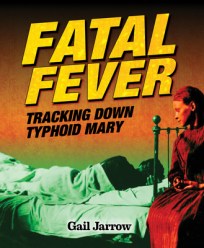
Fatal Fever: Tracking Down Typhoid Mary, by Gail Jarrow

Terrible Typhoid Mary: A True Story of the Deadliest Cook in America, by Susan Campbell Bartoletti

Support Independent Bookstores - Visit IndieBound.org

Here’s a quick recap. In the early 1900s Mary Mallon carried typhoid but didn’t display any of the symptoms. She worked as a cook, was definitively linked to the infections of 49 people plus three deaths, was quarantined for decades, and became the brunt of a tabloid scandal. Both books look at the entangled story of her life, medical professionals who tracked her down, legal charges against her, and implications for constitutional rights.


Support Independent Bookstores - Visit IndieBound.org

In two books on the same topic, published in the same year, written with similar audiences in mind, there is much to compare and contrast. What I find most intriguing is that both bring the science and history to light while posing enduring questions.

Dive In

Let’s look at how these books each handle one of those enduring questions. Get ready for some close reading!

After years of quarantine, Mary was finally released on parole. The terms of her release specified that she take precautions to not infect others, not work as a cook, and report regularly to the health department. But Mary broke those terms, resulting in another major outbreak and her own exile until death. The question these authors chase: Why did she risk it?

Turn to pages 133-135 of Terrible Typhoid Mary and Page 118-120 of Fatal Fever to read the texts. Here are some things to look for. I’ve included a few things I noticed and am eager to hear what you discover.

Whose story is told first?

  • Fatal Fever:
    • “Mary had no lawyer to help her.”
  • Terrible Typhoid Mary
    • “Mary never said why she broke the conditions . . .”

What words are chosen to set the tone?

  • Fatal Fever:
    • “A Witch!”
  • Terrible Typhoid Mary
    • “. . . she struggled . . .”

In what way are other characters’ reactions used? Do those reactions support or denigrate Mary’s choice?

  • Fatal Fever:
    • “The sympathy that people once felt toward Mallon evaporated.”
  • Terrible Typhoid Mary
    • “Her temerity galled Soper.”

What words or phrases convey doubt or leave interpretation open?

  • Fatal Fever:
    • “Maybe she didn’t see the harm in it, . . .”
  • Terrible Typhoid Mary
    • “Is it possible that Mary simply didn’t understand . . .”

Are you caught up in this conundrum? Of how Mary, who had been presented as a person who stepped in to care for children when needed, could do such a thing? I am.

Where do these passages leave you emotionally? Did the balance between narrative and expository impact your reaction? Does either passage affect you more? Why?

On Your Own

Now, pursue a similar close reading on your own. There are plenty of other parallel topics in these books. Try the discussion of gall bladder removal: Fatal Fever (page 93) and Terrible Typhoid Mary (pages 136-137).

How do these authors use sequencing, language, and other characters? How do their skillful use of nonfiction devices impact you as a reader?

—-

By Heather L. Montgomery

Heather L. Montgomery writes for kids who are WILD about animals. Her latest book, Bugs Don’t Hug: Six-Legged Parents and Their Kids, is a perfect picturebook for a close read.

www.HeatherLMontgomery.com


The O.O.L.F. Files

Resources for Writers

https://www.rhymezone.com/

This site might have been designed with rhyming in mind but it has many other uses. Need a thesaurus? Angling for alliterative words? Looking for lyrics? Rhymezone’s got you covered.

https://www.google.com/alerts

Needing to go deep on a topic? Set up a Google alert on your topic. Day after day it will deliver the freshest posts straight to your inbox.

http://www.bluebulbprojects.com/MeasureOfThings/default.php

When you need a measurement comparison, The Measure of Things is your best friend! How large is 110 cubic inches?

  • 9/10th the size of a human stomach
  • 1/3rd the size of a bowling ball
  • 1 1/10th the size of an ostrich egg!

STEM Tuesday — Pair Up! Comparing Nonfiction Titles — In the Classroom

STEM TUESDAY from the mixed up files

Today is the 11th–a 1-1 pair-up. It’s an especially apt day for continuing with our Nonfiction Pair-up theme. One thing seems sure: You’ll double your impact if you pair nonfiction reading and writing with STEM lessons!

Support Independent Bookstores - Visit IndieBound.org Support Independent Bookstores - Visit IndieBound.orgIdeas Worth Spreading

Fatal Fever and Terrible Typhoid Mary highlight the social, personal, and epidemiological stories around Mary Mallon, AKA Typhoid Mary. Exemplifying how science and society intersect and examining the difficulties of clashing social and individual interests, this pair offers high drama and nearly endless entry points for curriculum learning.

  • Does the government have the right to imprison someone to keep that person from infecting others?
  • Do students think Mary was “terrible?
    • Students can develop charts with reasons for answering yes and no–then take a stand with mock op-ed pieces.
    • Form student committees to answer “What to do about Mary?” Make sure they consider how any decisions impact Mary and the community.
    • Expand into current day concerns: “What to do when one of us gets sick?” Students might research the school’s policy regarding teachers and students with the flu or other infectious diseases. What options are available to keep everyone safe and able to work and learn?

Looking for infectious enthusiasm? Try these science learning ideas.

  • DragonFly TV’s five-minute GloGerm video offers information, an experiment, and visuals including a powder that glows under UV light and spreads throughout a kids’ bowling party.
    • Show the video to accompany their reading.
    • As an alternative, if you have the resources to purchase GloGerm and a UV light, use the video as an inspiration for a lesson plan. Demonstrate the spread of disease. Then challenge students to design their own experiments.
  • In this lesson using water, baking soda and a simple acid/base indicator, one student unwittingly becomes the source of an “infectious disease”, which then spreads to classmates.  The indicator ultimately reveals “infected” students. As an extension, track down the source student–your classroom’s counterpart to Mary Mallon in 1906, someone who unknowingly spreads disease.
    • What does the student feel like?
    • How would the class feel if all of the infected students now had to stay quarantined despite feeling well, or could no longer do whatever job they would like?
  • Students become disease detectives with an engaging interactive from PBS’s NOVA resource, which allows them to “interview” subjects, collect and review data, and explore possible sources of the new Dizzy Disease. Students might also compare and contrast their methods to those used by the typhoid tracker who found Mary Mallon, George Soper.


Support Independent Bookstores - Visit IndieBound.orgSupport Independent Bookstores - Visit IndieBound.orgAnd Now, Some Rotten Ideas

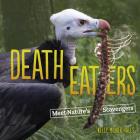
Students can become decomposers as they break down Rotten and Death Eaters, into their essential content and structure. For example, Elementary Nest’s lesson provides suggestions on conducting a compare/contrast of the facts in paired nonfiction titles.


Of course, this topic screams for a scavenger hunt! Send students searching for nonfiction text features. Check out these scavenger hunts  and, presto! You’ll gather your own list of features in no time. Follow up with a look at how these features help or detract from the reading experience.

  • How do various features help engage and explain information to readers?
  • Are there places in either book where the reader’s experience would have been enhanced by the addition or omission of a given feature?

After students digest the books in these lessons, they can recycle the morsels of information and insight into new, lively texts, composing short pieces based on the facts that they collected and incorporating the nonfiction text features to help readers engage with or grasp content.

Hands-on science experiences can add to the detail of student writing.  Start with this worm bin building activity and related resources from National Agriculture in the Classroom.


Support Independent Bookstores - Visit IndieBound.org Support Independent Bookstores - Visit IndieBound.org Support Independent Bookstores - Visit IndieBound.orgThis Trash Talk’s OK

Heighten student awareness of different styles and purposes of informational text with this trio. This Book Stinks is full of small bits of text and splashy graphics. Contrast it with Tracking Trash and Plastic Ahoy!, which combine storytelling, exposition, and characters into a cohesive whole. Challenge students to take passages from each book and turn them into the style and format of the other.

For science experiences, tie these books in with the decomposition books above (pair the pairs!). Or:


There’s so much you could do with this month’s theme, maybe you, too, should pair up; find a teaching partner to develop some of these ideas into great experiences for your students, or create your own.

  • What other book pairings can you suggest?
  • Which activities work for you?

Drop a comment to let us know!


****** BREAKING NEWS!!****

STEM TUESDAY from the mixed up filesSTEM Tuesday is now a monthly PODCAST! Tune into Jed Dougherty’s Reading With Your Kids Podcast on iTunes to listen to your favorite STEM Tuesday posts! The first airing is right here:  STEM Tuesday Podcast #1 

Be sure to join us the second Tuesday of every month for a podcast update!


Carolyn Cinami DeCristofano pairs writing nonfiction STEM books for kids with STEM educational consulting work.  Running on Sunshine: How Does Solar Energy Work? celebrates the innovative spirit and challenges behind engineering solar technologies, and received a starred review from Kirkus.