Posts Tagged Middle Grade Graphic Novels

Author/Illustrator Spotlight: Allan Wolf and Jose Pimienta

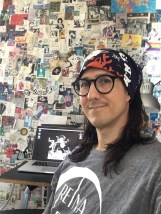
Illustrator Jose Pimienta

Author Allan Wolf

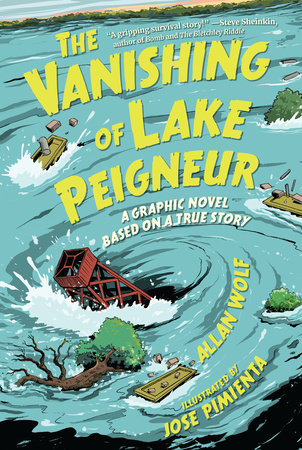
In today’s Author/Illustrator Spotlight, Landra Jennings chats with author Allan Wolf and Illustrator Jose Pimienta about their new middle-grade novel, The Vanishing of Lake Peigneur: A Graphic Novel Based on a True Story (Candlewick Press, October 7). They share the inspiration behind the novel, their creative processes and a little advice for those just starting out!

A Junior Library Guild Selection
Publisher’s Weekly Top 10 Middle Grade Graphic Novels, Fall ’25
“A riveting page-turner that will have readers eager to learn more about the topic.” —Kirkus Reviews (starred review)

Book Summary:

The strange, true tale of a Louisiana lake that vanished—taking with it every fish below and every boat and barge above—told in a gripping and accessible graphic format.

Home to catfish and crawdads, shrimp and spoonbills, even a gator or two, Lake Peigneur—pronounced “your pain,” only backward—bustles also with human life. Each day, the bean-shaped freshwater lake and its shores hum with folks going about their work: a devoted gardener’s apprentice and his dogs, fishermen, oilmen drilling at Well P-20, and the fifty-one miners employed by the Diamond Crystal Salt Mines. For most, November 20, 1980, began as “just another day on the lake.” But as the lake itself reflects, humans had, over time, left behind a honeycomb of salt highways deep beneath its surface, and water and salt mix all too well. Bracing, suspenseful, and packed with dramatic illustrations and dense end matter, this story of a catastrophic accident—narrated with the homespun voice of a “tall” tale, but true nonetheless—will amaze science and history buffs alike.


Interview with Allan Wolf and Jose Pimienta

LJ: Welcome to the Mixed-Up Files, Allan and Jose! Thanks for joining us today. I’m so intrigued by this new book and I can’t wait to hear your thoughts on its development. Let’s start with you, Allan. Where did you get the initial inspiration for The Vanishing of Lake Peigneur

AW: Back in 2007, while visiting schools and libraries in southern Louisiana, I noticed there was a chimney sticking up from the surface of Lake Peigneur, near New Iberia. So, I started asking questions.

I learned that Texaco, while exploring for oil in 1980, sent a 14-inch drill bit into the bed of a shallow1200-acre freshwater lake, piercing a salt-mine below, causing 3.5 billion gallons of water to drain like a bathtub. The resulting whirlpool and sinkhole, sucked in eleven barges, two oil derricks, a couple houses, a tugboat, a fishing skiff, and sixty-eight acres of a nearby ornamental garden. The disaster also created a 400-foot geyser and a 150-foot waterfall. The lake drained in four hours, then began to refill, via the Delcambre Canal, with saltwater drawn from the Gulf of Mexico, nine miles away! The A&E Channel featured the story in 2003 or so, but otherwise it seemed like very few people had even heard of this event. The details were so compelling, I had to tell it.

Junius Leak and the Spiraling Vortex of Doom

LJ: Allan, how does this title relate to your other recent release, Junius Leak and the Spiraling Vortex of Doom?
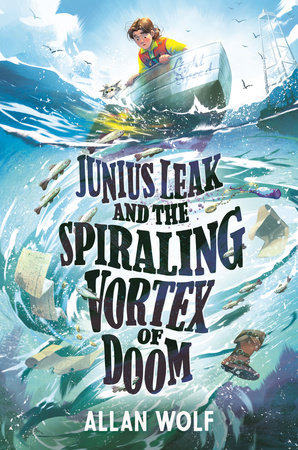
AW: The Vanishing of Lake Peigneur and Junius Leak and the Spiraling Vortex of Doom are siblings, raised together in the same house but choosing to grow in different directions. Junius Leak is a middle-grade historical fiction novel in prose, using the facts of the Lake Peigneur disaster as a backdrop for the book’s fictional characters. Junius Leak is a twelve-year-old kid sent to live with his mysterious uncle in a houseboat on Lake Peigneur near Delcambre, Louisiana.

The factual disaster becomes a symbol of Junius Leak’s own coming of age. But to make the world of Junius Leak as authentic and historically accurate as possible, I had to do a lot of research. Then to synthesize my research, I wrote a 60-page prose story of what actually happened so that I could elegantly combine my fictional plot with the factual events. My historical fiction novels often have very extensive back matter. Long-story-short, the back matter of Junius Leak was so compelling, that it demanded we turn it into a book of its own. And that’s how The Vanishing of Lake Peigneur was born. It was my editor at Candlewick Press, Katie Cunningham, who suggested we tell the story in graphic form.

On a somber note, Katie Cunningham passed away this July 4th. Just three days after Junius Leak was published. And three months before the publication of The Vanishing of Lake Peigneur. She was 43. I miss her terribly.

Learning about the Lake

LJ: I love hearing about the relationship between the two books though I am so sorry to hear about Katie. What kinds of research did you do to be true to this story?

AW: I read every newspaper article I could find from the 1980s, along with many government documents reporting and analyzing what took place. The newspapers would sometimes contradict one another, so I looked to official documents from the Mining Safety and Health Administration (MSHA) to get my final numbers. I stalked my way through a labyrinth of Cajun names on FaceBook. I looked at several hundred photographs. I interviewed, in person, a handful of survivors and their relatives—including the 95-year-old captain of the tugboat, Charlie, who narrowly escaped being flung from a waterfall formed by the collapsing earth. Since I started my research in 2007, a few interesting podcasts have added to the story as well. But the in-person conversations I had with first-hand witnesses was my most valuable research tool.

To the Heart of The Vanishing of Lake Peigneur

LJ: What do you hope readers take away from this novel?

AW: Over all I’d like readers to see how it is possible to act courageously even when we are afraid. That is the very definition of courage: to take action in spite of fear and self-doubt. In their own individual ways, both The Vanishing of Lake Peigneur and Junius Leak and the Spiraling Vortex of Doom are stories of ordinary people acting heroically in the face of extraordinary circumstances. That’s when we find out who we really are.

Also, Junius Leak models for us how we don’t have to hide our true selves to make others more comfortable. Sometimes you get tired of trying to fit in. Sometimes you just want to be yourself. It is your choice to make.

On Writing

LJ: What’s your favorite thing about being a writer and story-teller?

AW: I have always identified with “being a writer,” but the early romance has always butted heads with the mundane needs of life. Being a professional writer for kids these days requires a lot of social media, marketing, conferences, bookstore events, school visits—all of it with only a tangential relationship to the actual act of writing books. But that writing itch always lurks. We all need to be the makers of something. If that need isn’t met, we whither. I guess the thing I really love about being a writer is the writing. I can write my way to discover that place, that spot, that just-right, water-tight safe space inside my head where I can go to find myself in my imagination.

What’s Next for Allan?

LJ: Is there anything else you’d like us to know?

AW: Yes. The year 2025 has been a big one for me. In addition to the two books discussed here, I have a new poetry collection out, The Gift of the Broken Teacup: Poems of Mindfulness, Meditation, and Me. It is brilliantly and beautifully illustrated by Jade Orlando. These are fun yet thoughtful poems about self-regulation, self-care, and self-esteem. Of all my poetry collections to date, this one is the most personal. This book was my chance to explore what it means to have character and an intrinsic sense of self-worth. And it gave me a chance to share the ways I have learned to deal with anxiety and to practice self-care. The Gift of the Broken Teacup is sort of an owner’s manual for the soul.

The Illustrations

LJ: Now to you, Jose. The illustrations are phenomenal, starting with the cover. There’s so much energy that jumps right off the page. What excited you most about this project?

JP: The defining factor that excited me the most was that the story’s narrator would be the lake itself. I love stories about places, so, as much as there are many amazing people in this story, the point of view being the land drew me in, immediately.

LJ: How did this project differ from some of your other titles?

JP: This story is non-fiction, which is a first for me. Also, it involves so many people, so, keeping track of a large cast of characters was something I had never done. And! this is the first book I’ve drawn where all the characters are adults. Most of my books feature either teenagers or kids with some adults in there. This one was all grown-ups. But there’s puppies, so…

Jose’s Creative Process for Illustration

LJ: We all love puppies! What is your creative process like? What time of day do you do your best work and what medium do you use?
JP: For the most part, I like to listen to music related to the topic of the story I’m working on. I helps me to stay in the tone of the story. Unless I have errands to run or other engagements, I like to start drawing as soon as possible in the day, right after I finish cleaning up after breakfast. And I like it when drawing is the last thing I do before going to sleep. Everything in between can be different depending on the day. So, I draw a while, goof for a bit, run errands, meet with friends, draw some more, go for a bike ride, eat something, draw more, and so on.

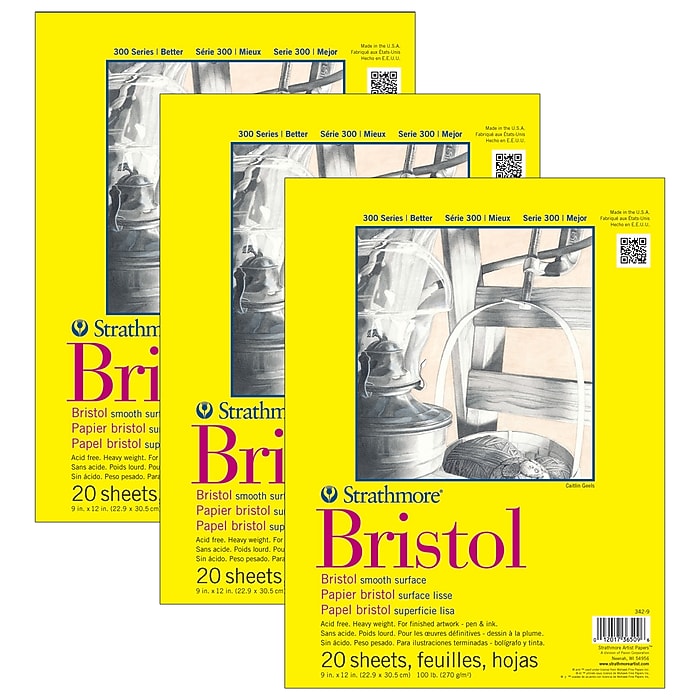
Generally, I draw with a mechanical pencil on 9×12 Bristol board or drawing paper. Then I ink my drawings with microns and brush pens. After that, I scan the pages and letter my comics digitally, because I do a lot of re-writes, so… this helps keeping the dialogues flexible. Lastly, I color digitally because it’s faster. I also prefer to do each book in passes. I like to do the entire book in pencil and then ink the whole book, and so on. Some people prefer to work in batches or one finished page at a time, and that’s great- but I can’t. I want to minimize the amount of gear shifting I do.

For writing, my process is an entirely different story. But more on that some other time.

The Path to Becoming an Illustrator

LJ: How did you get started along the path to becoming an illustrator?

JP: I’m not sure when it started. A cliché answer is “I never stopped drawing. I’ve just been doing this my whole life.” And that’s mostly correct. But as a professional, I can’t think of a definitive starting point. I went to art school, where I met a lot of amazing people I wanted to collaborate with, and that got me some work, but I also wanted to write and draw my own stories, so I did that as well. After art school, I came to Los Angeles in the hopes to work in the film industry, and I kept getting work here and there while I was making my own comics. At some point, I realized I was making a living drawing, so “Yay!”

I guess how I got started is I just kept telling people I wanted to draw and I showed them what I was working on. Some of that lead to work and some of it didn’t. Along the way, I made cool friends and got to collaborate with wonderful artists.

Advice for Those Just Starting Out in Illustration

LJ: What advice would you have for a beginning illustrator?

JP: Hmm… first I’d ask the illustrator what their goals are. Then, I’d hope I have useful advice for their specific path, or at least point them in the direction of other illustrators who do something similar so they can get better guidance. But as a general advice, I go with this:

Explore. Try things out. Find what works for you and approach everything with genuine curiosity. Experiment with mediums and see what catches your interest. Learn as much as you can from experts, but dare to go further than they have. Also- get comfortable with failure. Learning requires it. But pay attention and ask if it’s worth trying again. Lastly, Make friends. Be friendly. Be kind. Be sincere. Most people want to collaborate with someone they know or someone they like. So, show your work. No one’s going to hire you if they haven’t seen what you do. Oh! And of course: keep practicing the fundamentals.

I hope that’s useful, but if not, ask other illustrators. (And that’s my point: Ask and talk to as many as you can. We all want to see more art. So we’d love to see yours.)

Visiting the Lake

LJ: Is there anything else you’d like us to know?

JP: Only what you’d like to ask me, hehe. I’m not sure how to answer this, other than working with Allan was fantastic and this book was a phenomenal project. I’m so happy I got to draw this. Oh! Big story I like to share. When I first started drawing this, I wasn’t sure how to research this, since it’s non-fiction. I wanted to get as many details as possible correct, so, on a whim, I went to see the actual lake and I can’t tell you how much help that was. Visiting the lake was a terrific experience. Big thank you to everyone who answered my questions and their meals are top notch. If you get a chance to visit the area, by all means, it’s a delight.

Lightning Round Questions:

No MUF interview would be complete without our lightning round, so here we go…

For Allan Wolf:
Coffee or tea? Both.

Sunrise or Sunset? Sunrise.

Favorite city (besides the one you live in): Asheville, NC

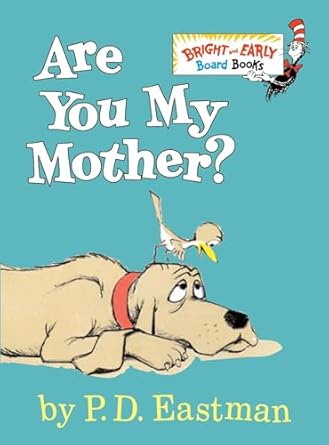
Favorite books from childhoodAre You My Mother? By P.D. Eastman and Mike Mulligan and His Steam Shovel by Virginia Lee Burton.

Favorite ice cream flavor: Banana

If you could choose a superpower, what would it be? The ability to flood others with any emotion so that emotion then becomes their own.

For Jose Pimienta:

cup of teaCoffee or tea? Tea.

Sunrise or Sunset? Sunset.

Favorite city (besides the one you live in): (In the world?) Hamelin, in Germany. But if we’re doing US only: Los Angeles (I live in Burbank).

Favorite book from childhood: “Matias y el Pastel de Fresas” by Jose Palomo.

Favorite ice cream flavor: Ube. Or anything chocolate.

If you could choose a superpower, what would it be? I’m very serious about this: Scent manipulation. Being able to control smells would amazing. Had a bad day? Not when it smells like a bakery in here. Supervillain attacking you? Make it smell so bad they’re incapable of focusing. Did you pass gas in public? No one ever has to know. OR teleporting, whichever is easier to acquire.


Thank you so much Allan and Jose for sharing with us!


About the Author and Illustrator

Allan Wolf

Two time winner of the North Carolina Young Adult Book Award, as well as Bankstreet College’s prestigious Claudia Lewis Award for Poetry, Allan Wolf is the author of picture books, poetry, and young adult novels. Booklist has named his historical verse novel, The Watch That Ends the Night, one of “The 50 Best Young Adult Books of All Time.”

Also a skilled and seasoned performer of 30 years, Allan Wolf’s dynamic author talks and poetry presentations for all ages are meaningful, educational and unforgettable. Florida Reading Quarterly calls Wolf “the gold standard of performing poetry.” Wolf believes in the healing powers of poetry recitation and has committed to memory nearly a thousand poems.

Wolf has an MA in English from Virginia Tech where he also taught. He moved to North Carolina to become artistic and educational director of the touring group Poetry Alive!. Wolf is considered the Godfather of the Poetry Slam in the Southeast, hosting the National Poetry Slam in 1994, forming the National Championship Team in 1995, and founding the Southern Fried Poetry Slam (now in it’s 27th year).

Jose Pimienta

Jo Pi’s almost full name is Jose Pimienta. They reside in Burbank, California where they draw comics, storyboards and sketches for visual development. They have worked with Random House Graphic, Iron Circus Comics, Dark Horse Comics, Disney Digital Network, and more.

During their upbringing in the city of Mexicali, Mexico Jo was heavily influenced by animation, music and short stories. After high school, they ventured towards the state of Georgia where they studied at Savannah College of Art and Design. 

For Comics work, they are represented by Elizabeth Bennet of Transatlantic Agency.

Author Spotlight: Amar Shah

In today’s Author Spotlight, Sydney Dunlap chats with author Amar Shah about his middle-grade graphic novel, Wish I Was a Baller. School Library Journal gives Wish I Was a Baller a starred review and calls it “a perfect example of trying, failing, and rising again.”

Amar Shah is a multiple Emmy-winning writer and producer who has written for ESPN.com, NFL.com, The Wall Street Journal, The Orlando Sentinel, Sports Illustrated for Kids, Slam Magazine and The Washington Post. In the 90s, Amar was a teen sports reporter and got to hang out with the Chicago Bulls during their golden era. He even landed on the cover of Sports Illustrated for Kids with Shaquille O’Neal! Learn more about Amar at amarshahwrites.com

All About the Book!

Wish I Was a Baller is part New Kid, part The Tryout, and part Dragon Hoops! Amar Shah has some story to tell! In 1995, he was a fourteen-year-old aspiring sports journalist (and basketball superfan) angling to get into an Orlando Magic team practice. He did, and it took him on the ride of his life! Wish I Was a Baller is a graphic memoir chronicling Amar’s real-life experiences as a fourteen-year-old sports journalist covering the golden era of the NBA, when he befriended Shaq and hung out with Michael Jordan and the Bulls—all while surviving high school, dealing with crushes, and friendships being tainted by jealousy.

Interview with Amar Shah!

Sydney: I was amazed at your perseverance as a fourteen-year-old aspiring reporter. To what do you attribute your ability to never give up, even in the face of such difficult odds?

Amar: There’s a reason the book is called Wish I Was a Baller. It’s named after this iconic mid-90s hip-hop track by Skee-Lo that became my personal soundtrack. I was a short brown kid with glasses who couldn’t make it on the actual basketball court, so I had to find another way into the game.

I think from an early age, I had this quiet, absurd confidence in myself. When someone told me no, I didn’t hear the end of the story…I heard a challenge. I couldn’t accept rejection as final. I always wanted to find a way in, to create a new door if one didn’t exist.

A lot of that determination also comes from my parents. They immigrated to this country without speaking English and had to build everything from scratch. I watched them face setback after setback, and never stop moving forward. They taught me that even if something doesn’t work out, you’re not done: you adapt, you grow stronger, you keep going. That mindset of believing you can do anything if you work hard and stay committed…stayed with me.

Craft

Sydney: You do such a great job maintaining a fast, exciting pace in your book. Was it difficult to craft? What were your biggest challenges in writing it?

Amar: I was really lucky to have an incredible collaborator in Rashad Doucet, my illustrator. He’s an amazing author and artist in his own right, so he really understood the graphic novel form. From day one, working with him was a joy. And I had two incredible editors, Abby McAden and Anjali Bisaria, who helped me take my original manuscript and shape it into something much tighter and stronger.

The truth is, Wish I Was a Baller didn’t start as a graphic novel. It was originally a YA memoir, over 100,000 words long, and the very first book I ever wrote. That version got me my agent, Jas Perry, and even though it got rejected by a number of publishers, we knew the story had something special. Jas had the brilliant idea of adapting it into a middle-grade graphic novel. That’s when she brought Rashad on board, and the two of us started shaping the proposal together.

The biggest challenge? Cutting. I had to take chapters I loved, stories I was deeply attached to, and just… let them go. It was painful at first, but I knew we had to honor the rhythm and form of a graphic novel. Luckily, I come from a screenwriting background, so I leaned on that experience to focus on pacing making sure every page moved the story forward.

It was also a shift going from prose to script format. But once I got into a rhythm and started getting Rashad’s feedback, it became a really fun and collaborative process. Honestly, we had a blast. I like to say we had the chemistry of Wayne and Garth from Wayne’s World, just two guys geeking out over something we loved, completely in sync, and somehow making it all work.

Authenticity

Sydney: You describe the experience of the awkwardness that can be such a part of adolescence so honestly and with such authenticity. What was it like to revisit those years and share them with young readers?

Amar: To be honest, it was both a delight and a challenge to revisit those years. Writing this book felt like being an archaeologist, digging through old yearbooks, school newspapers, and the random things I’d kept from childhood. I remembered how, at that age, every feeling hits at full volume. Everything feels seismic. 

For me, those memories were like fossilized moments trapped in amber. And my job as a writer was to be like a Jurassic Park scientist, extracting the DNA from those experiences and bringing them back to life on the page.

Of course, it came with vulnerability and a bit of embarrassment. I mean, being 14 or 15 in high school, when you’re still a kid surrounded by what feel like adults, is awkward by definition. Even though the book is set in the 90s and packed with references today’s kids might not get, their parents probably will. But the emotional core is timeless: first crushes, friendships and fallouts, the search for identity, and figuring out where you belong.

Yes, I had these surreal moments with Shaq, MJ, and Kobe during the golden era of the NBA, but what I experienced daily at school is what most kids go through. That’s the part I think young readers will connect with: finding your voice, your passion, your people.

Those years shaped everything that came after. They launched my career in journalism and storytelling. And if sharing that helps even one reader feel seen, less alone, or more inspired to chase something they love, then it was absolutely worth the trip back.

Publishing Journey

Sydney: How did you decide to get into publishing books for young readers? Please share a bit about your journey.

Amar: I think I always knew I wanted to write for young readers, even when I was a young reader myself. I’ve wanted to be a writer since fourth or fifth grade. In fourth grade, my teacher read Tales of a Fourth Grade Nothing and Superfudge to us, and I was hooked. I completely connected with Peter, the narrator. I had a younger brother too, so I felt like those books were speaking directly to me.

By fifth grade, I was writing my own short stories. I even wrote my first novella, which was some kind of mashup between Field of DreamsDie Hard, and every action or sports movie I loved at the time. In sixth grade, I kept writing and eventually fell in love with journalism. But I always felt that the ages between 10 and 17 were the most emotionally alive years of my life. That window of time is where everything feels massive and defining, and I think that’s why I kept coming back to it in my writing.

I spent years as a journalist, writing for places like ESPN, the NFL, The Washington Post, and The Wall Street Journal. I was always writing. But it took me a long time to find the discipline to write a book. Like a lot of people, I started and stopped several times throughout my twenties and thirties. Then my son was born in 2015, and something shifted. I wanted to stop just dreaming about writing a book and actually do it.

I started writing Wish I Was a Baller in 2016, though the idea first came to me back in 2011 after Shaq retired. It became my pandemic project, or maybe my midlife crisis. Instead of buying a fancy car, I wrote a book. I worked on it with my agent, Jas Perry, and we eventually submitted it to Scholastic, where an editor named Matt Ringler loved the voice and gave me a shot at another project.

That led to the Play the Game series. Scholastic asked me to try out for a sports series. I wrote a few sample chapters, and they offered me a three-book deal. I loved it, because it gave me a chance to revisit one of the most meaningful and painful moments of my youth…getting cut from the basketball team. I channeled that experience into Raam’s story, and writing it felt both cathartic and authentic. My kids were also around the same age as the characters, so I had a built-in focus group.

Eventually, the original version of Baller evolved into a graphic novel, and I couldn’t be more grateful for how it all came together. Writing for young readers means everything to me. That age group is where future writers and readers are shaped. They are looking for stories that make them feel seen and understood. I’m incredibly lucky to get to tell those stories and go on that journey with them.

Graphic Novels Vs. Prose

Sydney: Now that you’ve written books in two such different formats, what can you tell your fellow writers about the differences in process between the two? And which took longer to write?

Amar: That’s such a great question. I think I was lucky in the sense that I had never written a middle grade book until I wrote one. I had never written a graphic novel either, but I dove in. If you’re willing to learn the foundations, you can figure it out. I’m not saying follow a formula or chase tropes, but I do think it’s important to study the form. I read a bunch of middle grade novels. I read graphic novel scripts. You have to understand how a thing is built before you can build your own version.

Graphic novels don’t have a strict format the way screenplays do, but my screenwriting background helped a lot. In screenwriting, every page is roughly a minute of screen time. That taught me to treat each page like something needed to happen. The pacing had to be tight. In a graphic novel, you don’t get the luxury of long internal reflection or poetic description. You’re working with panels, dialogue, and movement. It has to be visual. It has to move. The energy is kinetic.

Middle grade prose, on the other hand, gives you more room to breathe. You can let your characters contemplate. You can let a moment linger. You can be quiet. But no matter what you’re writing, the sentences have to carry momentum. They have to move the reader forward.

Writing a novel is a solo journey. It’s just you and the page. You’re living in that world and shaping it alone. Writing a graphic novel is a collaboration. It’s more like making a movie. You’re the screenwriter, but there’s also the illustrator, the editor, the letterer. It’s creative back and forth, more like a DJ and an MC working together.

In terms of time, the prose version took longer, simply because I was figuring out the story from scratch. But writing a graphic novel requires precision. You have a smaller canvas, so every moment has to count. One isn’t easier than the other, just different. And I learned so much doing both.

Takeaways

Sydney: What do you hope readers take away from these stories?

Amar: With everything I write, I want to give readers a sense of hope. I want them to feel inspired, understood, and less alone. Sure, you hope to pass along some wisdom, but more than anything, I want young readers to take away something that helps make the world feel a little more manageable. Life can be tough, but there’s something powerful inside you. You can persevere. You can thrive.

That’s the beauty of storytelling. The things that feel the most personal, the moments you think only you have experienced, often turn out to be the most universal. When you share your story…honestly, vulnerably…you create connection. You let others know they’re not the only ones going through something hard. That’s powerful.

I don’t think of my books as pep talks or coach’s speeches. I think of them as quiet offerings, reminders that you can bounce back. That you can mess up and grow. That you can go after what you want and still be a good person.

I hope readers walk away from these stories feeling like they’ve found a piece of themselves. I want them to develop their own version of the Mamba mentality. I want them to know that it’s okay to make mistakes. You’ll learn. You’ll get better. And you’ll be okay.

Writing

Sydney: Where and when do you prefer to write?

Amar: I’d love to tell you I have a disciplined early morning routine where I wake up at 5 a.m., sip coffee, and crank out a thousand words before sunrise. Or that I stay up until 3 a.m. writing with lo-fi beats in the background. But the truth is, I write when I write.

I write in the margins of my day. I might be in the school pickup line, sweating in the car while it’s 95 degrees outside, and I’ll pull up the Notes app and start typing. I might jot something down right after I get home, while the thought is still fresh. I believe every writer needs a second brain whether that’s your phone, a notepad, or a scrap of paper to catch the ideas when they come.

At home, I like to move around. Sometimes I write on the porch. Sometimes at the kitchen table. I write wherever I feel that sense of flow. And when that flow hits, when you’re fully locked in, it’s the best feeling in the world.

I also write to music. Always. I’ll put on the Lord of the Rings Shire theme on loop if I want something soothing. But I might also need Eminem to fire me up. Or Tupac. Or Ravi Shankar. Or 90s Bollywood songs. Or sad Boyz II Men ballads if I’m in that kind of mood. Music helps get me into the right emotional space, and now I’ve even got a record player going. I only just figured out how to use one a couple of years ago, but it’s become a part of the process.

So no, I don’t have a perfect system. But I write wherever I am, whenever I can, and I try to make sure music is always playing nearby.

Experiences

Sydney: What have been some of your favorite experiences since becoming a published author?

Amar: I’ve had so many incredible moments since becoming a published author. One of the best was when my kids had their Scholastic Book Fair at school, and my book was on the shelves. That was a full-circle, bucket list moment. They got to show their classmates and teachers that their dad’s book was part of the fair. As a kid, there’s nothing more magical than a Scholastic Book Fair, so to be part of that as a parent was huge.

Another unforgettable moment was walking into a bookstore, seeing my book on the shelf, and then being asked by a staff member to sign it. They put one of those “signed by the author” stickers on the cover. That never gets old.

But honestly, the most meaningful experiences have come from connecting with readers. School visits have been incredible. Getting to talk to students, hear their questions, and remind them that their stories matter. When a kid says they want to become a writer or a journalist after reading my book, or when a parent emails to say the story helped their child feel seen, that’s the real reward. That’s the thing that sticks with me.

Sure, it’s cool when someone at Costco says, “Hey, aren’t you the author?” But even if no one recognizes me, just knowing the books are out there in the world, being read, being shared that’s the dream.

And getting to meet other authors, swap stories, learn from each other that’s been a gift too. I still love seeing my name in print, and every time I spot my book in a library, or see that it’s checked out, it’s a little jolt of joy.

Inspiration

Amar: What are some current books that have influenced you as a kidlit writer?

Amar: Lately, I’ve been really inspired by so many incredible books by writers I’m lucky to call friends. Jerry Craft, Ali Terese, Christina Soontornvat. Their work continues to push the boundaries of what kidlit can be, and it’s exciting to be part of that same space.

Of course, Judy Blume will always be my favorite children’s author. Her voice, her honesty, the way she captured what it feels like to be young. That stuck with me from the beginning and still shapes how I write today.

And if we’re talking all-time favorite writer, that would be F. Scott Fitzgerald. Most people don’t know this, but he actually wrote a great middle grade series of short stories. There’s a lyrical quality to his work that I’ve always admired, even when writing for a younger audience.

Advice

Sydney: What is your advice for aspiring writers?

Amar: Read. Read. Read. And then listen. Really listen.

The beauty of language is something you have to learn to appreciate whether it’s a Bob Dylan lyric, a Tupac rhyme, or a Keats poem. Let words move you. Let them linger. That’s how you grow as a writer.

And most of all, learn to love revising. The real writing lives in the red lines. First drafts are important, but it’s what you do after that makes the difference.

Upcoming Projects

Sydney: Can you give us some insights into what you’ll be working on next?

Amar: I’ve got a few different projects cooking right now, all in various stages. I’m revising a YA fantasy that I’ve been working on for a while, and I’m also drafting my first adult novel, which has been a whole new creative challenge.

On the middle grade side, I’m collaborating again with Rashad on a new graphic novel, which I’m really excited about. And hopefully, there’s another sports-themed middle grade book on the horizon too.

I’ve learned I can only write one book at a time, so I’m just taking it project by project but definitely keeping busy.

Lightning Round!

Coffee or tea?

Amar: Coffee, without a doubt. I can’t start my day without my Nespresso machine and at least two cups. Ever since I turned 40, I’ve become a bit of a coffee snob. I take my caffeine very seriously now.

Sunrise or sunset?

Sunset, by far. I love this question because I’m not sure if you mean the natural kind or the Richard Linklater films and honestly, both mean a lot to me. Before Sunrise and Before Sunset are two of my absolute favorite movies. Before Sunset, in particular, is one of my all-time favorites. That walk through Paris with Ethan Hawke and Julie Delpy? Perfect.

Favorite place to travel:

I’m a total credit card points fiend, so if anyone ever needs tips on how to rack up travel rewards, I’m your guy. We’ve been lucky to travel a lot as a family over the last few years. I’m always happy at the beach, but I had an amazing time in both Italy and Paris. I’d go back to either in a heartbeat.

Favorite dessert:

Lately, I’ve been obsessed with this dessert from Costco. it’s called Island Way Sorbet. They serve the sorbet inside real fruit shells, like mango, red berry, grapefruit, and pomegranate. The mango one comes in an orange rind. It’s ridiculously good and has definitely become my midnight guilty pleasure.

Superpower:

Tenacity. It really is a superpower. Not giving up, pushing forward, staying stubborn in the best way. Call it what you want, but to me, it’s about believing in something and making it happen.

Music?

This one’s almost impossible. I love music as much as I love sports. My taste is all over the map from 90s hip-hop, Bollywood, jazz, rock, Sinatra, Dylan, Pac, The Killers, Vampire Weekend. It really depends on the mood, but I can find something I love in just about every genre.

Favorite book from childhood:

From early childhood, it would have to be Clown Around by Joanna Cole. My mom used to read it to me, and I loved it so much I’ve held on to a copy all these years. As I got older, Judy Blume was a huge influence, of course. But there was also a lesser-known baseball series called The Iron Mask by Robert Montgomery. That one definitely helped inspire my own Play the Game series.

Thanks again, Amar! It was so much fun to learn about you, your writing journey, and your amazing novel! Learn more about Amar on his website and follow him on Instagram.


Author-Illustrator Spotlight: Jessixa Bagley

In today’s Author Spotlight, Landra Jennings chats with author-illustrator Jessixa Bagley about her new middle-grade graphic novel, Jazzy the Witch in Broom Doom (Simon & Schuster Books for Young Readers, July 15). She’ll share her inspiration behind writing it, her creative process and a few hints about the next Jazzy book!

Book Summary:

“Whimsy abounds in this playful” (Publishers Weekly, starred review) middle grade graphic novel about a young witch who struggles to fit in—perfect for fans of The Okay Witch and Hooky!

In her town full of witches, Jazzy’s always been a little bit different. She’s not excited about magic. She forgets the steps to spells. And even though her parents run the town’s broom shop, she doesn’t want to fly.

Then, one day, she discovers what she was born to do: cycling! Now she just has to find a way to get a bicycle…and learn how to ride it. But will her new passion come between her and her best friend—and possibly get her in big trouble?

Interview with Jessixa Bagley

LJ: Welcome to the Mixed-Up Files, Jessixa! Thanks for joining us today.

JB: Thank you so much for having me.

LJ:  First off, I want to tell you how much I enjoyed this novel. Your characters’ expressions—those nuances—really take us into the heads of the characters and into the story. There are so many laughs and so much heart. Can you tell us about your inspiration for writing this book?

JB: It’s a funny thing how the idea came about. I had a dream, and when I woke up in the morning, I drew a picture of a little witch that looked kind-of like me as a kid. It made me think of a lemonade stand or Lucy’s advice booth in Peanuts, but the kid in my dream was selling bicycle seats for broomsticks to witches. I posted it on Instagram and the feedback was: This needs to be a book!

Around that time, my son was learning how to ride a bike and I was reflecting on how I had a really hard time learning how to ride a bike myself. As I began developing my little witch character, I found myself putting more of “me” into her. I also added some snark and sass because I love characters with some texture. So, my inspiration was a mix of the unconscious, my childhood, and some bits from real life.

Developing Ideas

LJ: I’m always curious about how author-illustrators work. How do you develop your ideas?

JB: My process has changed over the years. Before I was published, I was looking everywhere for a story, trying really hard. I didn’t feel the ideas were coming to me very easily; the stories didn’t feel interesting or personal and I didn’t have much of a connection.

These days, as I’ve tuned more into my own experiences and my childhood, I might be inspired by something in a dream, I might get ideas while I’m meditating, or something in the world might catch my eye. I try to capture these moments. During school visits, I show the students the place in my sketchbook where I do just that—I jot down words or phrases or an animal that I like, because there’s something inside of those that was inspiring.

Writing and Illustrating

LJ: What’s your creative process like? Does the writing come first, or the pictures?

JB: These things are usually happening simultaneously. I jot down some ideas and then I’ll sketch a little and go back and forth.

For illustrations for Jazzy, I had my stylistic approach from that initial sketch. I was also inspired by Adrienne Adams’ The Woggle of Witches, which has a beautiful and moody quality to the artwork, and Norman Bridwell’s The Witch Next Door series, with those minimal illustrations and simple colors. I wasn’t intentionally creating something retro or vintage, but I was picking up on the things that I liked.

As far as the writing, my process is that after I get the initial concept, I outline the novel, considering total word count and what I plan to happen. Then I’ll reverse-engineer, writing the whole manuscript before I start sketching. My years of creating picture books (those page-turn moments!) and making comics really informs my work. For this project, I was focused on dialogue, because graphic novels are all dialogue.

Overall, making graphic novels is fun because there’s that sense of the unexpected that comes through during the process. I just try to go with the flow and stay loose and let things happen.

Creative Tools

LJ: What’s your medium? Do illustrators still use pen and paper or is everything software-driven now?

JB: I used to be much more of a traditionalist. Thumbnail, then pencil, ink, color. That’s how I did my comics. For most of my picture books there was very minimal involvement of digital tools. I created everything by hand and with watercolor. I loved doing that.

But making picture books the traditional way creates so much pressure because if you don’t get it right, you’re starting over. And an entire graphic novel done in traditional fashion can also take a real physical toll.

The newer tools allow for moving things around, changing things. They make the process easier and more fun. I’m trying to be freer with how I make art. For me, that’s allowing for the opportunity to work smarter. I enjoyed using Photoshop for iPad for this project, my first attempt to do an entire book digitally.

Character Expressions

JB: You mentioned the facial expressions that you loved. I created this postcard, as part of my pre-order goodies, reflecting Jazzy’s different moods.

LJ: Thank you so much for sharing the postcard! It really nails Jazzy’s feelings. For those interested in obtaining a copy, Books of Wonder may still have some of the pre-order goodies available with purchase.

Deep relationships

LJ: I love how you handled relationships, with Jazzy and her family, with her best friend Aggie, with her mentor Madame Melcha (even the bickering familiars got a relationship arc!). How did you balance all those threads?

JB: Collaborating on graphic novels for upper elementary with my husband Aaron had me thinking on character arcs for that slightly older reader. So, I was used to keeping an eye on what was happening with the different characters, building that muscle memory, like, “When’s the last time we saw Aggie or Madame Melcha?” And making sure that the characters all evolved a little bit differently.

One of the relationships I loved the most was that minimal arc that Aggie’s familiar, Cassie has with Jazzy’s familiar, Fiona. Cassie hates Fiona. Fiona likes to needle her. I enjoyed having a moment where they come together. So even though this novel is for a middle grade audience that’s a bit younger than the books I did with Aaron and the relationship arcs are simpler and more straightforward, I still wanted to make sure that they were there.

Favorite Scene(s)

LJ: There were so many scenes that were hilarious with a lot of fun details. There were also others like the “I found it” scene (where Jazzy stares into the television) that were simpler, but impactful. What was your favorite scene to create?

JB: There’s three that come to mind. I really love the conversation that Granny Titch has with Jazzy where she’s telling the family history over the course of a few pages. It was an opportunity for me to go outside the panels and do more of a flowy composition. I also liked being able to tuck in bits about the history of witches.

A similar moment occurs with Madame Melcha where she’s telling Jazzy about her past. Witches have a complicated history and I really liked the opportunity to acknowledge some of the things we know about witches and witchcraft, like, for instance, that relationship to nature and to the harvest, while also keeping the story sweet and joyful and age-appropriate

My other favorite scene is when Jazzy and Aggie go to the junkyard and they make the bike. We see Aggie coming prepared. She has her spell and Spellopedia and she’s very confident. But Jazzy has to bring her own magic to it too. And she’s a little unsure, but she makes it work because she really wants this and she really loves this. I loved that element—that when we really want something, we can bring a lot more of ourselves to it and we can actually make it happen.

On Learning How to Ride a Bike

LJ: There are actually quite a few panels about riding a bike after that scene. What was your thinking there?

JB: I mentioned that I was a very late learner to riding a bike and I fell a lot. I was very much like: Why can’t I just do this thing? Well, it takes practice. You have to form this energy force effectively between yourself and this object. You have to find your balance.

So, after Jazzy created a bike for herself, I found a really fun opportunity to have all that in there. What are the things you need to think about when riding a bike? Because maybe some of the kids who are going to read this novel don’t know how to ride a bike yet. I wanted that little tutorial and also the message: You’re going to fall and that’s part of it. It’s okay.

To the heart of Jazzy

LJ: The theme of being your own person is meaningful for so many. Can you share with us what drew you to that theme?

JB: If I were to have had a theme in mind from the beginning, I don’t think the book would’ve worked. I didn’t want to make a self-help book for kids or beat anyone over the head with theme. I wanted to create this as much from a “kid feeling” as I possibly could. So, I really just set out to create this little book about this witch and her world.

It was only when it was done that I realized this book actually speaks to larger themes that could apply to kids in so many different ways: You don’t have to be what others expect you to be. Jazzy perceives that she’s supposed to be a certain kind of witch. And her family just assumes she’ll be into witchcraft because it’s their whole world. These sorts of expectations come in so many forms in real life for kids, be it academic, athletic, religious, cultural, or community. And that can be very hard when you don’t feel those things are your identity.

What I absolutely love about making books, about making art in general, is that people will look at it and reflect and bring their own feelings to it. I don’t get to decide what this book means to somebody, the same way I don’t get to decide what a painting means.

On Creating

LJ: Anything else you want to share?

JB: I hope I’ve set a tone for Jazzy’s world. That it can feel real in people’s minds and these characters feel big and rich. Making graphic novels is not for the faint of heart, for sure. But I have loved every second of this, even the hard parts, because it was just so much fun. I would encourage anybody that has an interest in it to give it a try. I know that it can be daunting. But kids love graphic novels so much. I feel like I’m trying to make up for all the books that I didn’t get to have when I was a kid.

More Jazzy

LJ: What will the next Jazzy book be like?

JB: I have so many more of those big, full-page moments that really add emotional heft to the book. This next book is even more expressive, even more yelling, more faces.

LJ: I already know we’ll love it!

Lightning Round

No MUF interview is complete without a lightning round, so. . . .

Coffee or tea?

I drink tea, but I like the idea of coffee way better. Like, I love the ritual and the idea. My body just doesn’t love coffee as much.

Sunrise or sunset?

Oh, that’s really hard. I’ll say sunsets. But what I have learned in living in a place where I get to see the sunrise, is that it does give you a sense of hope.

Favorite city besides the one you live in?

I have two. I’m a bit of a Francophile. I love Paris. And I do really love New York. My dad was from there.

Favorite childhood television show?

Pee Wee’s Playhouse. I’m staring at things from the show right now!

Favorite ice cream.

I like inclusions. So, I’ll say Mint chocolate chip.

If you could choose a superpower, what would it be?

Teleportation, hands down.

Favorite book from childhood?

Beatrix Potter books. I was really steeped in those when I was a kid. And that definitely led me as an adult to making books that featured animals. They were “delicate,” those books, with whimsy before I knew what whimsy was.

LJ: How can readers obtain a copy of the book?

JB: The book can be ordered at your local independent bookstores, Books of Wonder, Bookshop.org, Barnes and Noble, or Amazon, or any place books are sold.

About the Author 

Jessixa Bagley is a children’s book author-illustrator with a background in fine art and comics. She has had work featured in publications such as New American PaintingsHighlights Magazine, The Stranger, and Illustoria Magazine. She’s also the author of the middle grade graphic novels Duel and Dear Jackie (illustrated by Aaron Bagley) and the author-illustrator of the middle grade graphic novel series Jazzy the Witch. Jessixa is a two-time Washington State Book Award recipient; first in 2016 for her debut picture book, Boats for Papa, and again in 2024 for her graphic novel, Duel. Jessixa also received a 2018 Ezra Jack Keats Honor Award for picture book Laundry Day. Many of her books are Junior Library Guild Selections. In her work, she’s drawn to animals and emotional themes often inspired by her own experiences. Jessixa also teaches and speaks about writing and illustration. She often illustrates for other writers and artistically collaborates with her husband, Aaron Bagley. Jessixa lives in Seattle with her husband and son.