

 Have you been following the awesome STEM activities/innovations/inventions in the news lately? Wish you could share those with your students?
STEM Tuesday can help– We have a Book for Every topic! And also a classroom project or activity.
Just go to our home page HERE and search for the topic that you’re looking for!
Here’s how it works:
Say you’re interested in having your students follow the Artemis 1 launch progress with NASA
- Check out the NASA STEM page here – It’s packed with TONS of information and great activities for your students.
- Encourage their curiosity by having them read more books about space. But where do you find them?
- LOOK at our SPACE page
We highlight a few books like these:


Don’t forget to check out the In the Classroom and the Writing Tips and Resources Page for that month.
Want to transition to learn more about becoming an astronaut? Check out our Astronauts and Space travel topic featuring books like these:
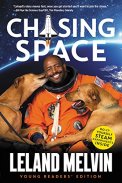

And here is an excerpt from the In the Classroom page
Consider Being an Astronaut
Do a little career exploration and determine if you have what it takes to be an astronaut.
What is NASA looking for in astronauts? Find out here: https://www.nasa.gov/audience/forstudents/postsecondary/features/F_Astronaut_Requirements.html
There is a short video where astronauts talk about what kinds of people NASA looks for in astronauts here: https://youtu.be/4fXsAvv96Gw.
Take an Astronaut test – would you be a good candidate? https://www.astronaut-test.com/quiz
NASA has a behind the scenes look at astronaut training from about 15 years ago. Poke around the information and read entries from an astronaut trainee’s journal here: https://spaceflight.nasa.gov/shuttle/support/training
Then answer the question. Do you have what it takes to be an astronaut? Why or why not?
Pick astronaut or another career and do a little research into it.
What kind of skills and/or training does it require?
What is a typical workday like?
What is the pay range?
One place to look for career information is the U.S. Bureau of Labor and Statistics: https://www.bls.gov/k12/students
I think you get the picture. STEM Tuesday has TONS of great resources!
For the James Webb Space Telescope go HERE
For climate change go HERE
For examples of amazing people of all backgrounds doing amazing things check out our Diversity in STEM topic HERE


We have almost FIVE YEARS of awesome content, right at your fingertips and it’s all free!
But if there is a topic we’ve missed, please let us know.
STEM ROCKS!!


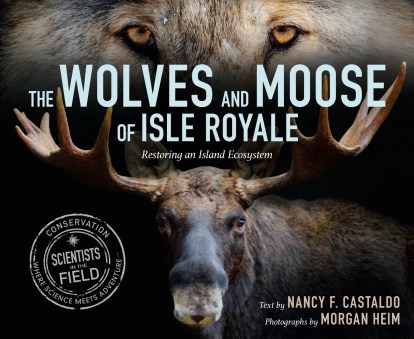 Nancy Castaldo: This is a book project that began decades ago in my college ecology class. That is where I first heard of the important predator/prey study on Isle Royale. I was intrigued by this long study and have followed it ever since. When I found out that wolves might be released on the island I started to formulate the book project.
MKC: Care to share a favorite research moment from your time on Isle Royale?
Nancy: Spending time on the island was wonderful. I truly can understand why so many people return to the park after visiting. Photographer Morgan Heim and I stayed on the island, got up super early every morning, and hiked well past 10 pm each night to complete this book. The remoteness of the island provided some travel challenges, but they were well worth it. It is an exceptional place that deserves protection. I only wish we had more time there. It was a great experience. My favorite moment? Perhaps when we were in the forest with Cara as she was investigating wolf pings and we came across a spot where a moose had bedded down. We could see where it had folded its legs to rest. And beside this spot we found one where a wolf had bedded down. They were side by side. Of course, it is highly unlikely they were there at the same time. I couldn’t resist curling my body up to fit in those spots where they had rested. And then, I coaxed Cara and Morgan to do the same. It filled me with lots of feelings of connection and also fun. Those moments were so unexpected.
MKC: To whom did you imagine yourself writing to while drafting the book?
Nancy Castaldo: This is a book project that began decades ago in my college ecology class. That is where I first heard of the important predator/prey study on Isle Royale. I was intrigued by this long study and have followed it ever since. When I found out that wolves might be released on the island I started to formulate the book project.
MKC: Care to share a favorite research moment from your time on Isle Royale?
Nancy: Spending time on the island was wonderful. I truly can understand why so many people return to the park after visiting. Photographer Morgan Heim and I stayed on the island, got up super early every morning, and hiked well past 10 pm each night to complete this book. The remoteness of the island provided some travel challenges, but they were well worth it. It is an exceptional place that deserves protection. I only wish we had more time there. It was a great experience. My favorite moment? Perhaps when we were in the forest with Cara as she was investigating wolf pings and we came across a spot where a moose had bedded down. We could see where it had folded its legs to rest. And beside this spot we found one where a wolf had bedded down. They were side by side. Of course, it is highly unlikely they were there at the same time. I couldn’t resist curling my body up to fit in those spots where they had rested. And then, I coaxed Cara and Morgan to do the same. It filled me with lots of feelings of connection and also fun. Those moments were so unexpected.
MKC: To whom did you imagine yourself writing to while drafting the book?



 What information do the text boxes provide on their own? Imagine if there was no picture of the otter at all, and this information was conveyed in writing only. Would it work? How does the image of the otter add to your understanding of how the otter is built to hunt?
 Kirsten W. Larson used to work with rocket scientists at NASA and now writes about women in science and much more. Her books include the WOOD, WIRE, WINGS: Emma Lilian Todd Invents an Airplane, illus. Tracy Subisak and A TRUE WONDER: The Comic Book Hero Who Changed Everything, illus. Katy Wu. Learn more at