 Today, I’m bubbling over with excitement to chat with Mixed-Up Files contributor Heather Murphy Capps about her middle-grade debut, Indigo & Ida. Hailed by Kirkus as “… A satisfying story that demonstrates how the past can shed light on the present,” and by author Chad Lucas as “brimming with passion on every page,” the novel–which earned a star from Booklist–is out now from Carolrhoda Books/Lerner. Want a chance to win a copy? Details below! 👇
But first…
A Summary of Indigo & Ida

When eighth grader and aspiring journalist Indigo breaks an important story, exposing an unfair school policy, she’s suddenly popular for the first time.
The friends who’ve recently drifted away from her want to hang out again. Then Indigo notices that the school’s disciplinary policies seem to be enforced especially harshly with students of color, like her. She wants to keep investigating, but her friends insist she’s imagining things.
Meanwhile, Indigo stumbles upon a book by Black journalist and activist Ida B. Wells―with private letters written by Ida tucked inside. As she reads about Ida’s lifelong battle against racism, Indigo realizes she must choose between keeping quiet and fighting for justice.
Interview with Heather Murphy Capps
MR: Before we start Heather, I’m beyond thrilled to welcome you to the Mixed-Up Files as a published author! Woohoo!
HMC: Thank you so much! Those words … “published author” … will never get old and positively send delicious thrills down my back!
Inspiration: Ida B. Wells

MR: First, I have to tell you how much I enjoyed Indigo & Ida. What was your inspiration behind this wonderful book?
HMC: I’m so excited and grateful you like Indigo and Ida … thank you! My inspiration came from several different places, but this book truly began as an exploration of the themes of friendship and finding the courage to speak your truth.
First, I wanted to investigate friendship from the perspective of a girl who’s seeing for the first time that sometimes friends you thought you’d keep for a lifetime turn out to be friends you keep for just a season.
The grounding in history came from a story I learned about Ida B. Wells: that she helped Alice Paul and her team organize and prepare for the Woman’s Suffrage Parade in 1913. But when the big day arrived, Paul told Wells that she would have to march in the back of the parade with the other Black women, because to march up front alongside the white women would anger Southerners. Paul didn’t want to risk losing the strong political power of the Southern women.

When I learned this story, I was overwhelmed. I felt so deeply, so viscerally, a sorrowful connection to Ida in that moment when she realized her friend wasn’t the person she thought she was. We’ve all been there, and even when the stakes aren’t as high as these, it still hurts, and the betrayal is still very real. I couldn’t stop thinking about Ida and about other questions that percolated up in the next few days: Why had I never learned this particular fact before, when I learned about the Woman’s Suffrage Parade? Why was this story omitted from the teaching of that important milestone for women’s suffrage?
That was when Indigo—a journalist like Ida—was born, along with the idea that I wanted to write a story that would connect the two across the centuries.
Speak Your Truth

I also wanted to carve out my own space within the Black American literary tradition that illustrates the concept of the two voices—public and private. (W. E. B. DuBois’s “double consciousness.”) For me, that idea is similar to “code switching.” There’s the outward voice, the public-facing personality that covers up the parts of us that don’t fit in a default white society, and then there’s the private personality and voice, which is the one where we feel safe being ourselves within our own community. Indigo has two voices—the one she uses at school where she’s trying to fit in and where she’s shushed when she tries to speak out about the injustice she finds, and her private voice, which is empowered by Ida’s voice urging her to speak her truth.
Crusade for Justice

MR: Indigo discovers a copy of Crusade for Justice, the autobiography of Black journalist and civil-rights activist Ida B. Wells, during a stint in school detention. What is it about Wells’ autobiography that inspires Indigo to investigate the injustice experienced by Black and brown kids at her school? Also, can you tell readers what impact Wells’ autobiography has had on you personally?
HMC: Wells’s autobiography is wonderful reading. She’s fearless and dogged in her investigations—as one of the first investigative journalists in this country, she set the bar high. I’m in awe of her work and want to honor her by doing my best to follow in her footsteps, even though I am no longer a reporter.
One key word in her autobiography that stands out to Indigo–and to me too—is the word “outrage.” Ida is outraged by rampant injustice and by all who willfully ignored or perpetrated these injustices. That word galvanizes Indigo’s desire to push for the truth. I don’t necessarily want to live a life of constant outrage, but I do want to be vigilant about speaking up and fighting injustice.
Letters from Ida

MR: Indigo finds letters written by Ida B. Wells tucked inside the pages of Wells’ autobiography. What made you choose this device to tell Ida’s story—and, as an extension, Indigo’s?
HMC: The sheaf of letters Indigo discovers inside the autobiography are from Ida B. Wells to an unidentified recipient. In these letters, Ida tells the story of her life and narrates some of the challenges she faces—and it’s these stories that empower Indigo to use her voice like Ida did, to shine a light of truth on the injustices of the world.
Key moments in Indigo’s story develop as she reads about the pivotal moments in Ida’s life, and we see many parallels between these two characters who live in completely different times but are connected by a desire for justice as well as by evidence of this country’s ongoing struggle with bias and racism.
Originally, I wanted to show Ida’s life story through quotes from her own body of work, including her autobiography. But even though Ida was a gifted writer, her style is from another century. I needed to ensure her story was accessible to a 21st century audience, so I wrote the letters myself, doing my best to reflect Ida’s distinctive voice.
Fact Versus Fiction

MR: I loved how you wove in real-life events from Wells’ life—including an incident in which, at age 20, Wells bit a white train conductor who forcibly removed her from her seat in a “whites only” car. (She later sued the railroad for violating equal accommodation statutes and won $500 in damages.) This letter, among others, is fictionalized but sounds incredibly authentic. How did you achieve this feat?
HMC: Isn’t that an amazing story? It’s one of my favorites, even though it doesn’t end well. The $500 in damages was later clawed back, and Wells was accused of harassment for pursuing the lawsuit.
To find Wells’ voice, I read her work as deeply as I could to educate myself. To articulate her voice, I talked out loud to myself. (If anyone were to observe me, they’d seriously have a good laugh–ha!) So, I walked around my living room, talking out loud, and listening for Ida’s voice. I tried to live various moments through her eyes, and play out how she must have felt. I then translated those reactions, along with her own observations, into her letter.
The Source of the Matter

MR: What did your research process look like? I know you used Wells’ autobiography as a starting point, but what other sources did you find useful? (For more on the life of Ida B. Wells, check out Heather’s Mixed-Up Files post here.)
HMC: I read as much of her work as I could lay my hands on! I researched during Covid, which meant I wasn’t able to research beyond what I could access online and in physical copies of her books and pamphlets. That said, we are extremely fortunate in that so much of her work does still exist, and I was able to read her seminal investigative reports: Southern Horrors and The Red Record (both on the lynching crisis in America). I also read collections of her newspaper columns and her Memphis diary.
The “Double Consciousness”
MR: In addition to Indigo’s quest for the equal treatment of Black and brown students, the theme of popularity looms large. How does Indigo’s need for popularity bump up against her quest for social justice?
HMC: This internal struggle she faces is part of my exploration of the “double consciousness.” Indigo—like so many of us—just wants to be liked and to hang onto dear friends she thought she’d have for a lifetime. This quest for popularity is her public voice, the one that craves acceptance and assimilation. Her private voice is the one she usually hides because it’s not the one she thinks will serve her quest for popularity. But it’s the one that deeply feels outrage at the unfairness of her school’s discipline policy, and ultimately, it’s the one she feels empowered to use because of Ida’s letters.
MR: Indigo is a strong, resourceful, and highly relatable character. How were you like Indigo as a child? How were you different?
HMC: I wish I’d been as brave as Indigo! I definitely struggled with the desire to be popular. I wasn’t one of the popular kids, not by a long shot. I often felt like I was hiding large parts of myself just to fit in with the rest of the students at my school, and Indigo feels that way too.
Heather Murphy Capps Reporting


MR: You were a television news journalist for almost two decades. How did your career in journalism prepare you to be a novelist? Also, what was the most exciting (or weirdest!) story you ever reported?
HMC: I loved being a reporter; it was so interesting and edifying to get such a close view of the major events that tell the stories of our times. An invaluable skill I honed over the years was being able to research deeply and narrate nuanced concepts for a general audience. I draw on that when I write.
The weirdest or most exciting story I ever reported… WOW. Great question. There are a few I can’t mention in a middle-grade blog (!!), but I’d have to say the greatest opportunity I had to tell important stories came when I was embedded on three different Navy ships in the beginning of Operation Iraqi Freedom. On the opening night of the war, I was flown to the aircraft carrier USS Theodore Roosevelt, which launched the first F-14’s and F-18’s of the conflict. While I personally opposed our country’s involvement, I was committed to honoring the work and sacrifice of our service members.
Path to Publication

MR: As a follow-up, can you tell us about your path to publication? Was it smooth sailing or bumpy seas?
HMC: Aaahhh I love being able to be transparent about the fact that Indigo and Ida is my FIFTH book. Not smooth sailing! I faced a lot of rejection, but I kept working hard to improve my craft, and I am still working hard.
I often joke about the fact that I must have something karmic I am trying to learn in that my two primary life occupations—news reporting and novel writing—are both notoriously hard to break into and full of rejection!
Writing Rituals

MR: What does your writing routine look like, Heather? Do you have any particular writing rituals?
HMC: I like to light a candle and, if it’s cold out, light a fire. In the summertime, I write on my sunporch and take breaks to watch the birds outside (and walk around my backyard talking to myself, ha!) It’s a wonderful view, truly my happy place. Sometimes when the timing works out, I also check in with some of my writing friends and we sprint together. On days when I am pressed for time (kids! Day job!) I just jump in at odd moments and do as much as I can, even if it’s not perfect.
#WNDMG: The Backstory

MR: You curate the popular Mixed-Up Files series, “We Need Diverse Middle Grade” (#WNDMG). What was the impetus for this series? How can interested MG authors contribute?
HMC: I started the series because I felt that, while we have a team of truly inclusive, equity-minded contributors who value and work toward diversity in publishing, we needed to do more. We needed a dedicated space on the blog that centered diverse voices and spaces—and in the days following George Floyd, that need felt crucial to me. So, our admin team collaborated on ways to best make this happen, and here we are—WNDMG is about to celebrate its third anniversary and now has a dedicated team of four contributing authors! We do accept guest posts from diverse authors but rely mostly on the diverse voices from our WNDMG and MUF teams.
Next Up: Magical Realism
MR: Your next MG novel, The Rule of Three (out Fall 2024 from Carolrhoda/Lerner), features a biracial seventh-grade boy who conjures smoke in stressful moments. Can you tell us a bit more about the novel? Also, what is it about magical realism that sparks your imagination?
HMC: The novel follows Wyatt and his father as they navigate the discovery of and healing from a unique genetic expression of generational trauma—they literally create smoke. It’s a tough subject, and I tried to honor all its inherent complexity but also tried to embed moments of lightness. Talking about generational trauma is painful and if you’re Wyatt, you can only take so much before you have to just throw a baseball or crack a joke.
What I love about magical realism is that this literary style is historically unique—used only by storytellers coming from marginalized communities with the intent to use everyday magic as a way to cope with the tragedy of oppression.
MR: What are you working on now? Can you give us a hint?
HMC: I am working on TWO things right now, believe it or not! One is an exciting adventure, and the other is not middle grade … but that’s all I can tell you. 🙂
Lightning Round!

MR: And finally, no MUF interview is complete without a lightning round, so…
Preferred writing snack?
Tea with almonds or Twizzlers or jellybeans or cookies. I have a HUGE sweet tooth!!
Coffee or tea?
Both!
Cat or dog?
I have two cats, so I guess cat. But I love dogs too!
Zombie apocalypse: Yea or nay?
Sure, why not? Lots to write about, but honestly I’d personally become a vampire or a witch instead. I like the idea of being able to run fast and have super-attuned senses.
Superpower?
Teleporting!
Favorite place on earth?
In front of a fireplace or a lake with all my people.
If you were stranded on a desert island with only three things, what would they be?
My laptop, a grape vine I could cultivate to start a vineyard, and a pair of running shoes.
MR: Thank you for chatting with us, Heather—and congratulations on the publication of Indigo & Ida. I thoroughly enjoyed it, and I know MUF readers will too!
HMC: Thank you so much, Melissa—what a fun interview! I so appreciate the chance to chat! I hope our readers will consider buying Indigo and Ida or recommending it to their local public and school libraries!
Bio

Heather Murphy Capps writes about history, social justice, science, and magic. She is a mother of two, an Army wife, and an education equity activist. As a biracial author, Heather is passionate about creating diversity in publishing. Learn more about Heather on her website and follow her on Instagram and Twitter. To join Heather’s mailing list, click here.
Like this:
Like Loading...



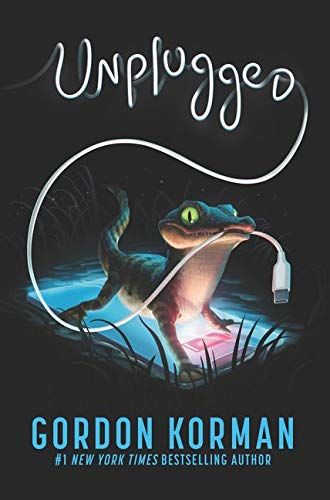 Genre Swapping: Take a familiar setting from a favorite book or class novel study and re-imagine the time and place by changing the book’s genre. For example, what if a modern comedy like Gordon Korman’s Unplugged was actually a high fantasy? Or if Lauren Wolk’s historical Wolf Hollow was contemporary? Build this “reset” world, keeping premise details in mind.
 Narrative Nonfiction Worldbuilding: Apply worldbuilding analysis to a work of narrative nonfiction as a way to glean factual detail and comprehend the setting’s full impact on the tale, especially one in which the setting seems distant or almost otherworldly, like Race to the Bottom of the Earth: Surviving Antarctica by Rebecca E.F. Barone.
 The End of the Story

