Posts Tagged Diverse

Blasts From the Past: Diverse Historical Fiction

As a kid, I loved reading historical fiction. In my day, most of these stories centered on Europe and a war. I felt transported to other times and places, and was introduced to characters my age confronting challenges of survival. I enjoyed connecting with kids from the past who, with their friends and families, bravely faced difficulties.

Now, we have more novels told by historically underrepresented voices that offer perspectives on a wide variety of events. Rudine Sims Bishop described how books can be mirrors to a readers life, or can build empathy through windows where readers can view lives of others, or may provide sliding doors where readers can step into another world and immerse themselves in a new reality.

Here, I offer six wonderfully written, diverse titles that serve as a portal to another time.

A Sea of Lemon Trees

A Sea Of Lemon Trees by Maria Dolores Aguila, Macmillan, 2025, 273 pp.

This novel in verse is inspired by the true story of Robert Alvarez and the Lemon Grove Incident where one child’s courage to stand up for what is right and the determination of the Mexican community will transport readers to the challenges confronted by Robert in 1931 San Diego. Young Roberto was chosen to speak up about the horribly unfair conditions in the separate school for Mexican immigrants. This is the uplifting story of how his activism brought great changes to the “Americanization” efforts.


Zarina Divided

Zarina Divided by Reem Faruqi, Harper Collins, 225, 326 pp.

Zarina’s idyllic life in 1947 Poona, India is abruptly ended when her Muslim family moves to Pakistan during the Great Partition. Lyrical verse paints a realistic picture of Zarina’s hardships, including acts of violence and racism, as she journeys by train and boat to a new home. Just as Zarina begins to settle into her new life, she makes a big mistake. Her family agrees to let her go to boarding school, where a whole new set of challenges confront her. This novel brings a fresh perspective to the religious divide of a country.


Nine Moons

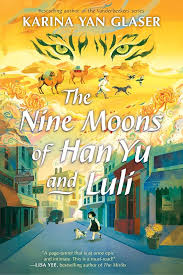
The Nine Moons of Han Yu and Luli by Karina Yan Glasser, Harper Collins, 2025, 420 pp.


Han Yu and Luli Lee live 1200 years apart, yet they both share a goal: they go to great risks to save their families. In 731 a plague threatens Chang An, China, and Han Yu must trek across the Silk Road to fulfill a promise and find a cure. In 1931, New York’s Chinatown, Luli starts up her own bun business to bring her family’s restaurant back from the brink of foreclosure. Big themes and small details – like buns and birds – connect these two stories. The ties that bind Han Yu and Luli across centuries are an unforgettable surprise.


Seabird

Seabird by Michelle Kadarusman, Pajama Press, 2025, 199 pp.

Twelve-year-old Katina brings nineteenth century Indonesia (also known as the Dutch East Indies) to life through her letters to her best friend and her passion for learning. Inspired by the real-life Javanese noble turned activist, Raden Adjeng Kartini, this novel depicts how girls were given little freedom. Noble-born Kartini was confined to her house at twelve until she was to be married. Educated, Kartini turned to her best friend, Letsy, who had returned to Holland for help. Through her skills as a writer, Kartini speaks out, and like a seabird, gets free of her cage, and becomes a celebrated advocate for education.


How to Say Goodbye in Cuban

How To Say Goodbye in Cuban by Daniel Miyares, Random House, 2025, 223 pp.

Readers get a visual and personal view of Castro’s Revolution in Cuba in this emotionally gripping graphic novel. Based on the experiences of the author’s father, readers see the uncertainty and fears Carlos faced as a child while his family was being threatened for owning land. Major events in Castro’s path to power are explained in a straightforward manner. Miyares does an excellent job describing the differing opinions of Castro that the Cubans held.


Will's Race For Home

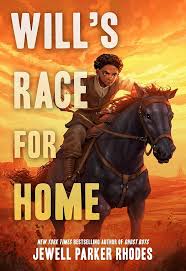
Will’s Race For Home by Jewell Parker Rhodes, Little Brown, 2025, 196pp.

This is a Western like no other. It’s 1889, and Will has persuaded his father to allow him to accompany him on the treacherous trek from Texas to Oklahoma. It’s been several decades since the Emancipation Proclamation, yet his father still does not have the right to own land – unless he takes advantage of the Oklahoma Land Rush. The journey is difficult not only because of the difficult terrain, but also because of the racism, poverty, and violence Will and his father experience along the way. Belle the mule, and frequent illustrations add charm to the story.


WNDMG Wednesday- Author Interview with Marzieh Abbas

I’m so excited to be able to introduce you to author Marzieh Abbas. Marzieh is a celebrated award-winning author of so many books- from chapter books to picture books to beautiful board books. I have loved so many of her books, and my kids love them too!

And I am so excited to interview her about her debut gorgeous new middle grade novel in verse!

Her title is called “Aarzu All Around” which launched from Salaam reads/Simon Kids on July 29, 2025.

I love Muslim representation and verse novels, and I cannot wait to read this one!

About Aarzu All Around:

Description taken from online:

“Heartfelt and triumphant.” —Rajani LaRocca, Newbery Honor–winning Author of Red, White, and Whole

A cricket-loving Pakistani girl stifled by patriarchal expectations disguises herself as a boy to get a job to pay her sister’s medical bills in this “lyrical action-packed debut full of determination and grit” (Reem Faruqi, award-winning author of Golden Girl).

Living with her aunt and patriarchal uncle in Karachi, Pakistan, recently orphaned twelve-year-old Aarzu detests the way she and her younger sister get treated like extras and excluded from all the fun stuff. Aarzu dreams of playing cricket, just like her male cousins and the neighborhood boys in the streets, but her uncle will hear nothing of it. According to him, girls ought to master the art of making round rotis, not play sports.

When her sister requires urgent medical treatment but finances are tight, Aarzu decides to earn money herself. She hears of a part-time job at a bungalow near her school—but it’s only open to boys. Aarzu has no choice but to disguise herself as a turban-wearing boy to get the gig.

Now, Aarzu must find a way to balance school, work, chores, and secret cricket practices—all without burning out or getting caught by her uncle—or else her dreams of making the girls cricket team and her quest to save her sister will crumble around her.

Interview with Marzieh:

I loved getting to talk to Marzieh about her new book and I know you will enjoy meeting her and Aarzu as well.

MA: Thanks for having me, Shifa! I’m currently using one of your books as a mentor text, so it feels extra special to be here, chatting with you today!

SSS: Thank you!

First off- what a gorgeous cover. I loved how you included cricket. I actually don’t know anything about cricket, and I am sure so many readers will be learning a lot about it! Did you set off knowing you wanted to write a book about this sport? (side question: do you play!)

MA: I love the cover too! Chaaya Prabath is so talented, and I love that she read (and loved) the whole book despite having a brief for the elements I wanted on the cover. I’ve been extremely lucky with all the talented artists and teams I’ve gotten a chance to work with.

Coming to the second part of your question, I’ve been getting messages from readers about how much they enjoyed learning about cricket. There’s a short section where I explain how it’s played and who doesn’t love learning about a new sport?

Some background to why I chose to write about cricket: I was born, and grew up in the UAE till I was 12. When we moved to Pakistan I turned extremely patriotic— suddenly, I felt like I belonged and it wasn’t hard falling in love with cricket in a cricket-crazy nation. I mean, I used to watch the game with my Abu, my dad, even when we lived in Dubai, but experiencing the atmosphere in Karachi during a match is a completely different experience. The whole muhalla, or neighborhood, throbs with excitement! When I decided I wanted to set the book in Pakistan, I knew I wanted it to center around cricket. I never got to play, though. In school, we played baseball and netball, and growing up, there wasn’t a girls cricket team in Pakistan. I used to watch the neighborhood boys play and remember wanting to, but not being allowed (by the boys) to play. After I got married, I played with my nephews and nieces sometimes, but never with proper rules, always just for fun.

SSS: As a mom of three Muslim girls, I love Muslim representation to empower them and make them feel proud of themselves. And I love the hijab on the cover too! How was the process writing the hijabi and Muslim rep in the book?

MA: Oh, it came very naturally to me. I’ve been wearing the hijab since I was nine. Despite living in Muslim countries, I have often felt judged for my hijab. I purposely didn’t want all the girls in my novel to be hijabis, because I wanted to show we Muslims aren’t a monolith in our practices. I also wanted to show girls who were curious about Aarzu’s hijab, because not everyone understands the significance it holds in our faith, and this was an opportunity to showcase my faith and beliefs. I hated being questioned about my hijab when I was younger and honestly got tired of answering questions like ‘aren’t you hot in it?” or “can you hear us clearly?” Even though those questions sometimes came from a place of curiosity and concern. My favorite thing to do once I’ve finished a book is write the dedication and this is what I have down for Aarzu All Around:

For all the hijabis.

May our stories be celebrated,

Our voices heard,

And our dreams realized.

Ameen.

SSS: I love reading books set in other countries. How was it writing the book set in Pakistan? Was it fun to include details?

MA: It was! I found myself rediscovering sights and sounds I used to find fascinating when I was new to Pakistan. The bazaars and alleyways are a vibe and I wanted to capture all the beauty in the chaos for foreign readers! The flowers, the birds, the foods, the scents, everything!

SSS: I know your book is about girls overcoming misogyny, which is a problem not exclusive to Eastern society but is present unfortunately in different forms around the world! Can you tell us a little bit more about how Aarzu deals with this issue?

MA: Aarzu and her younger sister, Sukoon, have to deal with a misogynistic uncle, in whose house she stays after her parents pass away in an earthquake. While this may come across as a stereotype to readers who only read the book’s description, I go into a lot of detail in the book to make it clear that not all eastern men are the way that the media frames them to be. We often confuse cultural norms with religious rulings, which is really unfair to Islam. I wanted to make it clear that Islam gives a lot of respect to women, and our Holy Prophet (peace be upon him) lived this in his dealings with his daughter, Fatimah, and other women. I also draw upon other stories from the Quran and the strength of women mentioned in several chapters of the Quran, and significant women in Islamic history—- it is their stories of strength and resilience that Aarzu uses to eventually come clean… sure she makes some mistakes along the way, hiding her choices (and thus lying), but all along she feels the prick of guilt because she knows her religion teaches her better. But, I had to keep her character real, flawed, and believable.

Link to order here.

Writing Process

SSS: When did you start writing the story and was the process a long one?

MA: I took about six months to write this novel. I was also simultaneously learning how to write this longer form– learning about where which beats in the story should fall and how to weave in backstory and all that fun stuff. So, no, I wouldn’t say it took long to write. I did spend a lot of time revising once i got the bones of the story down.

SSS: How is the process of writing a novel in verse different from picture books and chapter books?

MA: I feel writing longer form is challenging because of the number of threads and themes you have to keep track of. You also need to significantly develop side characters and keep track of what you reveal when. Since I was coming from a background of writing picture books (which are just 500ish words) and early reader chapter books (my Nadia & Nadir series), I needed a way to keep myself more organized. I set up a spreadsheet to keep track of the timeline as I revised and also used a wall in my house to colorful sticky notes for each act in the novel. This way I could move things around and add and subtract scenes as I revised.

SSS: Any advice for fellow middle-grade authors?

MA: I’d say find yourself 3-4 beta readers and do get feedback on your premise before you begin writing– it always helps to know what people think of your initial idea and what parts aren’t making sense and what parts are working. Once you start writing, I feel it’s good to hold off on feedback until you’re done with a first draft. With my current WIP I got feedback too early and now feel torn about which direction to go in. It’s back to the drawing board and some journaling for me to figure out what I really want my story to be about–what message do I want my readers to takeaway? What discussions do I want my book to spur?

Bonus!

SSS: Bonus question! Is there anything I haven’t asked that you’d like to share with us?

MA:How is it living on the opposite side of the globe to where your book releases?

Answer: It’s so tough! I don’t get to physically see my book on bookshelves and don’t get to do readalouds or booksignings. It isn’t always convenient to travel and connect with your target audience. Everything has to be virtual and isn’t as special as it would be in-person! Marketing and getting booked for author visits is also a struggle, because it’s so much easier to reach out if you live/can travel to different libraries and schools in your vicinity. My books also take a while to become available locally and so even though I have friends wanting to support my work, there’s a big lag. But I’m so grateful to be doing what I do.

SSS: What else can we look forward to from you?

MA: I have a new nonfiction picture book, THE CAMEL LIBRARY, A TRUE STORY FROM PAKISTAN, and a board book, RADIANT RAMADAN, releasing this year.

Thank you Marzieh for joining us!

For more Pakistani rep in MG books check out these two interviews, here and here!


About Marzieh Abbas:

Marzieh Abbas is a baker turned award-winning author. She loves adding magic to her creations, from a seven-layered rainbow cake to the books she writes for children all over the world. Her work is inspired by her Pakistani culture and Muslim heritage. Marzieh is a member of Julie Hedlund’s 12×12 Picture Book Challenge and a graduate of the Lyrical Language Lab and Children’s Book Academy. She is the author of the popular chapter book series Nadia and Nadir and the middle grade novel Aarzu All Around. A Dupatta Is… is her debut picture book and she has several upcoming board and picture books. She occasionally writes under the name Marzieh A. Ali. Marzieh enjoys learning new skills, jumping rope, sipping chai, and observing nature. She dreams of owning a talking parrot someday. But until then, she lives in Pakistan with her husband and children who inspire her daily. You can find her on the web at MarziehAbbas.com.

WNDMG Wednesday: Author Interview with Aida Salazar

Ultraviolet cover with a young Latina boy in technicolor

Wndmg logo

WNDMG Wednesday: Author Interview with Aida Salazar

Welcome to WNDGM Wednesday. I’m so excited to be able to introduce you and interview accomplished award-winning author Aida Salazar today. Aida’s newest book is Ultraviolet (Scholastic) and it launches on April 2, 2024.

I absolutely love anything Aida writes. I am specifically a huge fan of her verse novels- A SEED IN THE SUN and LAND OF THE CRANES made me feel so much emotion while reading, and I hung onto every word of gorgeous poetry.

I cannot wait to dive into this new book!

I encourage everyone to buy a copy for themselves and their classrooms and libraries.

ultraviolet cover with a young Latina boy

About ULTRAVIOLET

Description taken from online:

Sometimes life explodes in technicolor.

In the spirit of Judy Blume, award-winning author Aida Salazar tells it like it is about puberty, hormones, and first love in this hilarious, heartwarming, and highly relatable coming-of-age story. Perfect for fans of Jason Reynolds, Kwame Alexander, and Adib Khorram.

* “Stunning…A story that sings to the soul.” ―Kirkus Reviews, starred review

* “A compassionate verse novel about first love, heartbreak, and vulnerability. ” ―Publishers Weekly, starred review

“This important and intensely relatable tale perfectly captures the angst of growing up. A true gift to maturing tweens everywhere.” ―Ernesto Cisneros, Pura Belpré award-winning author of Efrén Divided

For Elio Solis, eighth grade fizzes with change―His body teeming with hormones. His feelings that flow like lava. His relationship with Pops, who’s always telling him to man up, the Solis way. And especially Camelia, his first girlfriend.

But then, betrayal and heartbreak send Elio spiraling toward revenge, a fight to prove his manhood, and defend Camelia’s honor. He doesn’t anticipate the dire consequences―or that Camelia’s not looking for a savior.

Hilarious, heartwarming, and highly relatable, Ultraviolet digs deep into themes of consent, puberty, masculinity, and the emotional lives of boys, as it challenges stereotypes and offers another way to be in the world.

Interview with Aida:

I loved getting to talk to Aida about her new book and I think you will enjoy meeting her and Elio as well.

SSS: What a heartfelt description! I was intrigued right away- and I cannot wait to see how Elio’s story unfolds.

 What is the inspiration behind ULTRAVIOLET?


AS: The initial idea for the book came from my son, João, and his friend, Mario, who after I’d written about a Latina girl’s coming of age in The Moon Within, insisted that I write one from a boy’s perspective. Mario said, “Ms. Aida, you have to write The Sun Within.” “Yeah, mom, when are you going to write a book for me?” my son added. They wanted to see a book that showed their inner lives and brought up conversations about puberty, first crushes, gender, and rites of passages—conversations that echoed who they were as cis Latino boys.

SSS: As a mom of an almost-teenage boy, I am so protective over him. He is such a sweet emotional boy, and I love that the description honors the emotions of young boys. What emotions do you think young men feel as they grow into maturity?

AS: Our patriarchal societies have made boys victims as much as girls and women and gender expansive people. We don’t allow boys space to explore the tender parts of themselves – love, anger, rejection, grief, and hormonal confusion. They are raised to bury feelings—to be “macho” and “man up.” We rarely provide safe spaces and ways for them to move through tough feelings or offer guidance on how to rise above them. It is a huge tragedy, really. When boys deny this very human part of themselves, it deeply impacts their relationships as they grow into men. And in that loss, in that wound, they sometimes treat others with the same hurt they feel or worse. Girls and women often bear the brunt of that wound, as we have seen by the violence and wars in our society today. Through Ultraviolet, I want to offer boys examples of undoing toxic masculinity and how they can find strength through nurturing their sensitivity and vulnerability.


SSS: I love your answer! As a mom of a young tween who is Syrian American, I worry about how the world will view my little boy, especially with stereotypes about Muslims and Arabs. As a Latine author, does your role as a mother play a part in the stories you write? How does Elio’s book play out differently than it would for someone who was not Latine?

AS: Absolutely. I have a teen son and daughter and their lives as bi-cultural, multi-racial youth inspire me. What they have to deal with as young people is unprecedented in the history of humanity because of technology and as our racism and intolerance grows. Brown and Black children and other kids of color in particular are ever more vulnerable. But I do believe in the power of education, collective organizing, and efforts to make the world a better place. Young people have a strong moral compass and I only hope that is going to be the guide that will help them not only navigate but rise above and help solve some of the most troubling issues in the world. And some things, like love, heartbreak, and puberty are evergreen. I am hopeful that the universal experiences like those found in Ultraviolet will help boys (no matter the background) understand their hearts and where they might contribute to their own and others healing through justice.

SSS: The subject of puberty is such an important topic! I am excited to see more books centering these important coming of age stories for our young ones who may feel confused as their body’s changes.

AS: Indeed! There are only a handful of books like Ultraviolet. I had a conversation with Varian Johnson and John Schu at a conference about the need for a book like this. There was so much to explore in middle grade fiction and so much of it was hilarious! I challenged them to write one because I felt like it needed to come from a boy/man’s perspective. I think John might have a memoir coming which sounds beautiful. But when my son and his friend specifically asked me for it, I knew I couldn’t say no. This one, is my interpretation of a boy’s life as a mother and feminist.


SSS: Will there be more Elio (or other middle grade verse novels) in the future?

AS: Yes! I have a secret project that might involve Elio and might involve another character from another of my books. Writing these characters are pure joy. I know them so well and can’t wait to write them a new narrative with new adventures in growing up. Of course, in verse!


SSS: Ahhh! Amazing- I cannot wait!!


Link to preorder here.

Writing Process


SSS: When did you start writing Ultraviolet and was the process a long one?

AS: Ultraviolet was actually a graphic novel before it was a verse novel. I made the move on the suggestion of my editor at Scholastic, Tracy Mack. I struggled to transition from one to the other but then I gave it a shot. Once I wrote the opening poem, I was hooked on Elio’s voice and couldn’t stop. I wrote the first draft in about three months but the editing process took another six months. We worked hard to get the story as clear, as fun, as poetic as can be.


SSS: Wow so interesting!

As a fellow middle grade verse novelist, I LOVE reading verse. How do you write your verse books- do they start out as verse in your mind while you write, or do they end up that way along the revision process (as happened with me!)

AS: Yes, the characters come in verse and stay that way. I am a student of Linda Sue Park’s philosophy of writing voice in fiction. She says that “voice is word choice, rhythm, and punctuation.” I explore this wisdom from a poet’s perspective. Writing poetry gives us all the tools we need to articulate these elements of voice with an extra layer of artfulness and intention. For instance, rhythm or the song or musicality of a line is crucial to poetry. Many fiction writers don’t think about this as deeply as poets. Also, poetry needs for us to use precise and economic language. To make a line artful. How you do that is what will set the voice apart. I try to make it so that each character can be their own person, with their own artful word choice, with their own song, certainly not mine or an adult’s, so they emerge as their own poet.

SSS: One hundred percent- poetry is so special and the voice in your books always stands out beautifully!

Any advice for fellow middle-grade authors? For Debuts?


AS: Lean on community, be tenacious, be okay to fail or be rejected, and give yourself grace. These things have made me continue in this business when times have been tough. Onward!

For more verse novels- check out this previous Mixed-Up-Files Post!

Bonus!

SSS: Bonus question! Is there anything I haven’t asked that you’d like to share with us?

AS: Ultraviolet though it might seem a light-hearted and somewhat superficial experience, really is about undoing so many hurtful practices. It takes a look at the reasons why we hurt others. There is a line in the book by Fernando, one of the leaders of the sons and fathers’ group that urges Elio to reflect when he wants to lash out against his ex-girlfriend, “Just because someone hurts you doesn’t mean you have to hurt them back.” I think about the relevance of this line and the current genocide of Palestinian people by Zionists. It is my hope that young people will understand that our wounds, as deep as they are, will never be resolved with violence. My intention was to write a feminist book for boys, to dismantle and free ourselves from these oppressive patriarchal ideas.

Thank you so much Aida for answering my questions and with such thoughtfulness and honesty! I hope everyone picks up a copy of your beautiful book.

picture of author Aida Salazar

About Aida Salazar:

Aida Salazar is an award-winning author and arts activist whose writings for adults and children explore issues of identity and social justice. She is the author of the middle-grade verse novels The Moon Within (International Latino Book Award Winner), Land of the Cranes (Américas Award Winner), A Seed in the Sun (Tomás Rivera Book Award), the picture book anthology, In the Spirit of a Dream, and the picture book biography Jovita Wore Pants: The Story of a Mexican Freedom Fighter (Caldecott Honor). She lives with her family of artists in Oakland, California.

Website: www.AidaSalazar.com    

Twitter: @aida_writes

Instagram: @aida_writes

TikTok: @aida_writes