
of Middle-Grade Authors

Posts Tagged cross-curricular

STEM Tuesday– Symbiotic Relationships– Book List

Symbiosis is a close and long-term biological relationship between two different species. Sometimes both benefit. Sometimes only one benefits. So you might want to study up before you develop that new “friendship” …

Natural Attraction: A Field Guide to Friends, Frenemies, and Other Symbiotic Animal,  by Iris Gottlieb

Watercolor illustrations combine with a humorous, scientific text to examine thirty-five odd and unusual symbiotic animal, plant, and bacteria relationships. It includes statistics, graphs, takeaways, and fun additional facts about mutualism, commensalism, and parasitism.


Symbiosis, by Alvin Silverstein

Photographs and a sprinkling of fun fact sidebars enhance the examination of plants, animals and fungi partnerships (both beneficial and necessary), symbiosis of numerous parasites and microorganisms (including Ebola and SARS), and the possibility of symbionts from space. The engaging text is supplemented with scientific terms, a glossary, and further research suggestions.


Partners in the Sea, by Mary Jo Rhodes and David Hall

You’ve probably heard about cleaner fish, but there are so many more undersea partnerships. There are fish that hang out in anemones, tiny crabs and shrimps that live inside sponges, and a bunch of animals that partner up with algae.


There’s A Zoo on You! by Kathy Darling

You share your body with more than a thousand microscopic species of bacteria, fungi, and other too-small to see organisms. Some are beneficial, such as tooth amoebas that eat bacteria. Others, like some fungi, take advantage of the relationship by benefiting at our expense.


It’s a Fungus Among Us: The Good, the Bad & the Downright Scary, by Carla Billups and Dawn Cusick

Most land plants live in a symbiotic relationship with fungi, and use the fungal web to share information with their plant buddies in the garden, field, and woods. Some animals develop beneficial partnerships with fungi, too – but others are attacked by fungal parasites.


Things That Make You Go Yuck! Odd Couples, by Jenn Dlugos & Charlie Hatton

Everything on earth is involved in a symbiotic relationship, some good and some bad. Amazing close-up photographs coupled with trivia questions, humor, sidebars, and a dash of gross-out facts makes this book on animal, plant, and microorganism adaptation and survival an entertaining and educational read about some unusual and creepy relationships.


Forest Talk: How Trees Communicate, by Melissa Koch

Trees are talking all around us, using an underground network of fungi and roots to communicate with one another. They also share chemical messages from their leaves, sending defense signals to other plants when pests attack.
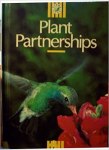
 

Plant Partnerships, by Joyce Pope

An examination of the dependence of numerous plants and lichen on other plants and animals for their habitat or survival. Covers instances of symbiosis, parasitism, gardening, and pollination by insects and mammals.


STEM Tuesday book list prepared by:


Sue Heavenrich writes about science for children and their families, from space to backyard ecology. A long line of ants marching across the kitchen counter inspired her first article for kids. When not writing, she’s committing acts of citizen science in the garden. She blogs about science for kids and families at archimedesnotebook.blogspot.com.


Maria is a children’s author, blogger, and poet passionate about making nature and reading fun for children. She’s been a judge for the Cybils Awards from 2017 to present. And a judge for the #50PreciousWords competition since its inception. Her poems are published in The Best Of Today’s Little Ditty 2017-2018, 2016, and 2014-2015 anthologies. When not writing, critiquing, or reading, she bird watches, travels the world, bakes, and hikes. Visit her at www.mariacmarshall.com.

STEM Tuesday — Earth Day 50th Anniversary Celebration– Interview with Author Mary Kay Carson


I’m excited to turn the tables on Mary Kay Carson, who usually does these interviews and invite her to speak about her newest (really cool) book,

Wildlife Ranger Action Guide 


Be a Hero for Local Wildlife!

Birds, insects, reptiles, amphibians, and mammals live all around you – and you can help protect them! Use the field guide pages to learn about which species you’re likely to see in your area. Then turn your backyard into a sanctuary by creating an animal-friendly habitat where wild residents can find food, water, shelter, and places to nest and raise their young.


Here is a spread of the inside of this awesome book:


A lot of the books you’ve written are about space or weather, how did you come up with the idea to write Wildlife Ranger?

Providing habitat for local wildlife is a real passion of mine. My husband and I live in the city, but chose to buy the 100+ year-old home we did fifteen years ago because of the acres of urban green space that surround it. We’ve been able to watch all kinds of critters take up residence as invasive plants has been removed, native plants encouraged and cultivated, dead trees left standing, and lawn abandoned! And I want kids to feel similarly empowered. To know that they can help wildlife right in their own backyards by providing one or more of the Big Four—water, food, shelter, and nests. Kids love animals, and presentations about how scientists are helping endangered animals are some of my most requested during school visits. And while kids are drawn to the well-publicized plight of pandas, tigers, and penguins, there isn’t a whole lot a young person in Iowa can do to help those faraway animals apart from raising awareness or donating money from a bake sale. But helping the wild animals that live all around us? That’s something anyone of any age can do.

I do love to write about space and weather! But biology is actually my background. My degree was biology (systematics and ecology), I served in the fisheries program as a Peace Corps volunteer, and I have quite a few animal books under my belt—Emi and the Rhino Scientist, The Bat Scientists, Do Sharks Glow in the Dark?, etc. But I’d have to say that it was my years of experience writing for Audubon Adventures that most inspired me to propose the idea of Wildlife Ranger Action Guide. I knew there were lots of fun projects out there for kids to do that would truly help wildlife.
 Was it difficult to do the research on each animal? Can you share something unexpected or unusual you learned about some of the animals.

Our home is filled with field guides, so I can’t say the research was difficult. I am embarrassed by how much I learned along the way, however. After all, these are animals I’ve seen most of my life. But somehow I never realized that green darners migrate nor knew that cottontails can have six litters a year. SIX! I’m ready for native wildlife trivia night!

Was it fun to write in this style, ie. more expository than narrative?
I like expository writing when it really speaks directly to readers. I try to imagine myself speaking to a group of kids thirsty for facts—but also a bit fidgety—when writing expository text. Clarity, brevity, and friendliness are paramount. I’m not a big fan of rambling, stream-of-consciousness, expository text for young readers.


This book seems to just beg for readers to take with them outside. Is that how you hope that readers use it?
This book should be filthy! Covered in dirt and warped from damp grass, smudged with paint and sticky with glue from projects. Seriously! A pristine copy of Wildlife Ranger Action Guide is just sad.


Can you give your readers tips on how to record data on animals they see or how to make journal?

Choose a format that works for you. Some kids are more likely to use something they’ve invested time into or personalized, like a Wild Notes Notebook. (Download template pages here.) But there are also apps for recording observations for the smart-phone savvy, too. In these times of global climatic changes, tracking when flowers bloom  and birds migrate has never been more critical.

Is there anything else you would like readers to know about the book?

My photographer husband, Tom Uhlman, did the photos of all the step-by-step kid projects. (A good number of the animal photos in the Field Guide sections are his, too.) Kudos to him for all the kid-wrangling of neighborhood and friends’ children! It was a fun challenge to think so visually. Not only how do I write up projects and information in ways that interest readers, but how (and what!) to show so they can successfully make a Paw Printer or Coffee Tub Nest Box by looking at the photos and text. Those photo shoot days were long and messy! Also, that’s our beloved cat, Shamu, on page 38.

Thanks so much for sharing your book with us, Mary Kay! If you’re interested in winning an autographed copy, please comment below or give this post a shoutout on Twitter and tag @mixedUpFiles and @marykaycarson.
********
Author Jen SwansonScience ROCKS! And so do Jennifer Swanson’s books. She is the award-winning author of over 40 nonfiction books for kids. Jennifer Swanson’s love of science began when she started a science club in her garage at the age of 7. While no longer working from the garage, you can find Jennifer at her favorite place to explore the world around her. www.JenniferSwansonBooks.com Jennifer is also the creator and administrator of #STEMTuesday and #STEAMTeam2020

STEM Tuesday — Earth Day 50th Anniversary Celebration– In the Classroom


It’s interesting that we’re celebrating Earth Day’s 50th anniversary in the midst of a pandemic that has much of the world shut down. As I write this post, my state is under a Stay-At-Home order, and has been for a while. While COVID-19 has been devastating for people, in a way, it’s been a gift to the Earth. With people taking a step back from their daily hustle and bustle, the Earth has breathed easier, and animals have felt safe to come out of hiding. Before the world restarts, it’s a good time to step back and take a look at our relationship with the Earth.

The books on this month’s list cover a wide range of topics, from inspiring environmental activists…

Support Independent Bookstores - Visit IndieBound.org

One Earth: People of Color Protecting Our Planet
by Anuradha Rao
With stars from Kirkus and Publishers Weekly, this book profiles twenty environmental activists of color from around the world. Their individual stories show how they went from kids who cared about the environment to leaders in their communities.


Support Independent Bookstores - Visit IndieBound.org

Friends of The Earth: A History of American Environmentalism with 21 Activities
by Pat McCarthy
A collection of inspiring stories about the women and men who had the foresight to preserve Yosemite, Mt. Ranier, the Grand Canyon, and the Florida Everglades. Through these stories, young readers form a picture of American environmentalism and conservation. McCarthy helps kids act with 21 eco-activities.


…to understanding the complexities surrounding environmental policy…

Support Independent Bookstores - Visit IndieBound.org

Eyes Wide Open: Going Behind the Environmental Headlines
by Paul Fleischman
This Green Earth Book Award title offers a wake-up call for middle-grade and young adult readers as they try to make sense of the flood of environmental news. Readers discover there is more at work than merely wanting to help — money, politics, history, and psychology are all connected.


…to things you can do in your everyday life to help the Earth.

Support Independent Bookstores - Visit IndieBound.org

Human Footprint: Everything you will Eat, Use, Wear, Buy, and Throw Out in Your Lifetime
by Ellen Kirk 
A powerful visual tool from Ellen Kirk and NatGeo that helps kids visualize the extent of their consumption. Did you know we each consume 13,056 pints of milk; take 28,433 showers; and eat 12,888 oranges, 14,518 candy bars and buy $52k,972 of clothes in our lifetime?

Support Independent Bookstores - Visit IndieBound.org

Generation Green: The Ultimate Teen Guide to Living An Eco-Friendly Life
by Linda Sivertsen
Sure, we want to be eco-friendly, but how do we accomplish that? Siversten offers dozens of tips on how to shop, dress, eat, and travel with a lighter carbon footprint.


Even if you are quarantined and don’t have easy access to these books, you can still dig in to some activities that celebrate Earth Day.

Research How COVID-19 is Helping and Hurting the Environment

Practice your internet searching skills to find out how the COVID-19 pandemic is impacting the environment. (Be sure to look for reliable sources of information.) In some ways, it seems to be helping. Air quality has improved dramatically in many areas due to the lack of cars on the road. In other ways, it may be hurting. A lot of recycling has been suspended because of the Stay-At-Home orders. How else is the pandemic helping or hurting the environment?

On a more personal note, think about how you are living right now. What things are you doing (or not) that are beneficial to the environment? Are you doing anything that is more harmful?

Take Action In Your Own Life

Very few of us live a life that doesn’t impact the environment in negative ways. Often times, we don’t even think about how what we’re doing affects the Earth. One of the best gifts we can give to celebrate Earth Day is to make changes in our own lives to be more environmentally friendly.

To start, you need to be aware of how you impact the Earth. Take a look at how you use resources. You can make it simple or you can track your usage over a period of time – a week or two or even a whole month. Resources to look at include food, water, fuel (including gas for your car and energy for your house), clothing and other items.

Here are some questions to help you think about how you live.

  • How many resources do you use? How much of each?
  • Where do your resources come from?
  • How much do you waste?
  • What do you do with resources when you are done with them?

Once you’ve taken a look at how you use resources, think about things you can change to live a more environmentally friendly life. Here are some examples.

If you notice a lot of your food is being transported from across the country or world, commit to getting more of your food from local farms. Look into participating in a CSA (Community Supported Agriculture).

How much of the food you buy gets thrown away? Think of ways to reduce your food waste. In our family, that often includes planning meals for a week and having leftover nights to eat food that didn’t get eaten the day it was cooked. You can also look into composting. Instead of throwing out potato peels and apple cores, throw them in a compost bin. Use the resulting compost to improve the quality of soil in your gardens.

Do you throw out clothes when you are done with them? If so, look into alternatives. You can pass them along to a friend or relative. There are also lots of opportunities to donate them to charities. You can even hold a clothing drive where you can help people recycle their clothing and earn money for a school or service organization.

There are lots of resources that can help you find ways to live a more Earth-friendly life. This includes several of the books on this month’s list.

Help Your Favorite Animal

Perhaps you’d like to do something further afield. What’s your favorite wild animal? Do some research. Where does it live? What environmental issues does it face? Are there charitable organizations that are working to help these animals? Once you know what issues there are, you can come up with some ways to help.

Perhaps that means donating to an organization dedicated to helping that animal. To help even more, ask for people to donate to that organization rather than giving you birthday presents. Or run a fundraiser to collect money to donate.

Maybe you can participate in a citizen science project that will help the animal. Enlist your friends and family, too. Here are a few resources that can help you investigate what citizen science activities are out there:

https://www.citizenscience.gov
https://www.nationalgeographic.org/idea/citizen-science-projects 
https://www.nwf.org/Educational-Resources/Wildlife-Guide/Understanding-Conservation/Citizen-Science

No matter what you’re doing these days, I hope you’ll take some time to celebrate the Earth. Wishing you, your family, and the Earth peace and good health.

*************************************

Janet sometimes helps out with conservation projects – here she’s helping cut reeds to stock an insect hotel.


Janet Slingerland loves learning about science, history, nature, and (well) everything, which she then turns into a book. She has spent many hours helping out on environmental projects, including transforming her yard into a native plant oasis (a work in progress). To find out more about Janet and her books, check out her website: janetsbooks.com

Giveaways!

Login


Mission Statement

From the Mixed-Up Files is the group blog of middle-grade authors celebrating books for middle-grade readers. For anyone with a passion for children’s literature—teachers, librarians, parents, kids, writers, industry professionals— we offer regularly updated book lists organized by unique categories, author interviews, market news, and a behind-the-scenes look at the making of a children's book from writing to publishing to promoting.

Shop Your Local Indie Bookstore