

Evolution has shaped — and continues to shape — our world in countless ways. The titles on this month’s list explore both the scientific and social impacts of evolutionary theory (including two books launching in spring 2023!).

Evolution: The Story of Life on Earth by Jay Hosler, illustrated by Kevin and Zander Cannon
This is a brilliantly illustrated graphic novel, perfect to get students engaged on the topic of evolution in a comical and accessible way. It introduces intrepid alien scientist Bloort-183 (from The Stuff of Life: A Graphic Guide to Genetics and DNA) as the alien visits earth and unravels the fundamentals of the evolution of life on earth. In addition to the humor, the text is informative and factually correct, starting with earth’s primordial soup and then venturing inside modern humans.

Charles Darwin’s “On the Origin of Species” adapted by Rebecca Stefoff
Charles Darwin’s famous theory of natural selection shook the world of science to its core, challenging centuries of orthodox beliefs about life itself. Darwin published his treaty, entitled On the Origin of Species, in 1859, and author Stefoff does a great job of capturing its essence in an accessible way for young readers, and also examines the treaty through the lens of modern science. The book includes contemporary insight, photographs, illustrations, and more.
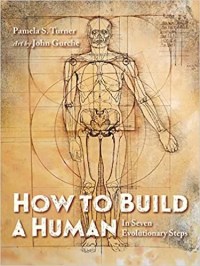
How to Build a Human by Pamela Turner, illustrated by John Gurche
How did we become who we are? This book examines an age old question but does so with incredible humor and wit. Turner uses milestones of human evolution to engage young readers, where she breaks down the evolutionary steps in comical ways such as “stand up” and “smash rocks.” In addition to being funny, the text is well written and informative. It’s perfect for middle grade and up, with plenty of thoughtful insights for older readers and extensive resources for those who want to explore further. Who knew that evolution could also be funny!

Evolution: How Life Adapts to a Changing Environment with 25 Projects by Carla Mooney, illustrated by Alexis Cornell
This book explores the theory of evolution, its history, how we think it works, examples of creatures that evolved in response to specific circumstances, and what this might mean for the future of our planet. The text is well written and includes “Did You Know?” sections detailing informational concepts. Each chapter ends with information on “Good Science Practices” and a thought provoking question, as well as an activity allowing students to apply the concepts discussed. Perfect for young readers who wonder about things like why humans walk on two legs or why fish have gills.

When the Whales Walked: And Other Incredible Evolutionary Journeys by Dougal Dixon, illustrated by Hannah Bailey
The first in a series of five, this book won Outstanding Science Trade Book for Students: K–12 by the National Science Teachers Association and the Children’s Book Council in 2019. It allows readers to step back in time and discover a world where whales once walked, crocodiles were warm-blooded, and snakes had legs. The focus is on animals and how they came to be the version they are today, and the fascinating text is paired with annotated illustrations, illustrated scenes, and family trees.

Amazing Evolution: The Journey of Life by Anna Claybourne, illustrated by Wesley Robins
With gorgeous illustrations and clear scientific explanations on every page, this book celebrates the wonder of evolution in our world. It provides both a big-picture perspective about how life began as well as an up-close look at how specific structures, like hands and eyeballs, developed over time. The final section, called “Amazing Adaptations Fact File,” highlights some of the planet’s most awe-inspiring species.

One Beetle Too Many: Candlewick Biographies: The Extraordinary Adventures of Charles Darwin by Kathryn Lasky, illustrated by Matthew Trueman
From his childhood in England to his travels around the world, Charles Darwin loved being outside, observing nature, and collecting specimens. Kathryn Lasky’s illustrated biography is fast-paced and fun, filled with sensory details from Darwin’s adventures and discoveries. Readers will love following along with Darwin as he asked questions, looked for evidence, and ultimately developed his theory of evolution.

Charles and Emma: The Darwins’ Leap of Faith by Deborah Heiligman
This young adult book is a love story about Charles Darwin and his devoutly religious wife, Emma Wedgwood. Their marriage epitomized the tension between science and faith, with Emma both supporting her husband and fearing for his eternal soul as he published his groundbreaking theory. Heiligman’s narrative weaves in primary sources from the couple, giving readers a firsthand glimpse at how the Darwins made sense of their work and marriage. This book was both a National Book Award finalist and Michael L. Printz Honor book.

The Monkey Trial: John Scopes and the Battle over Teaching Evolution by Anita Sanchez (to be released in March 2023)
During the summer of 1925, the small town of Dayton, Tennessee, took center stage in a national battle over science, religion, civil rights, and education. At the center of the chaos was John Scopes, a high school teacher who had violated a state law by teaching his students about evolution. In this engaging nonfiction story about the Scopes Monkey Trial, Sanchez captures the zeitgeist of the town as it became overrun by reporters, lawyers, scientists, fundamentalist Christians … and even a few chimpanzees! With its memorable cast of characters and straightforward explanations of the legal and philosophical principles underpinning the case, this book would make a great conversation starter among young readers.

Evolution Under Pressure: How We Change Nature and How Nature Changes Us by Yolanda Ridge, illustrated by Dane Thibeault (to be released in May 2023)
This unique book examines how humans are accelerating the process of evolution around the world. From farming to poaching to urban development, Ridge explores the phenomenon of “not-so-natural selection” and its impact on the environment today. She integrates perspectives from biology, sociology, and anthropology, challenging readers to think about their presence and impact in the world around them. Each chapter contains practical suggestions for individual action, discussions of systemic solutions, and profiles of environmental changemakers.
________________________________________________
This month’s STEM Tuesday book list was prepared by:

Lydia Lukidis is the author of 50+ trade and educational books for children. Her titles include DEEP, DEEP, DOWN: The Secret Underwater Poetry of the Mariana Trench (Capstone, 2023) and THE BROKEN BEES’ NEST (Kane Press, 2019) which was nominated for a Cybils Award. A science enthusiast from a young age, she now incorporates her studies in science and her everlasting curiosity into her books. Another passion of hers is fostering a love for children’s literacy through the writing workshops she regularly offers in elementary schools across Quebec with the Culture in the Schools program. For more information, please visit www.lydialukidis.com.
 Callie Dean is a researcher, writer, and musician living in Shreveport, LA. She writes stories that spark curiosity and encourage kids to explore their world. Follow her on Twitter at https://twitter.com/CallieBDean.

 Welcome to STEM Tuesday: Author Interview, a repeating feature for the fourth Tuesday of every month. Go Science-Tech-Engineering-Math!
 Karen: I really like the interactive nature of this book, with origami folding exercises to try and Lerner’s AR app. The app brings images to life, like NASA’s InSight Mars lander image in Chapter 5. It shows how the lander’s solar arrays unfold from their compact shape. It’s really cool!



 This analysis might lead us to dive even deeper: How many words per sentence?
 When not analyzing words written by others, Heather L. Montgomery writes books for kids who are wild about animals! Snag some text from her recent Who Gives a Poop? Surprising Science from One End to the Other to see what you can see! Learn more at