For Librarians

Summer Scares

Don’t we all have at least one fiber in us that loves a good, scary story? As a species, we’ve been telling scary stories almost from the time we stood up and began to walk upright on two legs. Stories that have become integral to our human existence. Our advancement as a species is built on the back of a story. We pass our experiences down from generation to generation through story.

Scary stories play an integral role in shaping our existence. From entertainment to cautionary tale, to moral plays, to simply visceral enjoyment, stories of ghosts, monsters, urban legends, and creatures of the night serve their purpose well. Frankenstein, Dracula, the Brothers Grimm, all use a scare to define our limits and our psychological fears.

When my siblings and I were growing up in the early 1970’s, my dad never failed to send a shiver down our spines with this one thing he did. He would cup his hands around his mouth to get a 1930’s radio special effect and mimic the introduction to The Shadow radio drama.

“Who knows what evil lurks in the hearts of men? The Shadow knows!”

Even now, it brings a little smile to my face. The joy of remembering a dark hallway with us boys supposedly going to sleep in our bedroom and Dad, out in the living room, saying the Shadow’s introduction in his deep voice and with an emphasis on the word “evil”. I would smile as my heart raced and Mom would shush Dad about scaring us boys when we should be going to sleep. I would pull the covers tight and have visions of The Shadow with his black cape, hat, and mask. Scary (but not too scary) felt like a warm blanket. That’s one thing a good scary story does. It wraps around you and gives a familiar and slightly uncomfortable spine-tingling feeling.

Which brings me back to the beauty of a good middle-grade scare. These books are important. They do serve a purpose. Claire Quigley wrote a great blog post addressing scary books in June of 2016 at BookRiot.com. In the post, she nailed the explanation of why scary books belong in a prominent space in kidlit.

“These creepy stories have an important place in our literature, and our culture at large. Being a child is a scary, strange and unsettling time, and the stories that articulate these anxieties help children navigate the world, all the way through to adulthood. Life can be challenging, and at times upsetting, but you’ll also be equipped to battle through it, just like the heroes and heroines of those creepy tales. And let’s not forget, at the end of the day – those spine-chilling stories are always such good fun!”

Below is a list of my top 13 scary MG book recommendations. Books that are perfect for late summer nights when the warm, humid air calls for a creepy chill and reading by lantern or flashlight in a quiet, dark woods or on a windy nighttime beach is in peak season.


HOODOO by Ronald L. Smith
Debts paid by body appendages rarely are for the greater good.

THE GRAVEYARD BOOK by Neil Gaiman
A different breed of adoption tale.

THE NIGHT GARDENER by Jonathan Auxier
Never trust an old tree growing in the house.


THE NEST by Kenneth Oppel
Wasps are such beautiful & talented creatures.

TEXAS GHOST STORIES, FIFTY FAVORITES FOR THE TELLING by Doc Moore & Tim Tingle
The Hairy Man + a bonus chapter on how to tell a ghost story!

THE JUMBIES by Tracey Baptiste
Walk away from yellow-eyed trickster creatures named Severine.


DOLL BONES by Holly Black
A doll is just a doll. Or is it?

THE GHOST OF GRAYLOCK by Dan Poblocki
Is exploring the abandoned asylum in the woods ever a good idea?

CORALINE by Neil Gaiman
Meet the parents; the other parents.


THE RIVERMAN by Aaron Starmer
Accepting a biography writing gig from the neighbor girl.

SKELETON MAN by Joseph Bruchac
Always follow the talking rabbit.

SCHOOL OF THE DEAD by Avi
Beware the creepy uncle who helps plan your future.

And for the 13th and terminal selection…

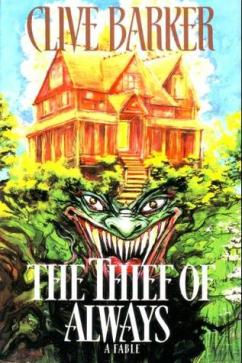
THE THIEF OF ALWAYS

by Clive Barker
Rictus, Jive, Marr, Carna, and Mr. Hood.


Celebrating Cousins!

It’s National Cousins Day! And to celebrate, I executed a not-so-scientific search of middle-grade books that highlight relationships between cousins. What I found was that many such books also feature quite a bit of diversity when it comes to race, gender, and culture. But whether it’s a cousin from a far-away place, a cousin with a different lifestyle, or cousins that just happen to get along, that special family bond plays an important part in the characters’ lives. So take a tip from these great stories of extended families, and connect with a cousin today. Who knows what might happen.

The House You Pass on the Way by Jacqueline Woodson

Thirteen-year-old Staggerlee used to be called Evangeline, but she took on a fiercer name. She’s always been different—set apart by the tragic deaths of her grandparents in an anti-civil rights bombing, by her parents’ interracial marriage, and by her family’s retreat from the world. This summer she has a new reason to feel set apart—her confused longing for her friend Hazel. When cousin Trout comes to stay, she gives Staggerlee a first glimpse of her possible future selves and the world beyond childhood.


My Cousin’s Keeper by Simon French

In this Australian import, eleven-year-old Kieran wants to be part of the “in” group at school. He wants to be on the soccer team. He wants to fit in. But then his weird cousin Bon turns up, both at school and at home. Bon knows nothing about fitting in, with his long blond braid, babyish hand-knit hat, and funny, precise voice. Bon doesn’t play sports, and he likes to draw imaginary maps with stories about “Bon the Crusader” and “Kieran the Brave.” He’s an easy target for teasing, and Kieran has little patience for him. Even more irritating, Bon’s only friend is the other new kid, a cool girl named Julia who wears cowboy boots and has a confidence that fascinates Kieran. What could she and Bon possibly have in common? With unflinching honesty, My Cousin’s Keeper takes on childhood jealousy, family secrets, and unexpected kindness.


The Callahan Cousins (#4 Together Again) by Elizabeth Doyle Carey

Look out Gull Island! Neeve, Phoebe, Kate, and Hillary—the twelve-year-old Callahan cousins—are back at their grandmother Gee’s rambling seaside estate for Christmas break! When the girls camp out at a whale museum, they stumble upon a mystery they can’t ignore. Phoebe takes the lead as the girls join forces to solve an island mystery. This is the final book in the series.


Cupcake Cousins (Book One) by Kate Hannigan

In the first of a series, Willow and Delia, nine-year-old cousins, can’t wait to spend a week vacationing together with their families. Their aunt is getting married, and Willow and Delia are hoping their tasty baked goods will be enough to get them out of being flower girls in the wedding. But with a mischievous little brother, a bacon-loving dog, and a misbehaving blender in the mix, their treats don’t exactly turn out as planned. When a real emergency threatens to ruin the wedding, will their baking skills be enough to save the day?


The Only Road by Alexandra Diaz

Twelve-year-old Jaime is sitting on his bed drawing when he hears a scream. Instantly, he knows: Miguel, his cousin and best friend, is dead. Everyone in Jaime’s small town in Guatemala knows someone who has been killed by the Alphas, a powerful gang that’s known for violence and drug trafficking. Anyone who refuses to work for them is hurt or killed—like Miguel. With Miguel gone, Jaime fears that he is next. There’s only one choice: accompanied by his cousin Ángela, Jaime must flee his home to live with his older brother in New Mexico. Inspired by true events, The Only Road is a story of a boy who feels that leaving his home and risking everything is his only chance for a better life. It is a story of fear and bravery, love and loss, strangers becoming family, and one boy’s treacherous and life-changing journey.


Saving Kabul Corner by N.H. Senzai

A rough and tumble tomboy, twelve-year-old Ariana couldn’t be more different from her cousin Laila, who just arrived from Afghanistan with her family. Laila is a proper, ladylike Afghan girl, one who can cook, sew, sing, and who is well versed in Pukhtun culture and manners. Arianna hates her. Laila not only invades Ariana’s bedroom in their cramped Fremont townhouse, but she also becomes close with Mariam Nurzai, Ariana’s best friend. Then a rival Afghan grocery store opens near Ariana’s family store, reigniting a decades-old feud tracing back to Afghanistan. The cousins, Mariam, and their newfound frenemy, Waleed Ghilzai, must ban together to help the families find a lasting peace before it destroys both businesses and everything their parents have worked for.


The London Eye Mystery by Siohban Dowd

Ted and Kat watched their cousin Salim board the London Eye, but after half an hour it landed and everyone trooped off—except Salim. Where could he have gone? How on earth could he have disappeared into thin air? Ted and his older sister, Kat, become sleuthing partners, since the police are having no luck. Despite their prickly relationship, they overcome their differences to follow a trail of clues across London in a desperate bid to find their cousin. And ultimately it comes down to Ted, whose brain works in its own very unique way, to find the key to the mystery.


Letters From Rifka by Karen Hesse

Rifka knows nothing about America when she flees from Russia with her family in 1919. But she dreams that in the new country she will at last be safe from the Russian soldiers and their harsh treatment of the Jews. Throughout her journey, Rifka carries with her a cherished volume of poetry by Alexander Pushkin. In it, she records her observations and experiences in the form of letters to Tovah, the beloved cousin she has left behind. Strong-hearted and determined, Rifka must endure a great deal: humiliating examinations by doctors and soldiers, deadly typhus, separation from all she has ever known and loved, murderous storms at sea, detainment on Ellis Island–and if this is not enough, the loss of her glorious golden hair. Based on a true story from the author’s family, Letters from Rifka presents a real-life heroine with an uncommon courage and unsinkable spirit.


Flying the Dragon by Natalie Dias Lorenzi

Flying the Dragon tells the story of two cousins in alternating chapters. American-born Skye is a good student and a star soccer player who never really gives any thought to the fact that her father is Japanese. Her cousin, Hiroshi, lives in Japan, and never really gives a thought to his uncle’s family living in the U.S. Their lives are thrown together when Hiroshi’s family, with his grandfather (who is also his best friend), have to move to the U.S. suddenly. Skye resents that she is now “not Japanese enough,” and yet the friends she’s known forever abruptly realize she is “other.” Hiroshi has a hard time adjusting to life in a new culture, and resents Skye’s intrusions on his time with Grandfather. Through all of this is woven Hiroshi’s expertise, and Skye’s growing interest in, kite making and competitive kite flying, culminating in a contest at the annual Washington Cherry Blossom Festival.

What’s your favorite book about cousins? I’d love to hear about it in the comments section.


Writing Quest Stories

  My fascination for quest stories began when I was in middle school.  At the time, our bespectacled young boy named Harry Potter wasn’t born yet. However, because I lived in India, I had the exposure to fantasy quest stories based on Indian culture. I read  Ramayana and Mahabharata epic novels, and stories from other Hindu texts. Those fantasy stories have been in the world for centuries, even millenia in some cases.

I often compare what I grew up reading to the middle grade quest novels of authors like J.R.R. Tolkien and J.K. Rowling. My brain is hardwired to pay attention to the common themes in the characters’ growth, and appreciate the similarities and deeper meaning in the journeys of the characters.


Quest stories make the characters seek something, and we as readers get to join them on the ride. In her book, The Tough Guide to Fantasyland, Diana Wynne Jones describes a quest as “a large-scale treasure hunt, with clues scattered all over the continent, a few false leads, mystical masters as game-show hosts, and the dark lord and the terrain who make the quest interestingly difficult”(153). Therefore, the hero leaves her comfortable, ordinary surroundings to venture into a challenging, unfamiliar world where she encounters conflicts with antagonistic, challenging forces before achieving her goal.

In this post, we will take a look at two fantasy quest novels:

Where the Mountain Meets The Moon by Grace Lin    

and 

The Wonderful Wizard Of Oz by Frank L. Baum

We will focus on some of the common themes around plot, conflict and change that made these quest stories timeless reads.

Plot:

If you’ve been writing fiction for even a short while, you have probably heard or used the word “plot” in your critique conversations. In his book, The Plot Thickens, Noah Lukeman writes that “plot is not just about having a single great idea; on the contrary, a good plot is an amalgamation of many ideas or elements of writing, including characterization, journey, suspense, conflict, and context” (xv). Therefore, while an idea is important, a plot doesn’t exist without the supporting elements that make up the story.

In Where The Mountain Meets The Moon, the main character Minli sets off on an extraordinary journey of adventure and folklore to find the Old Man on the moon to ask him how she can change her family’s fortune.

In the Wizard Of Oz, Dorothy and her dog Toto are swept away from a Kansas farm to the Land of Oz by a cyclone.

Minli’s quest is to find the Old Man on the moon. Dorothy’s quest is to return to her home in Kansas again.

In both the stories, Grace Lin and Frank L. Baum spend considerable amount of time at the beginning of the book establishing their main characters’ normal life before they take off on their journeys. The authors introduce the readers to the secondary characters and set up the cultural context. The settings create a vivid contrast with the strange new worlds Minli and Dorothy enter. All these elements together make strong plot structures for the stories.

Conflict:

Story plots must always involve conflicts.  Philip Athans writes in his book, The Guide to Writing Fantasy and Science Fiction that “unless your protagonist comes into conflict – in the broadest sense of the word – with someone or something, you have no plot, no story, and no novel” (25). Therefore, it is exceedingly important to put the characters in difficult situations that cause conflict.

In Where the Mountain Meets The Moon, the central conflict for Minli is that her family’s fortune is very weak. So she goes on an adventure to have a better fortune, make friends and bring green to the Fruitless mountain.

In The Wonderful Wizard Of Oz, the main conflict is that Dorothy thinks that life will be better someplace else (i.e. over the rainbow). She runs away from home, gets caught in a tornado, and ends up in another world. Finally, she is desperate to find her way back home.

Baum and Lin put their characters in conflict arising circumstances, and raise the stakes to increase the importance of their story goals. How Dorothy and Minli deal with the conflicts show us a great deal about their traits and personalities. They force the reader to take sides and keep reading.

Change:

In Where The Mountain Meets The Moon, Minli has a lively and impulsive spirit that is different from her parents. She makes friends along the way in her journey. She even befriends a dragon. But when Minli finally reaches home from the Never-Ending Mountain at the end, she realizes that all her questions are answered. Minli’s village is prosperous again, and she is thankful for her family.

In The Wonderful Wizard Of Oz, there’s an inherent change in Dorothy’s character when she meets other characters like the scare crow, the Tin Man, the lion, the wicked witch of the west and the wizard. In the end, Baum shows the change in Dorothy by having her realize that the special world of Oz must eventually be left behind if she has to get back to Kansas. This marks her decision to return to her home where Uncle Henry and Aunt Em live. The quest becomes meaningful when Dorothy returns to Kansas with a lesson from Oz. Dorothy finally returns to Kansas with the knowledge that she is loved, and that there is no place like home.

Even though The Wonderful Wizard Of Oz and Where The Mountain Meets The Moon were written and published at different time periods (1900 and 2009) and have different cultural references and symbolisms, Baum and Lin have made their characters embark on profound journeys that eventually lead them to self-realization and change from within.

Minli’s and Dorothy’s quests sum up themes that center around courage, coming of age, exploration, and family. The novels take us on fascinating journeys that emphasize similar quest elements of plot, conflicts, and change, which in turn give the characters growth and meaning.

And now, to jump into the world of quest stories, here’s a quick list of some recent books:

Navigating Early by Clare Vanderpool

The Conch Bearer by Chitra Banerjee Divakaruni

Fish by L.S. Matthews

One Came Home by Amy Timberlake

My Side Of The Mountain by Jean Craighead George

Fog Magic by Julia L. Sauer

What are your favorite quest novels? What do you like about them? Share with us in the comments below.