

“Any book that helps a child to form a habit of reading, to make reading one of his deep and continuing needs, is good for him.”
–Maya Angelou
“A child sitting in a quiet room with a good book isn’t a flashy or marketable teaching method. It just happens to be the only way one became a reader.”
–Nancie Atwell
I’ve yet to meet a teacher who isn’t passionate about instilling a love of reading in their students. I’ve also yet to meet a teacher who has a budget for buying independent reading materials for their classroom. Yet, my social media feed is full of smart, caring teachers who are using all of their resources and their own money to bring fun and diverse books into their classroom.
So, how are they doing it?
- They are raiding their personal bookshelves, their friend’s bookshelves, yard sales, used bookstores – pretty much any where they can get their hands on a book for cheap or for free.
- They are leveraging book clubs (like Scholastic’s) and book fairs, making the most of bonus points and freebies.
- They are seeking book donations from students, parents, and from the public through crowd-funding sources like Donors Choose and organizations like First Book and the Book Love Foundation.
- They are visiting their library book sales and taking advantage of the Library of Congress’s Surplus Books Program.
- They are following authors on social media. Authors – especially debut authors and authors who have a new book coming out – are giving away books all the time on social media. Follow them. Chat with them. And enter their giveaways. Authors love to see their books in classrooms. They also love to connect with teachers and students.
In an effort to help with your classroom library building efforts, I put out a call to some middle grade author friends who have generously agreed to donate the following books to the cause. Five lucky teachers will win 5 books each to help jump-start their classroom libraries. All you have to do to enter is comment below and tell us how you plan to grow and use a classroom library this school year. Then get ready for some pretty amazing book mail!
 STANLEY WILL PROBABLY BE FINE by Sally J Pla.
This funny and moving second novel from the author of The Someday Birds features comic trivia, a safety superhero, and a super-cool scavenger hunt all over downtown San Diego, as our young hero Stanley Fortinbras grapples with his anxiety—and learns what, exactly, it means to be brave.
 A DASH OF DRAGON by Heidi Lang and Katie Bartkowski
A thirteen-year-old chef has a lot to prove as she tries to run a five-star restaurant, repay a greedy loan shark, and outsmart the Elven mafia in this entertaining novel that combines all the best ingredients—fantasy, humor, adventure, action, cute boys, and a feisty heroine!
 THE UNLIKELY STORY OF A PIG IN THE CITY by Jodi Kendall
This delightful middle grade novel is a modern-day homage to Charlotte’s Web, perfect for fans of Katherine Applegate and Cammie McGovern.
A little pig in a big city leads to lots of trouble!
 THE TRAGICALLY TRUE ADVENTURES OF KIT DONOVAN by Patricia Bailey
Life in a Nevada mining town in 1905 is not easy for 13-year-old Kit Donovan, who is trying to do right by her deceased mother and become a proper lady. When Kit discovers Papa’s boss at the gold mine is profiting from unsafe working conditions, she realizes being a lady is tougher than it looks.
 HOLLY FARB AND THE PRINCESS OF THE GALAXY by Gareth Wronski
Guardians of the Galaxy meets Hitchhiker’s Guide to the Galaxy in this laugh-out-loud funny journey into space and beyond. Holly Farb is not the Princess of the Galaxy. She may be top of the class in every subject, but she can’t even win a school election, never mind rule the Milky Way.
 ENGINERDS by Jarett Lerner
The battle between boys and bots is on in this funny, fast-paced novel. Ken is an EngiNerd: one of a super-smart group of friends—all nerds—who have been close since kindergarten.
 KAT GREENE COMES CLEAN by Melissa Roske
Kat Greene lives in New York City and attends fifth grade in the very progressive Village Humanity School. At the moment she has three major problems—dealing with her boy-crazy best friend, partnering with the overzealous Sam in the class production of Harriet the Spy, and coping with her mother’s preoccupation with cleanliness, a symptom of her worsening obsessive-compulsive disorder.
 COOKIE CUTTERS AND SLED RUNNERS by Natalie Rompella
Most kids would dread the start of middle school and the year-long Explorations project that comes with it, but Ana knows that her + her best friend Lily + their plan to write and sell their own cookbook is a recipe for success.
 ODDITY by Sarah Cannon
Join a tough eleven-year-old as she faces down zombie rabbits, alien mobs, and Puppet Cartels while trying to find her missing twin in Sarah Cannon’s imaginative middle-grade debut, Oddity.
 ONE BRAVE SUMMER by Kiersi Burkhart and Amber J. Keyser
Paley Dixon is not excited about six weeks on a horse ranch without access to the virtual world of Dragonfyre. In-game, she’s the Blue Elf, strong and powerful. In the real world, she’s coming off a bad year after moving from Los Angeles to Denver. At least Prince, the majestic horse she’s paired with at Quartz Creek Ranch, makes her feel like royalty.
 THE LONG TRAIL HOME by Kiersi Burkhart and Amber J. Keyser
Rivka can’t wait to get away from her family for the summer. Since that terrible day last year, she wants no part in their Jewish community. At least at Quartz Creek Ranch, she feels worlds away from home among the Colorado scenery, goofy ranch owners, and baby animals.
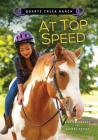 AT TOP SPEED by Kiersi Burkhart and Amber J. Keyser
For Ella, winning has always been the goal, and at Quartz Creek Ranch, she’s pretty sure she’ll ace horseback riding too. There’s just one hitch in her plan: Figure Eight, the beautiful quarter horse she’s paired with, won’t listen to a word she says.
 SHY GIRL AND SHY GUY by Kiersi Burkhart and Amber J. Keyser
For every kid, there’s a horse that can help. At least, that’s the idea at Quartz Creek Ranch. But Hanna doubts it will be true for her. Going to Quartz Creek was her mother’s idea; Hanna’s too terrified of horses to even go near them.
 UNDER LOCKER AND KEY by Allison K. Hymas
Eleven-year-old Jeremy Wilderson teams up with his rival crime fighter to stop the stealing spree that’s wreaking havoc on Scottsville Middle School in this action-packed MAX novel.
 THE DOLLMAKER OF KRAKOW by R.M. Romero
In the vein of The Boy in the Striped Pajamas and Number the Stars, this fusion of fairy tales, folklore, and World War II history eloquently illustrates the power of love and the inherent will to survive even in the darkest of times.
 NIGHT OF THE LIVING CUDDLE BUNNIES by Jonathan Rosen
Twelve-year-old Devin Dexter has a problem. Well, actually, many of them. His cousin, Tommy, sees conspiracies behind every corner. And Tommy thinks Devin’s new neighbor, Herb, is a warlock . . . but nobody believes him. Even Devin’s skeptical. But soon strange things start happening. Things like the hot new Christmas toy, the Cuddle Bunny, coming to life.
 SKELETON TREE by Kim Ventrella
Twelve-year-old Stanly knows the bone growing in his yard is a little weird, but that’s okay, because now he’ll have the perfect photo to submit to the Young Discoverer’s Competition. With such a unique find, he’s sure to win the grand prize.
 VILONIA BEEBE TAKES CHARGE by Kristin Gray
Being responsible is NOT easy. Fourth grader Vilonia hasn’t lost her rain coat in the three weeks she’s had it and she’s brushed her teeth every night and she’s volunteered to be the Friday Library Helper. But all that hard work is worth it if it means she can get a dog.
 THE FIRST RULE OF PUNK by Celia C. Perez (donated by Kristin Gray)
The First Rule of Punk is a wry and heartfelt exploration of friendship, finding your place, and learning to rock out like no one’s watching.
Black and white illustrations and collage art throughout make The First Rule of Punk a perfect pick for fans of books like Roller Girl and online magazines like Rookie.
 THE FRAME-UP by Wendy McLeod MacKnight
When Sargent Singer discovers that the paintings in his father’s gallery are alive, he is pulled into a captivating world behind the frame that he never knew existed. Filled with shady characters, devious plots, and a grand art heist, this inventive mystery-adventure celebrates art and artists and is perfect for fans of Night at the Museum and Blue Balliett’s Chasing Vermeer.
 LOST BOYS by Darcey Rosenblatt
Based on historical events, this unforgettable and inspiring tale for middle-grade readers is about a young boy torn from the only life he’s ever known and held captive as a prisoner of war.
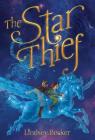 THE STAR THIEF by Lindsey Becker
Honorine’s life as a maid at the Vidalia mansion is rather dull, dusting treasures from faraway places and daydreaming in front of maps of the world. But everything changes when she catches two brutish sailors ransacking Lord Vidalia’s study, and then follows a mysterious girl with wings out into the night….
 P.S. I MISS YOU by Jen Petro-Roy
Evie is heartbroken when her strict Catholic parents send her pregnant sister, Cilla, away to stay with a distant great-aunt. All Evie wants is for her older sister to come back. Forbidden from speaking to Cilla, Evie secretly sends her letters.
Thanks so much to all of the authors who donated these amazing books!
Teachers, enter to win by commenting below and telling us how you plan to grow and use a classroom library this school year.
Winners will be chosen randomly on September 14th. (US entries only, please.)
Watch this blog post for the announcement.


