
“If you don’t have time to read, you don’t have the time (or the tools) to write.” This famous quote by Stephen King encapsulates an important truth for writers: We should always be reading, and the parenthetical in that quote tells us why. Reading gives us tools, and the only way we gain those tools is not just passively taking in stories but looking at them analytically and critically, like book detectives. Reading like a writer is one of the best ways to strengthen your writing skills because it teaches you written storytelling, and it’s also 100 percent free. Today, we’ll talk about three ways you can start reading like a writer: character investigation, technique collecting, and impact evaluation.
Why Reading?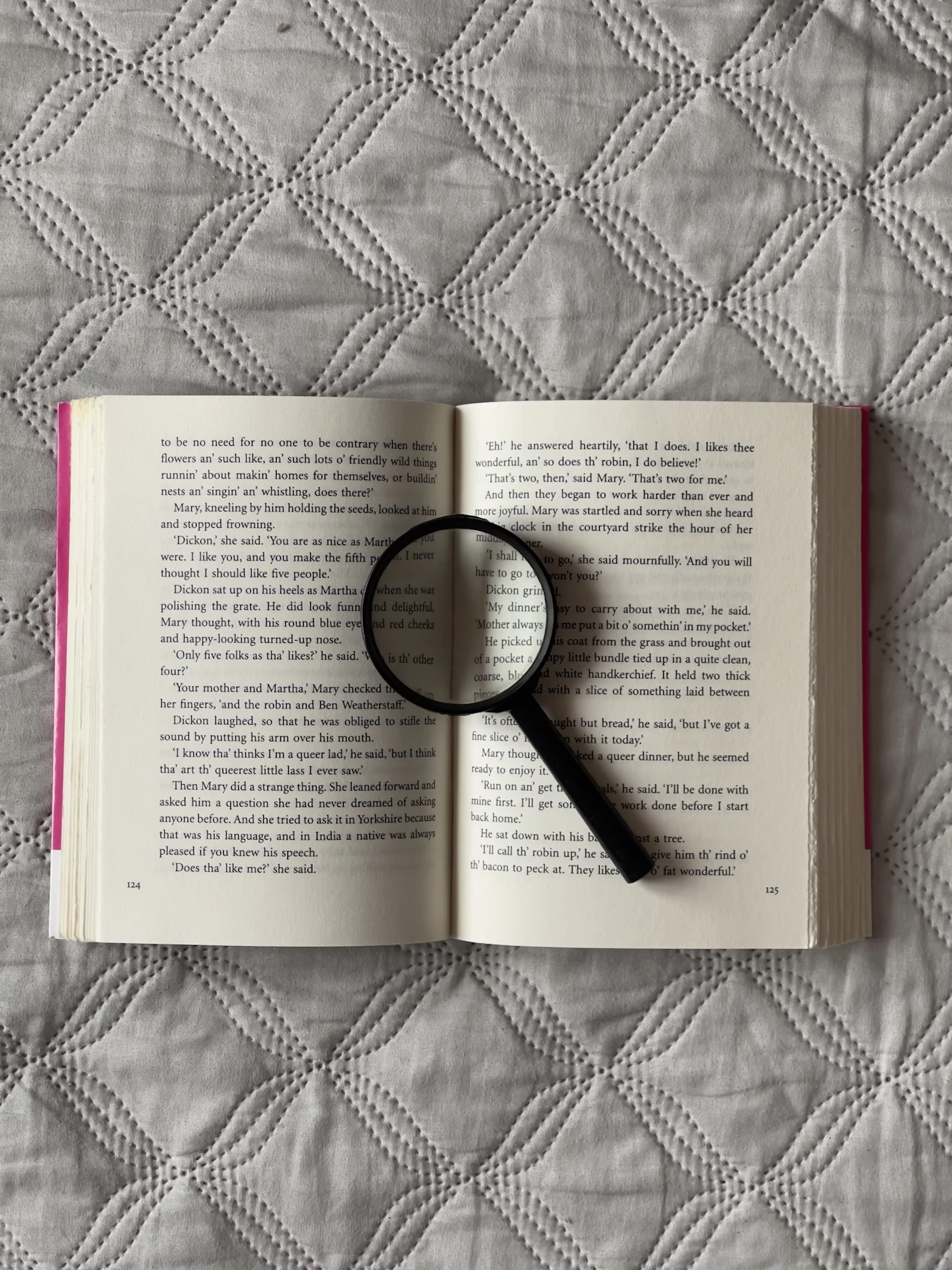
Like many authors, you might already have a question on your mind: What if I’m too influenced by what I read? This question can also be asked as What if I accidentally plagiarize another book? These anxieties can make it tempting to avoid reading entirely while you’re drafting, just to be on the safe side, but you might be surprised at how easy it is to tell when an author has stopped picking up books. This is because shows up in the writing itself.
You may not realize it, but every day, we take in tremendous amounts of storytelling through movies, music, games, ads, and even memes. Research shows that with the help of the screens that come with us almost everywhere, we absorb far more of this kind of storytelling than actual books. Everything you take in is teaching you different ways of sharing information, building interest, keeping attention, and, simply put, telling a story. These other kinds of storytelling can add unique flavor to your writing, but they are fundamentally different from written storytelling, using different techniques for different audiences for different purposes. There’s no replacement for the wealth of knowledge that comes from studying authors who are using the same medium you are, and there’s no reason to miss out on such a great education while discovering fabulous new stories!
Character Investigation
Every book you read contains characters, which makes this the most obvious place to start as you sit down to read like a writer. The simplest way to begin is to ask a simple question: Which characters stand out to you? It doesn’t matter if you like that character or dislike them. Once you’ve identified one or two characters that jump out at you, you can ask more questions. How is the author building this person on the page or making them distinct? Do they use description? Is it their dialogue or how they act? Do these characters change from beginning to end, and how would you describe that change? Asking questions about what other authors have done to make compelling characters can help you do the same in your own book.
Technique Collecting
If you’re new to reading like a writer, this approach might feel a little more advanced, but you can learn new techniques from reading with many of the same skills you use to investigate characters. If there is a part of the book you’re reading that changes how you’re reading, stop to reflect on why this has happened. For example, if you find that you’ve started reading more quickly and reached the end of the chapter faster than you expected, look at what the author was doing there. Did they use shorter sentences, punchier wording, or more dialogue? Did the author raise tension, up the stakes, or use foreshadowing? Any time you notice your reading has changed—whether you’re slowing down, rereading, or even highlighting—this is a great opportunity to take a closer look at how the author is changing how you as the reader is experiencing the story. If you can put words around what they’re doing, you can collect the technique and begin using it yourself.
Impact Evaluation
The third approach to reading like a writer is considering how the book as a whole strikes you. When you finish reading, what would you say the author set out to do, and do you think they achieved it? Thinking about the author’s purpose can help you consider the effectiveness of all the parts together. Did they use their characters and techniques well, or can you see opportunities they didn’t take advantage of? Were there chapters you felt like didn’t need to be there, or was the story a page-turner from start to finish? If this feels like too much to start with, begin by asking yourself if you liked the story. If you did, why did you like it? If not, what led you to feel that way?
Fall in Love with Reading
Reading closely is a fantastic way to discover tools and techniques and see how they’re being used. If starting with a fresh book is intimidating, pick up a book you’re already familiar with or one you love. This way, you can focus on analyzing what’s there without slipping into the way you normally read. Once you’re comfortable putting on your writer hat while you read, then you can ask these questions of books you’re reading for the first time.
If you need inspiration for good books, here at the Mixed-Up Files of Middle Grade Authors, we have lots of recommendations!
You can check out our book lists here: https://fromthemixedupfiles.com/mixed-up-files-book-lists/
For more specific lists, jump right in with these specific categories:
New releases: https://fromthemixedupfiles.com/category/new-releases/
Diversity: https://fromthemixedupfiles.com/category/diversity/
Share this:


Leave a Reply