Posts Tagged librarians

Author/Illustrator Spotlight: Allan Wolf and Jose Pimienta

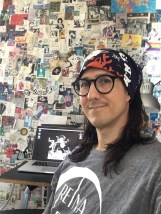
Illustrator Jose Pimienta

Author Allan Wolf

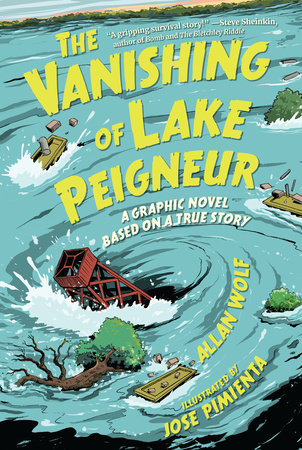
In today’s Author/Illustrator Spotlight, Landra Jennings chats with author Allan Wolf and Illustrator Jose Pimienta about their new middle-grade novel, The Vanishing of Lake Peigneur: A Graphic Novel Based on a True Story (Candlewick Press, October 7). They share the inspiration behind the novel, their creative processes and a little advice for those just starting out!

A Junior Library Guild Selection
Publisher’s Weekly Top 10 Middle Grade Graphic Novels, Fall ’25
“A riveting page-turner that will have readers eager to learn more about the topic.” —Kirkus Reviews (starred review)

Book Summary:

The strange, true tale of a Louisiana lake that vanished—taking with it every fish below and every boat and barge above—told in a gripping and accessible graphic format.

Home to catfish and crawdads, shrimp and spoonbills, even a gator or two, Lake Peigneur—pronounced “your pain,” only backward—bustles also with human life. Each day, the bean-shaped freshwater lake and its shores hum with folks going about their work: a devoted gardener’s apprentice and his dogs, fishermen, oilmen drilling at Well P-20, and the fifty-one miners employed by the Diamond Crystal Salt Mines. For most, November 20, 1980, began as “just another day on the lake.” But as the lake itself reflects, humans had, over time, left behind a honeycomb of salt highways deep beneath its surface, and water and salt mix all too well. Bracing, suspenseful, and packed with dramatic illustrations and dense end matter, this story of a catastrophic accident—narrated with the homespun voice of a “tall” tale, but true nonetheless—will amaze science and history buffs alike.


Interview with Allan Wolf and Jose Pimienta

LJ: Welcome to the Mixed-Up Files, Allan and Jose! Thanks for joining us today. I’m so intrigued by this new book and I can’t wait to hear your thoughts on its development. Let’s start with you, Allan. Where did you get the initial inspiration for The Vanishing of Lake Peigneur

AW: Back in 2007, while visiting schools and libraries in southern Louisiana, I noticed there was a chimney sticking up from the surface of Lake Peigneur, near New Iberia. So, I started asking questions.

I learned that Texaco, while exploring for oil in 1980, sent a 14-inch drill bit into the bed of a shallow1200-acre freshwater lake, piercing a salt-mine below, causing 3.5 billion gallons of water to drain like a bathtub. The resulting whirlpool and sinkhole, sucked in eleven barges, two oil derricks, a couple houses, a tugboat, a fishing skiff, and sixty-eight acres of a nearby ornamental garden. The disaster also created a 400-foot geyser and a 150-foot waterfall. The lake drained in four hours, then began to refill, via the Delcambre Canal, with saltwater drawn from the Gulf of Mexico, nine miles away! The A&E Channel featured the story in 2003 or so, but otherwise it seemed like very few people had even heard of this event. The details were so compelling, I had to tell it.

Junius Leak and the Spiraling Vortex of Doom

LJ: Allan, how does this title relate to your other recent release, Junius Leak and the Spiraling Vortex of Doom?
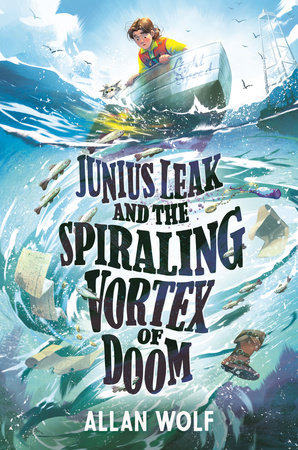
AW: The Vanishing of Lake Peigneur and Junius Leak and the Spiraling Vortex of Doom are siblings, raised together in the same house but choosing to grow in different directions. Junius Leak is a middle-grade historical fiction novel in prose, using the facts of the Lake Peigneur disaster as a backdrop for the book’s fictional characters. Junius Leak is a twelve-year-old kid sent to live with his mysterious uncle in a houseboat on Lake Peigneur near Delcambre, Louisiana.

The factual disaster becomes a symbol of Junius Leak’s own coming of age. But to make the world of Junius Leak as authentic and historically accurate as possible, I had to do a lot of research. Then to synthesize my research, I wrote a 60-page prose story of what actually happened so that I could elegantly combine my fictional plot with the factual events. My historical fiction novels often have very extensive back matter. Long-story-short, the back matter of Junius Leak was so compelling, that it demanded we turn it into a book of its own. And that’s how The Vanishing of Lake Peigneur was born. It was my editor at Candlewick Press, Katie Cunningham, who suggested we tell the story in graphic form.

On a somber note, Katie Cunningham passed away this July 4th. Just three days after Junius Leak was published. And three months before the publication of The Vanishing of Lake Peigneur. She was 43. I miss her terribly.

Learning about the Lake

LJ: I love hearing about the relationship between the two books though I am so sorry to hear about Katie. What kinds of research did you do to be true to this story?

AW: I read every newspaper article I could find from the 1980s, along with many government documents reporting and analyzing what took place. The newspapers would sometimes contradict one another, so I looked to official documents from the Mining Safety and Health Administration (MSHA) to get my final numbers. I stalked my way through a labyrinth of Cajun names on FaceBook. I looked at several hundred photographs. I interviewed, in person, a handful of survivors and their relatives—including the 95-year-old captain of the tugboat, Charlie, who narrowly escaped being flung from a waterfall formed by the collapsing earth. Since I started my research in 2007, a few interesting podcasts have added to the story as well. But the in-person conversations I had with first-hand witnesses was my most valuable research tool.

To the Heart of The Vanishing of Lake Peigneur

LJ: What do you hope readers take away from this novel?

AW: Over all I’d like readers to see how it is possible to act courageously even when we are afraid. That is the very definition of courage: to take action in spite of fear and self-doubt. In their own individual ways, both The Vanishing of Lake Peigneur and Junius Leak and the Spiraling Vortex of Doom are stories of ordinary people acting heroically in the face of extraordinary circumstances. That’s when we find out who we really are.

Also, Junius Leak models for us how we don’t have to hide our true selves to make others more comfortable. Sometimes you get tired of trying to fit in. Sometimes you just want to be yourself. It is your choice to make.

On Writing

LJ: What’s your favorite thing about being a writer and story-teller?

AW: I have always identified with “being a writer,” but the early romance has always butted heads with the mundane needs of life. Being a professional writer for kids these days requires a lot of social media, marketing, conferences, bookstore events, school visits—all of it with only a tangential relationship to the actual act of writing books. But that writing itch always lurks. We all need to be the makers of something. If that need isn’t met, we whither. I guess the thing I really love about being a writer is the writing. I can write my way to discover that place, that spot, that just-right, water-tight safe space inside my head where I can go to find myself in my imagination.

What’s Next for Allan?

LJ: Is there anything else you’d like us to know?

AW: Yes. The year 2025 has been a big one for me. In addition to the two books discussed here, I have a new poetry collection out, The Gift of the Broken Teacup: Poems of Mindfulness, Meditation, and Me. It is brilliantly and beautifully illustrated by Jade Orlando. These are fun yet thoughtful poems about self-regulation, self-care, and self-esteem. Of all my poetry collections to date, this one is the most personal. This book was my chance to explore what it means to have character and an intrinsic sense of self-worth. And it gave me a chance to share the ways I have learned to deal with anxiety and to practice self-care. The Gift of the Broken Teacup is sort of an owner’s manual for the soul.

The Illustrations

LJ: Now to you, Jose. The illustrations are phenomenal, starting with the cover. There’s so much energy that jumps right off the page. What excited you most about this project?

JP: The defining factor that excited me the most was that the story’s narrator would be the lake itself. I love stories about places, so, as much as there are many amazing people in this story, the point of view being the land drew me in, immediately.

LJ: How did this project differ from some of your other titles?

JP: This story is non-fiction, which is a first for me. Also, it involves so many people, so, keeping track of a large cast of characters was something I had never done. And! this is the first book I’ve drawn where all the characters are adults. Most of my books feature either teenagers or kids with some adults in there. This one was all grown-ups. But there’s puppies, so…

Jose’s Creative Process for Illustration

LJ: We all love puppies! What is your creative process like? What time of day do you do your best work and what medium do you use?
JP: For the most part, I like to listen to music related to the topic of the story I’m working on. I helps me to stay in the tone of the story. Unless I have errands to run or other engagements, I like to start drawing as soon as possible in the day, right after I finish cleaning up after breakfast. And I like it when drawing is the last thing I do before going to sleep. Everything in between can be different depending on the day. So, I draw a while, goof for a bit, run errands, meet with friends, draw some more, go for a bike ride, eat something, draw more, and so on.

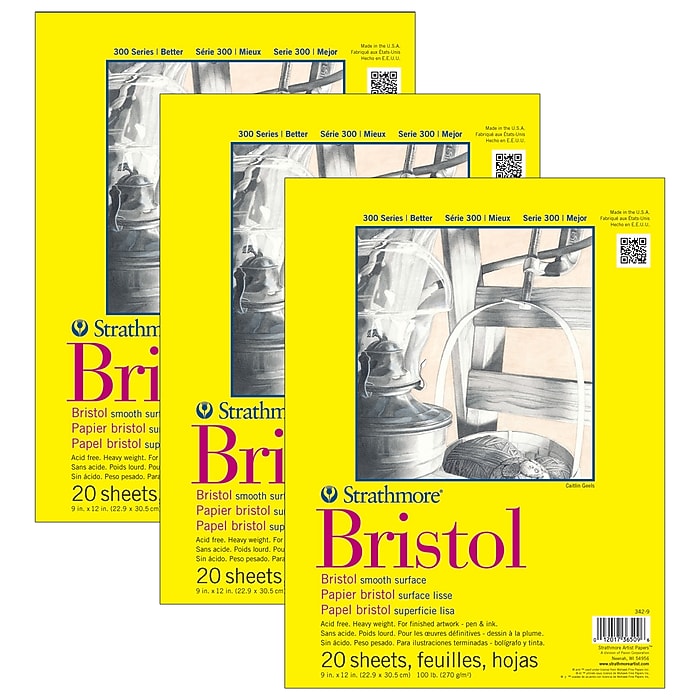
Generally, I draw with a mechanical pencil on 9×12 Bristol board or drawing paper. Then I ink my drawings with microns and brush pens. After that, I scan the pages and letter my comics digitally, because I do a lot of re-writes, so… this helps keeping the dialogues flexible. Lastly, I color digitally because it’s faster. I also prefer to do each book in passes. I like to do the entire book in pencil and then ink the whole book, and so on. Some people prefer to work in batches or one finished page at a time, and that’s great- but I can’t. I want to minimize the amount of gear shifting I do.

For writing, my process is an entirely different story. But more on that some other time.

The Path to Becoming an Illustrator

LJ: How did you get started along the path to becoming an illustrator?

JP: I’m not sure when it started. A cliché answer is “I never stopped drawing. I’ve just been doing this my whole life.” And that’s mostly correct. But as a professional, I can’t think of a definitive starting point. I went to art school, where I met a lot of amazing people I wanted to collaborate with, and that got me some work, but I also wanted to write and draw my own stories, so I did that as well. After art school, I came to Los Angeles in the hopes to work in the film industry, and I kept getting work here and there while I was making my own comics. At some point, I realized I was making a living drawing, so “Yay!”

I guess how I got started is I just kept telling people I wanted to draw and I showed them what I was working on. Some of that lead to work and some of it didn’t. Along the way, I made cool friends and got to collaborate with wonderful artists.

Advice for Those Just Starting Out in Illustration

LJ: What advice would you have for a beginning illustrator?

JP: Hmm… first I’d ask the illustrator what their goals are. Then, I’d hope I have useful advice for their specific path, or at least point them in the direction of other illustrators who do something similar so they can get better guidance. But as a general advice, I go with this:

Explore. Try things out. Find what works for you and approach everything with genuine curiosity. Experiment with mediums and see what catches your interest. Learn as much as you can from experts, but dare to go further than they have. Also- get comfortable with failure. Learning requires it. But pay attention and ask if it’s worth trying again. Lastly, Make friends. Be friendly. Be kind. Be sincere. Most people want to collaborate with someone they know or someone they like. So, show your work. No one’s going to hire you if they haven’t seen what you do. Oh! And of course: keep practicing the fundamentals.

I hope that’s useful, but if not, ask other illustrators. (And that’s my point: Ask and talk to as many as you can. We all want to see more art. So we’d love to see yours.)

Visiting the Lake

LJ: Is there anything else you’d like us to know?

JP: Only what you’d like to ask me, hehe. I’m not sure how to answer this, other than working with Allan was fantastic and this book was a phenomenal project. I’m so happy I got to draw this. Oh! Big story I like to share. When I first started drawing this, I wasn’t sure how to research this, since it’s non-fiction. I wanted to get as many details as possible correct, so, on a whim, I went to see the actual lake and I can’t tell you how much help that was. Visiting the lake was a terrific experience. Big thank you to everyone who answered my questions and their meals are top notch. If you get a chance to visit the area, by all means, it’s a delight.

Lightning Round Questions:

No MUF interview would be complete without our lightning round, so here we go…

For Allan Wolf:
Coffee or tea? Both.

Sunrise or Sunset? Sunrise.

Favorite city (besides the one you live in): Asheville, NC

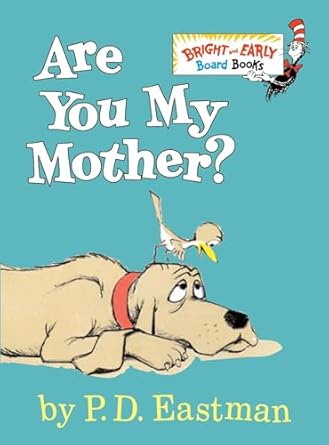
Favorite books from childhoodAre You My Mother? By P.D. Eastman and Mike Mulligan and His Steam Shovel by Virginia Lee Burton.

Favorite ice cream flavor: Banana

If you could choose a superpower, what would it be? The ability to flood others with any emotion so that emotion then becomes their own.

For Jose Pimienta:

cup of teaCoffee or tea? Tea.

Sunrise or Sunset? Sunset.

Favorite city (besides the one you live in): (In the world?) Hamelin, in Germany. But if we’re doing US only: Los Angeles (I live in Burbank).

Favorite book from childhood: “Matias y el Pastel de Fresas” by Jose Palomo.

Favorite ice cream flavor: Ube. Or anything chocolate.

If you could choose a superpower, what would it be? I’m very serious about this: Scent manipulation. Being able to control smells would amazing. Had a bad day? Not when it smells like a bakery in here. Supervillain attacking you? Make it smell so bad they’re incapable of focusing. Did you pass gas in public? No one ever has to know. OR teleporting, whichever is easier to acquire.


Thank you so much Allan and Jose for sharing with us!


About the Author and Illustrator

Allan Wolf

Two time winner of the North Carolina Young Adult Book Award, as well as Bankstreet College’s prestigious Claudia Lewis Award for Poetry, Allan Wolf is the author of picture books, poetry, and young adult novels. Booklist has named his historical verse novel, The Watch That Ends the Night, one of “The 50 Best Young Adult Books of All Time.”

Also a skilled and seasoned performer of 30 years, Allan Wolf’s dynamic author talks and poetry presentations for all ages are meaningful, educational and unforgettable. Florida Reading Quarterly calls Wolf “the gold standard of performing poetry.” Wolf believes in the healing powers of poetry recitation and has committed to memory nearly a thousand poems.

Wolf has an MA in English from Virginia Tech where he also taught. He moved to North Carolina to become artistic and educational director of the touring group Poetry Alive!. Wolf is considered the Godfather of the Poetry Slam in the Southeast, hosting the National Poetry Slam in 1994, forming the National Championship Team in 1995, and founding the Southern Fried Poetry Slam (now in it’s 27th year).

Jose Pimienta

Jo Pi’s almost full name is Jose Pimienta. They reside in Burbank, California where they draw comics, storyboards and sketches for visual development. They have worked with Random House Graphic, Iron Circus Comics, Dark Horse Comics, Disney Digital Network, and more.

During their upbringing in the city of Mexicali, Mexico Jo was heavily influenced by animation, music and short stories. After high school, they ventured towards the state of Georgia where they studied at Savannah College of Art and Design. 

For Comics work, they are represented by Elizabeth Bennet of Transatlantic Agency.

STEM Tuesday– Zombies (Real and Otherwise)– Book List

Zombies, monsters, and mummies – oh my! These are the stuff of nightmares… or of awesome Halloween costumes! But are they real? Let’s use science to find out.

Zombie Makers: True Stories of Nature’s Undead by Rebecca L. Johnson

Zombies are real … but so far, the zombie-makers don’t attack humans. Yet. They do take over the brains and bodies of spiders and ants, flies and snails, and even rats. Not only that, some of these zombies are too small to avoid, until it’s too late. Like the teeny tiny wasps and fungal spores, and the totally invisible viruses. And then there are the brain worms! A must-read for anyone planning to hunt for zombies in their backyard!

Monster Science: Could Monsters Survive (and Thrive!) in the Real World? by Helaine Becker

Monsters aren’t real… are they? For the most part, no – although there ARE zombies among us. This book shows the real science relating to the monsters of myth and legend: genetics and electricity, for Frankenstein’s monster, and hybrids and genetic engineering for possible werewolves. And (as in the case of zombies) sometimes we’re surprised when the real monsters do show up!

Frightlopedia: An encyclopedia of Everything Scary, Creepy, and Spine-Chilling, from Arachnids to Zombies by Julie Winterbottom

An encyclopedia of scary stuff with horrifying hands-on activities. From bird-eating tarantulas to vampire bats and zombies this book will definitely make you shiver. Learn how to make fake blood and send coded messages to aliens. Tucked amongst the science are a handful of ghost stories and mythology and some bits about killer bees, stonefish, and Komodo dragons.

Animal Zombies! And Other Bloodsucking Beasts, Creepy Creatures, and Real-Life Monsters by Chana Stiefel

Full of eye-catching, vividly detailed, photographs which delve into the living dead, bloodsuckers, creeps from the deep, animal aliens, and animal monsters. Each chapter also profiles a “Mad Scientist” offering insights into how they got started, their research, and interesting or unique things to know about their field. It also includes a look at pop culture and myths surrounding zombies, vampires, kraken, aliens, and werewolves.

Rise of the Zombie Bugs: The Surprising Science of Parasitic Mind-Control by Mindy Weisberger

This is for older readers or those looking for additional information on insect zombification. Using an engaging conversational voice, pop culture references, vivid descriptions, and a dose of the macabre, the book explores the horror and science of zombie ants, flies, beetles, cicadas, spiders, roaches, and ladybugs from around the world. And shines a light on the responsible fungi, viruses, wasps, flies, and worms.

Secrets of the Dead : Mummies and Other Human Remains From Around the World by Matt Ralphs

In most environments, when someone dies their flesh decays, leaving only bones. But not mummies. With mummified remains, we can learn about the person and their culture, the foods they ate, diseases they suffered from. This book brings nearly 20 mummies to life – so to speak.

Mysterious Mummies by Ron Knapp

Some mummies are the result of mindful preservation: the drying and wrapping of bodies as a way to honor the dead. Other mummies resulted from accidental freezing, being tossed into a bog, or burial by volcanic ash. Dive into the mysteries behind these mummies.

Catching Cryptids: The Scientific Search for Mysterious Creatures by Kim Long

The Loch Ness monster. Kracken. Giant turtles. What some people call monsters, others call cryptids: an animal whose existence is not yet substantiated by science. The emergence of DNA technology, SONAR, bioacoustics and more has allowed cryptozoologists of every stripe to seek – and sometimes discover – the species behind the monster myth.

What Do We Know About The Kraken? by Ben Hubbard

Before orcas battered yachts, the kraken terrorized sailors. This book fills in the details of how seafarers and scientists hunted for, and studied the giant squid they thought to be the kraken of mythology. But in the vast and still unexplored depths of the ocean, nothing can be certain…

Here There Be Monsters: The Legendary Kraken and the Giant Squid by HP Newquist

This book is divided into three parts. The first section celebrates tales of the sea serpents – the monsters at the edges of the maps. In part two, we follow the scientists who start to find bits of giant squid, and begin wondering: is this a kraken? The final section focuses on the search for the giant squid, and the research on cephalopods.


Sue Heavenrich is an award-winning author, blogger, and bug-watcher. A long line of ants marching across the kitchen counter inspired her first article for kids. When not writing, she’s either in the garden or tromping through the woods. Her books for middle-grade readers include Funky Fungi: 30 Activities for Exploring Molds, Mushrooms, Lichens, and More and Diet for a Changing Climate. Visit her at www.sueheavenrich.com

Maria Marshall is a children’s author, blogger, and poet who is passionate about making nature and reading fun for children. She is a judge for the Cybils Awards and the #50PreciousWords. Four of her poems are published in The Best of Today’s Little Ditty 2017, 2016, and 2014-2015 anthologies. When not writing, critiquing, or reading, she bird watches, travels the world, bakes, and hikes. Visit her at www.mariacmarshall.com.

Adventures abound in October New Books!

This month’s new releases offer adventure, suspense, fairy tales, and a puzzling mystery. And, be sure to check out From the Mixed Up Files Founder Jennifer Swanson’s latest, a fantastic three-week scientific journey through the rainforest!
Links to all the titles to bookshop.org, which supports local bookstores!
Busted  written by  Dan  Gemeinhart,  Henry  Holt  and  Company,  352  pages,  October  7

When 12-year-old Oscar Aberdeen decided he would do anything to save the only home he’s ever known, he didn’t realize that anything would include theft, trespassing, gambling, a broken nose, grand theft auto, a federal prison, and a police chase. He had no idea it would be so dangerous…or so fun.

Oscar Aberdeen is a bit of an oddball. He’s an ace at playing bridge, loves Frank Sinatra, and attends a whole lot of funerals. He’s also the youngest resident of Sunny Days retirement home by more than a half-century—and he wouldn’t have it any other way. So when his grandpa’s suddenly served an eviction notice that threatens their place at Sunny Days, he needs to find some cash. Fast.

Enter Jimmy Deluca, a shady elderly man with a reputation for being bad news, who makes Oscar an offer he can’t refuse. He’s got the drop on riches hidden away on the “outside” and he’ll share the loot with Oscar on one condition: he busts him out of Sunny Days.

In this humdinger of an adventure, the ultimate odd couple, along with an uninvited stowaway, go from high-stakes escape to rollicking escapade as they search for the secret stash—and forge an unlikely friendship along the way. Will Oscar succeed in saving the only home he’s ever known? Or will he have to fuggedaboutit and return a failure?


The Invisible List of Lani Li written by Veeda Bybee, Shadow Mountain, 224 pages, October 7

A challenge from her little brother and a Chinese fable inspire Lani Li to hit every note of invincible bravery on her band trip to London.

Thirteen-year-old Lani Li has grown up with the tale of the Eight Invincible Brothers–Chinese heroes who use their superpowers to conquer challenges. Lani wishes she could be as brave as them, especially as she faces her own test of courage . . .

When Lani’s elite performance band is chosen to perform in London, she should be thrilled. But with too many fears to count and her little brother, Gavin, unable to join her due to a serious heart condition, the trip feels more daunting than exciting. Before Lani leaves, Gavin gives her a challenge: tap into her own hidden strength by embodying the Eight Invincible Brothers–and each of their special powers.

In London, Lani creates her own “invincible list” based on the fable, and as she checks off each quality, she discovers that these “superpowers” might not be as far-fetched as they seem. But when the final challenge demands that she face a daunting fear–running down the famous Cooper’s Hill in a wild cheese race–Lani wonders if she has what it takes to complete the list.

With her brother’s courage as her guide, can Lani conquer her fears and prove she’s invincible in her own way? Or will this last challenge be the one that defeats her?


Outside written by Jennifer Holm, Scholastic, 240 pages, October 7

From three-time Newbery Honor winner Jennifer L. Holm, a chilling but heartfelt story of a girl being raised in a compound who doesn’t understand how isolated and unusual her life is… until she must encounter the outside world.

Whatever you do, don’t leave home.

Razzi has always been told: Don’t go Outside. It isn’t safe. There are people and creatures out there that will harm you. The walls of the Refuge will protect you from them.

Razzi’s friend Ollie was curious about Outside… and it led to his death. So Razzi is trying to be on her best behavior. She is the oldest kid left, the one the younger kids look up to. She has to follow the rules.

But Outside has a way of getting in, and Razzi, guided by a dog she has a strangely close connection with, wonders what it’s like to run free beyond the walls.

If she steps away from everything she’s ever known… what will she find?


Three Weeks in the Rainforestwritten by Jennifer Swanson, Charlesbridge, 80 pages, October 14

A women-led team of scientists protect the Amazon rainforest from destruction as readers get a firsthand account of real-life fieldwork in action.

A compelling, nonfiction, photo-illustrated STEM read for 8-12-year-olds who aspire to be future scientists, environmentalists, and conservationists!

Over 22 years, a team of scientists from the Field Museum in Chicago has helped conserve 28.9 million acres of the Amazon rainforest. Follow the team as they race to gather data over three precious weeks in the field.

During rapid inventory, information is gathered in two ways:

Biologists trek through mud and rain and count every animal and plant they see, recording everything that flies, swims, crawls, slithers, or walks. They then look at key plant and animal groups to assess the health of the ecosystem.

Social scientists visit villages, speaking with local people about their desires and goals for the land, as each community has developed its own way of taking care of its environment.

The team then makes a compelling, evidence-based case for conservation.

Developed in partnership with the Field Museum, this action-packed book focuses on Rapid Inventory 30, which is conducted in Colombia with the help of local and Indigenous scientists and community members.

Photographs from the scientists themselves give readers a glimpse into real-life fieldwork in the Amazon that will captivate STEM readers and the next generation of scientists.

Ivy and Forest Rewrite the Worldwritten by Hannah West, illustrated by Jennifer Bricking, Holiday House, 288 pages, October 14

Fairy tale heroes and fantasy villains chase one another across the multiverse in this clever middle grade debut that sparkles with bookish magic and quick-witted humor.

Ivy is an isolated, daydreaming girl in the “real” world. Forest is a scrawny, unlikely hero in Ivy’s “pretend” story.

Never the two shall meet . . . until Forest unexpectedly walks through a portal and finds himself in Ivy’s queendom. All Forest wants to do is talk to the author of his story about a few edits to his character arc—he has no idea what kind of narrative stakes he is up against.

As soon as Ivy and Forest try to rewrite Forest’s story, the pair gets caught in an evil wizard’s plot for world domination. They must travel through the multiverse of Ivy’s imagination—along with a mishmash cast of abandoned characters, including junior superheroes, an intrepid Victorian girl detective, and even a rough draft version of Forest himself—to foil their dastardly foe. If they don’t succeed in their heroic quest, each and every world (possibly even Ivy’s own!) could be obliterated with just two short words: “The End.”

Each story splinters into the next in this brilliant spin on classic storytelling tropes that celebrates the power of imagination and creativity during uncertain times. Bursting with energy, Hannah West makes a fresh middle grade debut that is perfect for bookworms and kids with big imaginations. Features spot illustrations and a map of Ivy’s multiverse destinations.


Ms. Pennypickle’s Puzzle Questwritten by Chris Grabenstein, Random House Books for Young Readers, 272 pages, October 14

Say this title five times fast!

From the New York Times bestselling author of the Mr. Lemoncello series comes a race across the country full of rousing riddles and laugh-out-loud humor as two brothers try to solve the million-dollar puzzle of an eccentric genius!

Benjamin and Ethan Broderick don’t fit together. Twelve-year-old Ben loves retro arcade games and puzzles, while his older brother would rather play sports and hang out with his friends. The only thing they have in common is how much they resent being forced to go on a summer road trip.

But at the quirky diner where the brothers make their very first stop, they discover a clue leading to a giant puzzle race with a million-dollar prize! Along with five other families, the Brodericks are thrust into a high-stakes competition along the famous Route 66.

Can Ben and Ethan put their heads together—and put aside their differences—to beat out the other families and solve Ms. Pennypickle’s ultimate puzzle?


The Tear Collectorwritten by R.M. Romero, Little, Brown Books for Young Readers, 336 pages, October 14

Set after the end of the world, this darkly fantastical climate change tale explores hope, memory, and what really makes a monster.
Climate change culminated in the Flood, an enormous wave that wiped out entire countries. Malka and her younger brother Ezra survived and now live with Dr. Jonas Hollman on the Island, the only piece of land left on Earth. Scavenging useful things from the shoreline under the watchful eye of the Island’s sinister leader Mr. Gray, Malka and her family get by. Barely.

But an illness called the Sorrow is changing people into monsters when their memories of the Mainland grow too sad…and Ezra is the latest to get sick. Desperate not to lose her brother, Malka throws herself into helping “Uncle” Jonas with his research to find a cure.

Then her family’s dismal lives are turned upside down by the mysterious Olivia, who crashes a plane on the beach. More people are out there, she says. The world isn’t lost forever. To save Ezra and the other Islanders, Malka will have to uncover the secrets of her flooded world–and the lies even the people she loves have told her about the true nature of the Sorrow.

R.M. Romero tackles our fear and anxiety surrounding climate change and weaves it through with hope in this beautifully told adventure that will resonate with readers young and old.


Fooled, written by Susan Haas and Lexi Haas,  Little, Brown Books for Young Readers, 288 pages, October 21

In this fresh, funny, and fast-paced story, chaos ensues when a down-on-its-luck middle school comes to believe that fake magic is the real deal!
Magic loving, wheelchair user Lil Evers wishes she could start sixth grade at a real wizarding school, instead of the worst junior high in her district. But when she leads her friends in roleplaying their own magic school in the Exceptional Children’s (EC) class for special education, it helps the school days feel more bearable.

When their magic wands end up scaring some bullies away in a chance encounter, the EC students’ standing at school does a total 180. Students think their magic is actually real–and that Lil and her friends can grant their wishes with good luck charms! Strangest of all, the charms seem to be working…

But it becomes clear that there’s someone lurking who doesn’t want the good luck to spread. Can Lil let go of her fantasy world to find her voice–and embrace her real  school–before Willow Street Middle falls victim to an evil plan?

From the co-authors of the critically acclaimed memoir The Year of the Buttered Cat comes an imaginative novel that shines a spotlight on the way the school system often fails students with disabilities–while showcasing the power of those very students to make positive change.