Posts Tagged Book Giveaway

Interview with Merrill Wyatt and giveaway of her latest mystery, Tangled Up in Nonsense

Merrill Wyatt is the author of Ernestine, Catastrophe Queen, and Tangled Up in Luck. Her newest, Tangled Up in Nonsense, (Margaret K. McElderry Books, release date November 29) has young detectives Sloane and Amelia trying to crack a case that happened over a hundred years ago. Set in a creepy mansion during a peony competition, Sloane and Amelia work together to piece together the clues to attempt to find out who kidnapped a dog and where millions of dollars are stashed. The Kirkus review raves, “A warmhearted, very funny, madcap caper.”

Merrill Wyatt

Welcome to From the Mixed-Up Files of Middle-Grade Authors, Merrill!

It is such a pleasure to interview an author who lives in my backyard. (Well, not quite, but you live here in my city of Toledo.) Speaking of backyard, Tangled Up in Nonsense is your second novel that features Northwest Ohio in the plot. What made you choose our beautiful area as the backdrop for your mystery?

There’s so much history and mystery in this area! Not only was Toledo a major stop on the
Underground Railroad, it was a hotbed of crime in the 1920s and 1930s. As in major robberies,
hidden gambling dens, gangster shootouts from speeding automobiles, and bootlegging – so much
bootlegging. If you were into crime in the 1920s, Toledo was the place to be. Which is why Sloane
and Amelia are searching for Bootleggin’ Ma Yaklin’s Missing Millions.

Young sleuths Sloane and Amelia run into all kinds of nonsense as they try and solve several mysteries nearly a hundred years ago; who kidnapped a bootlegger’s dog and where is the two million dollars that disappeared around the same time. What, or who inspired you to create this plot?

I’m a big animal lover, so animals frequently pop up as minor characters in my books. The bootlegging piece is straight out of Toledo’s history. If you talk to anyone who was alive during the 1920s or 1930s, they all have stories to tell you about gangsters and bootleggers. There’s a restaurant just down the street from where I live – I could walk to it – and one time, my dad casually said, “That was a big gangster hangout back when I was a baby. Licavoli and his guys went there all the time.” Licavoli was a major Toledo gangster with ties to other gangs all over the country.

Sloane and Amelia are rather fearless. What scares you?

Everything! Dolls creep me out – yet I love dollhouse miniatures. I can’t explain that. There’s a scene in Tangled Up in Nonsense in which Sloane and Amelia go upstairs to check out an attic in the middle of the night. As originally written, it swung between creepy and hilarious as Amelia convinced Sloane that there was probably an army of haunted dolls on the other side of the attic door. I had to cut a lot of that out because – even though it was funny and creepy – it slowed down the plot too much. There’s still a little bit of it in there, though. I couldn’t bring myself to cut out everything. I mean, if I was in the attic of a one-hundred-year-old mansion, I would definitely be worried about haunted dolls. We once had raccoons break into the attic of our very-normal house, and all the thudding and bumping woke us up in the middle of the night. But neither my husband nor I had the courage to go upstairs and check it out until it was daytime.

The mystery resolves around a time that many young people may not be that aware of…Prohibition of alcohol and bootlegging as a result. What drew you to this time frame? Are there history lesson tie-ins with the topic?

My grandmother could remember that time period very clearly, and even my parents have memories of what Toledo was like not long afterward. It really was the city’s big, shining moment. A lot of the city’s beautiful, older neighborhoods like Old Orchard, Ottawa Hills, West Moreland, and a lot of the developments along River Road date to around that time. Plus, the downtown area was gorgeous during that time. If you google “Toledo 1930s”, you’ll be able to see all these stunning buildings that are no longer with us.

If you’re looking for history lessons, a lot of the federal policing structures took shape around this time. Without Prohibition and the bootlegging that resulted, you wouldn’t have the FBI. That came directly as a result of all the crime Prohibition caused. And speaking of the FBI, one of its early directors once referred to Toledo as the most corrupt city in the country! Apparently, the mayor and the police knew they had all these gangsters living here, but they didn’t care because it brought business to the city! Also, this is when the police first got police cars. They didn’t really have them before the 1930s. But the gangsters did, and so the police would be trying to chase after them on horseback as the bootleggers drove off in cars. It didn’t work well.

 The shenanigans of the various characters reminded me of some of the Three Stooges’ antics, which my kids loved when they were younger. What slapstick comedians did you have in mind when creating the characters?

You know, I loved The Three Stooges when I was a kid too! There’s just something timelessly funny about physical comedy. I was definitely thinking of them as I was writing this. And to be honest was definitely inspired by a lot of the slapstick comedy you see on Disney and Nickelodeon shows, too. I watched so many of those with my daughter, and you can tell they are inspired by the Stooges, too. I would also add Charlie Chaplin and Buster Keaton. You can find their movies on YouTube, and they still hold up well even a hundred years later. Slapstick comedy is timeless.

I know you work full-time, are married, and have a teenage daughter. How do you balance it all? What does your writing process look like? Are you a plotser or pantser…do you plot out your storyline, or fly by the seat of your pants in writing your novels?

I start with a general plot and try to map out as much as I can. As you mentioned, I’m super busy every second of every day. I have to snatch the writing time whenever I can get it. Having a well-mapped-out plot helps with that. That being said, sometimes I’m really detailed in that process and sometimes my notes include things like, “and then something happens. Figure it out later.” Other times, once I start writing, I find that the story very naturally progresses in a different path than I thought it would. If that seems to be working, I try to follow it as much as I can while still bringing it back to my main goal. Typically, when I start writing, I have a clear beginning and a clear end. I sometimes refer to the middle as the “soggy middle” or the “squishy middle” because it’s the part that changes the most. 

I know that writing fiction requires research, and I imagine you studied the Stranahan home which served as the inspiration for the mansion where the peony competition takes place, as well as Prohibition. Could you share your research techniques with readers?

You can do a lot of research online. I usually start with just general searches, reading blogs and looking at a lot of pictures. Images definitely inspire me. After that, I start to get more detailed. I’ll only focus on online library archives and historical societies because they are more factual and trustworthy. The Lucas County Library has a terrific collection of online photographs that include details about them. Next, I’ll go to the library itself and start pulling books. The Main Library in downtown is absolutely fabulous, with incredibly knowledgeable librarians. I also went to the Stranahan Mansion at Wildwood, which is open to the public year around, though the best time to go is at Christmas when it’s decorated for the holidays. If I could, I’d be like Amelia and dress up as Nancy Drew. In fact, when I was writing Tangled Up in Nonsense, I checked out “Nancy Drew clothes” on Pinterest – and that led me down a wormhole that it took hours to get out of. I almost ended up with an adorable cloche hat and houndstooth cape. But they were sold out, sigh.

Is there a third mystery in the works?

There is! It’s called TANGLED UP IN MAYHEM, and it takes place at Cedar Point. Sloane and Amelia are hired to investigate a lost time capsule. They’re thrilled that someone actually wants to pay them for their detective work – until both their nemesis Mackenzie and a ghost show up to stop them.

Thank you for your time, Merrill!

Merrill has agreed to give away a complimentary copy of Tangled Up in Nonsense to a random winner. To enter, click here.


STEM Tuesday — A River Runs Through It– Author Interview

Welcome to STEM Tuesday: Author Interview, a repeating feature for the fourth Tuesday of every month. Go Science-Tech-Engineering-Math!

Today we’re interviewing Patricia Newman, author of the new book A RIVER’S GIFTS: THE MIGHTY ELWHA ROVER REBORN, illustrated by Natasha Donovan. “An illuminating glimpse at the Elwha River and its gifts…Beautifully illustrated and informative,” says Kirkus in a starred review.

Andi Diehn: I love how this is a story of scientific progress told alongside the story of a culture, the Strong People, who witness the destruction of their river and work for its return. How did you find a balance between discussing the engineering of the dams and story of a people?

Patricia Newman: When I write about the environment, I always discover a wonderful overlap between science, history, culture, and current events. This connection to all parts of our lives draws me to nature writing. That said, I do have to make some decisions regarding the pacing of the story—some details are omitted while others are expanded upon. During the research phase of A RIVER’S GIFTS, I took my lead from my experts who co-mingled science and culture. In this region, it is impossible to talk about the Elwha River without also considering its cultural significance.

AD: What inspired you to write this particular story?

PN: My husband came home from work one day with a book idea after a conversation with one of his colleagues. After 38 years of marriage, my husband has developed exceptional book-idea antennae! The story had it all. Nature. Environmental justice. Water (a happy place for me). A conservation success story. All those pieces and their assorted layers made this idea a go.

AD: You do a great job describing the tension between some forms of progress – such as electric lights in homes and businesses – and the adverse effect of that progress on the natural world. What are some other examples of progress versus environmental health?

PN: I remember an economics professor in college explaining the term “opportunity cost”—what we give up by choosing one thing over another. Life is filled with opportunity costs. I don’t blame the early Elwha River settlers one bit for preferring a life with electricity over a life without it. I grumble when my electricity goes down for a few hours! But we also need to include nature into our calculations when we make decisions.

For instance, at the time the Elwha Dam was built, Washington had a law stating all dams must include fish ladders to allow salmon to pass. For some reason, government officials waived this law for Thomas Aldwell, builder of the Elwha Dam. Why? No one knows. And in hindsight, this waiver is particularly maddening because the law was written with consideration for nature.

Including nature in our plans probably won’t be the easiest or cheapest solution. Look at gas-powered vehicles. They’re convenient. They’re fast. But they come with an enormous opportunity cost. We’re sacrificing clean air and clean water. Our temperature is rising because excess CO2 left over from burning fossil fuels clogs the atmosphere. Arctic ice is melting as the ocean warms. Heat waves, fires, and droughts dominate the news.

Way back, we chose leaders who prioritized progress over nature. Now, when we elect new leaders, we need to consider balancing progress and nature to live more sustainably.

Patricia Newman

AD: Are there other dam dismantling success stories? Any examples of dam dismantling gone wrong?

PN: Dams themselves aren’t evil. They provide a clean source of energy for millions of people, but they do come with consequences. River flow and flood patterns change. Fish populations change. Changes in the river channel change the surrounding forest. Dams are man-made structures that interfere with the natural functions of nature, functions we often don’t fully understand.

Every dam removal is a success story because we return a river to its free-flowing state to manage flooding, resupply the water table, manage wildlife populations, and nourish the ecosystem. Nearly 1,800 dams have been removed in the U.S. since 1912. I don’t know of any dam removals gone bad, but I do know of several projects that, like the Elwha River Restoration, are taking years of legal wrangling and governmental maneuvering.

AD: These illustrations are both gorgeous and scientifically fascinating! Why did the team think it important to add labels to the different species?

PN: I’m glad you like Natasha Donovan’s work. She is Métis and lives in the general area of the Elwha River, so she was able to create from her heart. In her art I can hear the river flow and feel its power.

In my original proposal, I provided lists of trees, plants, and wildlife for possible spot illustrations in the margins. I thought readers would feel the scope of this project if they knew about the vast array of biodiversity being saved. Art Director Danielle Carnito had the brilliant idea to add the labels directly to Natasha’s illustrations. The small but informative labels gave Natasha a lot more room for her gorgeous art.

spread from A River's Gift

AD: Why include real photographs of the dam being built and dismantled, not just illustrations?

PN: As a nonfiction author, “real” is important to me. Illustrations seemed a better fit for A RIVER’S GIFTS overall because the book begins back when the river first formed tens of thousands of years ago. But I worked from photographs. My research files are loaded with photos that show a sense of time and place. I think the photos provide a telling look at the size of these dams and the engineering magic that occurred to build them.

AD: One of the takeaway lessons from this book is that it’s never too late. We can undo past mistakes once we know better, such as dismantling dams. Why is this important to explore in children’s literature?

PN: We are all under attack by environmental headlines that spew gloom and doom. That’s why I write about our CONNECTION to nature. I want my readers to understand how it sustains us and how our habits affect it. With understanding, comes a sense of gratitude for nature and all its gifts. With gratitude comes action. And with action comes hope. Nature will heal itself if we move out of the way. We just need to learn which way to jump.


Patricia Newman is an award-winning author of nonfiction books for children.

Natasha Donovan is an illustrator with a focus on comics and children’s illustration.

Today’s host, And Diehn, is an editor at Nomad Press and has published 11 nonfiction books for kids.

Author Spotlight: Natalie C. Parker + a GIVEAWAY!

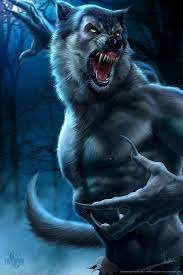
In today’s Author Spotlight, Natalie C. Parker, author of the acclaimed young adult Seafire trilogy among other YA titles, chats with me about her MG debut, The Devouring Wolf. Hailed by Kirkus as “An easily devoured, chilling, and suspenseful adventure,” the fantasy novel is out now from Razorbill. Plus, scroll down for a chance to win one of THREE copies! 👇

But first…

A Summary

It’s the eve of the first full moon of summer and 12-year-old Riley Callahan is ready to turn into a wolf. Nothing can ruin her mood: not her little brother Milo’s teasing, not Mama N’s smothering, and not even Mama C’s absence from their pack’s ceremony. But then the unthinkable happens—something that violates every rule of wolf magic—Riley and four other kids don’t shift.

Riley is left with questions that even the pack leaders don’t have answers to. And to make matters far worse, it appears something was awoken in the woods that same night.

The Devouring Wolf.

The elders tell the tale of the Devouring Wolf to scare young pups into obedience. It’s a terrifying campfire story for fledging wolves, an old legend of a giant creature who consumes the magic inside young werewolves. But to Riley, the Devouring Wolf is more than lore: it’s real and it’s after her and her friends.

The Interview

MR: Welcome to the Mixed-Up Files, Natalie! Thanks for joining us today.

NCP: Hi Melissa! Thank you so much for having me.

MR: Anne Ursu describes The Devouring Wolf book as “A compulsively-readable, big-hearted story,” and I concur. Can you tell us what inspired you to write it? Also, what is it about werewolves that fascinates you?

NCP: Inspiration is always such a sprawling, semi untraceable thing. I feel like I could give you twenty different answers that are all true; I was inspired by mythology and queer families and the love I have for my home state of Kansas! But in this case, I have to say that the inspiration to shift from writing for young adults to writing for middle grade readers belongs to all my nieces and nephews. I wanted to write a story for them.

As for werewolves, I have adored many over the years, starting with Wolfman from the timeless classic, The Monster Squad. As I started thinking about what kind of story I wanted to tell for middle grade readers, I realized that the majority of werewolf stories I was familiar with seemed to focus on adults where the metaphor of shapeshifting was something about the animal inside. When I considered what the metaphor looked like if kids on the verge of puberty were the ones learning how to shift, things got really exciting and the story sort of unraveled from there.

Message to Readers

MR: The novel centers on a community of werewolves, yet Riley, the 12-year-old protagonist, experiences feelings that are universally relatable: the desire to belong; the need for friendship; the importance of family; the fear of the unknown… What was the message you wanted to convey to readers?

NCP: When I was Riley’s age, I was very concerned with what was happening to my body. I was also worried about falling behind my peers and I struggled when things turned out differently for me than they did for others. A lot of this was wrapped up with being a queer kid and not having the language for it. I poured all of those feelings into this story and into Riley’s experience in particular who struggles when she doesn’t shift in spite of having an incredibly supportive family and community. There’s no guidebook for what she and the other four kids are going through, not even the adults can explain it to them. It’s scary and hard and ultimately something that Riley and the others have to figure out for themselves, and that is something I hope readers take away from this story. That sometimes our experiences align and sometimes they don’t and there are many ways of belonging.

Interview with a Werewolf?

MR: While we’re on the subject of werewolves, what kind of research did you do for the book? I’m pretty sure you didn’t interview a werewolf. 🙂

NCP: I wish! But alas. At the time of writing this book, no werewolves were available for an interview. The majority of my research was actually historical, most of which will never show up on the page. But because I was crafting communities of werewolves (and witches!) who reside alongside everyone else, I needed to approach the book as something of an alternate history, of the country and more specifically of the state of Kansas. The werewolves in the book are based in my own hometown of Lawrence and while I know a lot about our recent history and present state, I wanted to make sure everything I set up about the werewolves felt like it could be true.

Diversity and Representation

MR: The characters in your book are diverse in terms of race, gender, and sexual orientation—something that’s desperately needed in children’s publishing. Notably, Riley has two moms, and her friend Kenver is nonbinary, using they/them pronouns. What do you think needs to happen to make diverse representation the norm rather than the exception?

NCP: I think we need books that tackle questions of identity politics head-on and we need books that reflect a diverse world without demanding that authors or readers explore their pain on the page. Along those lines, queer normativity is intensely important to me and my work, so while Riley has two moms and is starting to crush on another girl, those things are woven into the fabric of her life as “normal.” She may have a little anxiety about her crush, but she never questions whether or not she should have those feelings.

We also need to keep finding ways to support our gatekeepers who are currently fighting to keep diverse books in libraries and schools.

Writing for Middle Schoolers

MR: You’ve written novels and short stories for young adults, but The Devouring Wolf is your first foray into middle-grade fiction. What prompted you to write for this age group? Did you encounter any specific challenges while writing the book?

NCP: When I think about who I’ve been as a reader, I have never felt as transported or taken care of by books as I did when I was reading middle grade. Books were an adventure, but they were also a deeply important refuge. I have always wanted to write a book that does for someone else what Madeleine L’Engle and Susan Cooper and Lloyd Alexander did for me. But it was intimidating to think about. I knew I had to wait for the right story. The one that landed with so much clarity that I had no choice but to try. And that’s exactly what happened with The Devouring Wolf.

MG/YA Switcheroo

MR: As a follow-up, is it tricky to switch from YA to MG? From MG to YA…?

NCP: I actually find it refreshing. Both YA and MG require precision and clarity, but it’s different for each and I find the challenge of moving between the two rewarding and enlightening.

Built for Speed

MR: The book moves at a speedy, page-turning clip. What is your secret to writing fast-paced prose?

NCP: This is one of those things that I didn’t realize I was doing until people started to tell me. So, sadly, there is no secret, but I can say that I never start a chapter until I know what the emotional movement will be within it. Whether I’m building anticipation little by little, or tipping that over into a moment of major disappointment, each chapter puts something new in place. That way, no matter what is happening with the plot, there is a feeling of forward momentum. At least, that’s how I think I do it. Another answer could just be that I love coffee and drink copious amounts when I write.

Secret to World-Building

MR: Also, please tell us the secret to fantastical world-building—something you nailed in The Devouring Wolf. How do you create a setting that feels other-worldly and earthbound at the same time?

NCP: That description makes me very happy because that’s exactly what I was trying to do. I think this answer goes back to what I was saying about research. I wanted this world—the werewolves and witches and hunters—to land so close to ours that it felt possible. I wanted young readers to finish reading and imagine that the next patch of woods they passed was secretly hiding a community like Wax & Wayne. I wanted them to reach for a silver bracelet and wonder if it was a wolf cuff. I wanted them to look at the first full moon of summer and hold their breath to see if they could hear the call of First Wolf. I built every piece of the world on top of something that was already familiar from history to mythology so that the magic felt like it was within reach.

Natalie’s Writing Routine

MR: What does your writing routine look like, Natalie? Do you have any particular writing habits or rituals?

NCP: I am mostly a chaos person when it comes to writing rituals, by which I mean, I am envious of them, but have never managed to keep any for myself. I love the idea of writing rituals, but am ultimately too Sagittarius to make them stick. I’m also easily distracted, so one of the best things I’ve discovered are writing sprints. I find a buddy (and honestly, this only works for me if there is a buddy in the picture), then we agree on the starting time, the sprinting time, and the rest period and get to work. And who knows why, but it really works for me. There is something about setting the timer for twenty minutes and typing “GOOOO!” that engages the productive part of my brain and for that I’m grateful.

Up Next…

MR: What are you working on now? Enquiring Mixed-Up Files readers want to know…

NCP: I am hard at work on a follow-up to The Devouring Wolf along with my next YA project, both of which will come out next fall. We should be releasing titles and names of each very soon, so keep a look out!

MR: And finally, no MUF interview is complete without a lightning round, so…

Preferred writing snack?

Coffee!

Coffee or tea?

Coffee!

Werewolves or vampires?

How could you do this to me??? Okay, okay, okay. Werewolves.

Zombie apocalypse: Yea or nay?

I’m a Sagittarius and you cannot convince me I wouldn’t survive the zombie apocalypse so I say BRING IT ON.

Superpower?

Telekinesis!

Favorite place on earth?

Kyoto!

If you were stranded on a desert island with only three things, what would they be?

A water purifier, a knife, and shovel. (And on the off chance you were looking for a less Sagittarian answer: an eReader, some SCUBA gear, and fuzzy blanket.)

MR: Thank you for chatting with us, Natalie—and congratulations on the recent publication of The Devouring Wolf. I thoroughly enjoyed it, and I know MUF readers will too!

And now…

A GIVEAWAY!

For a chance to win one of THREE copies of THE DEVOURING WOLF, comment on the blog–and, if you’re on Twitter, on the Mixed-Up Files Twitter account for an extra chance to win! (Giveaway ends on 9/18 at 12am EST.) U.S. only, please. 

About Natalie

Natalie C. Parker is the author and editor of several books for young adults, including the acclaimed Seafire trilogy. Her work has been included on the NPR Best Books list, the Indie Next List, and the TAYSHAS Reading List, and in Junior Library Guild selections. Natalie grew up in a Navy family, finding home in coastal cities from Virginia to Japan. Now, she lives with her wife on the Kansas prairie. The Devouring Wolf is her debut MG novel. Learn more about Natalie on her website and follow her on Twitter, Instagram, and Facebook. You may also subscribe to her newsletter here.